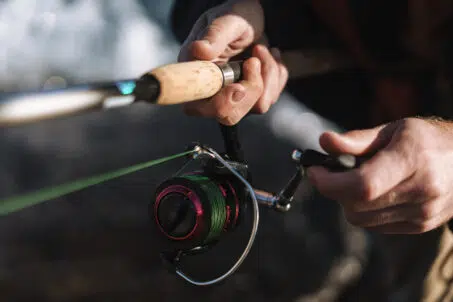
Mick Danek, a seasoned rod builder and fishing enthusiast, has spent decades refining his craft. From experimenting with spinning rods in college to chasing bonefish on the flats of the Bahamas, his passion for performance fishing has evolved into a pursuit of precision. One of the most intriguing technical insights he now champions is the concept of True Natural Frequency (TNF)—a dynamic measurement that adds valuable depth to how we evaluate rod performance.
Understanding True Natural Frequency (TNF)
True Natural Frequency refers to the rate at which a rod vibrates after being deflected and released—essentially, how quickly it “snaps back” into place. Technically, it’s the natural frequency of a cantilevered beam in bending, measured without adding any weight to the blank. Unlike power, action, or rod weight—standard metrics used in systems like CCS (Common Cents System)—TNF provides a dynamic measure of a rod’s behavior in real-world fishing scenarios.
Danek emphasizes that TNF doesn’t replace CCS but complements it. While CCS offers repeatable measurements for static attributes such as rod length, power, and action, TNF introduces a dynamic layer that captures the rod’s response speed, or recovery.
The Connection Between TNF and Sensitivity
One of the more debated aspects of TNF is its relationship to rod sensitivity. Danek, like many seasoned builders, believes that sensitivity is closely linked to the stiffness-to-weight ratio—a key driver of TNF. High modulus blanks, which are stiffer and lighter, tend to show higher TNFs. And while sensory perception can be subjective—often influenced by expectations or branding—TNF offers an objective data point.
“The higher the TNF, the crisper the rod feels in hand,” Danek notes. It’s not just a matter of subjective feedback; high TNF rods tend to recover faster from deflection, which theoretically enhances casting distance and transmits subtle vibrations more effectively to the angler.
Measuring True Natural Frequency
Measuring TNF is surprisingly accessible, thanks to modern tools like the Audio Frequency Counter app. Here’s how Danek does it:
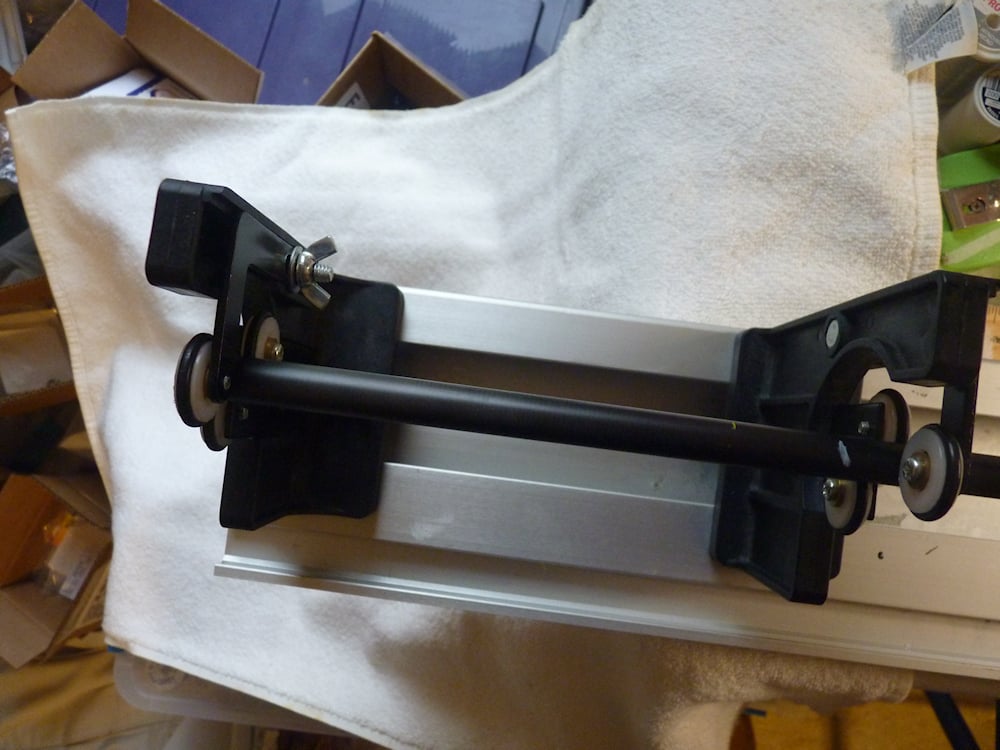
- Mount the rod using roller stands (similar to those used in a wrapping machine), ensuring the blank is only supported near the butt.
- Deflect the tip—typically 2–4 inches—and release it to initiate oscillation.
- Use a smartphone or tablet (Android devices work best) to record the vibrations by lightly touching the rod tip to the screen.
- Analyze the waveform to determine the period between oscillations, then calculate the TNF in cycles per minute using a simple formula.
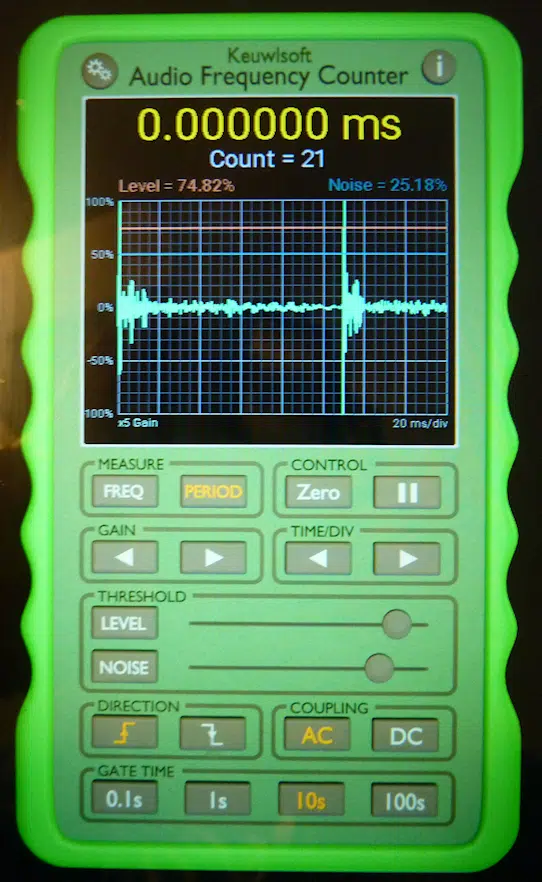
The process hinges on capturing consistent vibrations. Builders may face challenges with noisy environments or inconsistent bends, but clean technique yields repeatable results. Danek also points out that TNF readings are independent of deflection distance—so long as the bend remains within the elastic range of the blank.
Impact of Guide Train and Components on TNF
Guide train configuration significantly influences TNF. Lighter components, especially at the tip, help boost TNF by reducing overall blank weight. Danek has tested titanium versus stainless-steel guides extensively and consistently found that titanium guides outperform due to their lighter weight.
Interestingly, using heavier stainless reduction guides on spinning rods (closer to the handle) doesn’t always impact TNF dramatically. What matters more is the weight toward the tip, confirming the long-standing understanding that tip mass plays a critical role in recovery speed.
Even tip-top material makes a measurable difference. Danek recalls an experiment where titanium tip-tops improved TNF so noticeably that he now uses them exclusively on performance builds.
Practical Applications of TNF in Rod Building
When paired with CCS measurements, TNF offers a richer, more complete profile of a rod’s behavior. For instance, two rods may share identical power and action ratings, but if one has a higher TNF, it’s likely to feel faster, crisper, and potentially more sensitive.
Danek has used TNF to fine-tune mid-build decisions, compare blanks more objectively, and validate whether premium blanks are delivering real performance benefits. He recalls trying to justify the cost of high-end blanks by measuring TNF—and consistently finding that high modulus blanks live up to the hype in terms of dynamic performance.
Tips and Recommendations for Builders
Rod builders interested in experimenting with TNF should:
- Invest in a stable mounting setup (e.g., roller stands on a wrapping machine).
- Use light, consistent deflections during measurement.
- Prioritize weight savings at the tip by using titanium or smaller running guides.
- Repeat tests multiple times to ensure accuracy and identify anomalies.
- Experiment with flat-line oscillation, an idea borrowed from golf shaft tuning, to explore further refinements in build alignment and performance.
The Future of TNF in Rod Building
Danek envisions TNF becoming a more widely adopted standard in custom rod building. Its objectivity and accessibility make it ideal for hobbyists and professionals alike. He references a Japanese casting rod he recently repaired, noting that it naturally vibrated in a clean flat-line oscillation—an indicator that some manufacturers may already be aligning builds with TNF principles in mind, even if unconsciously.
Beyond rods, Danek sees potential crossover from other disciplines. A colleague from the golf industry introduced him to flat-line oscillation—a method used to align golf shafts for optimal vibration. Applied to rods, it could open up new frontiers in performance alignment and accuracy.
Conclusion
True Natural Frequency adds a vital, dynamic dimension to rod performance evaluation. When used alongside static systems like CCS, it helps rod builders make more informed decisions about materials, components, and build techniques. For Mick Danek, TNF has not only enhanced his builds but also deepened his confidence in his design choices.
As rod building continues to evolve, TNF stands out as a practical, measurable way to elevate both the science and the art of custom fishing rods.