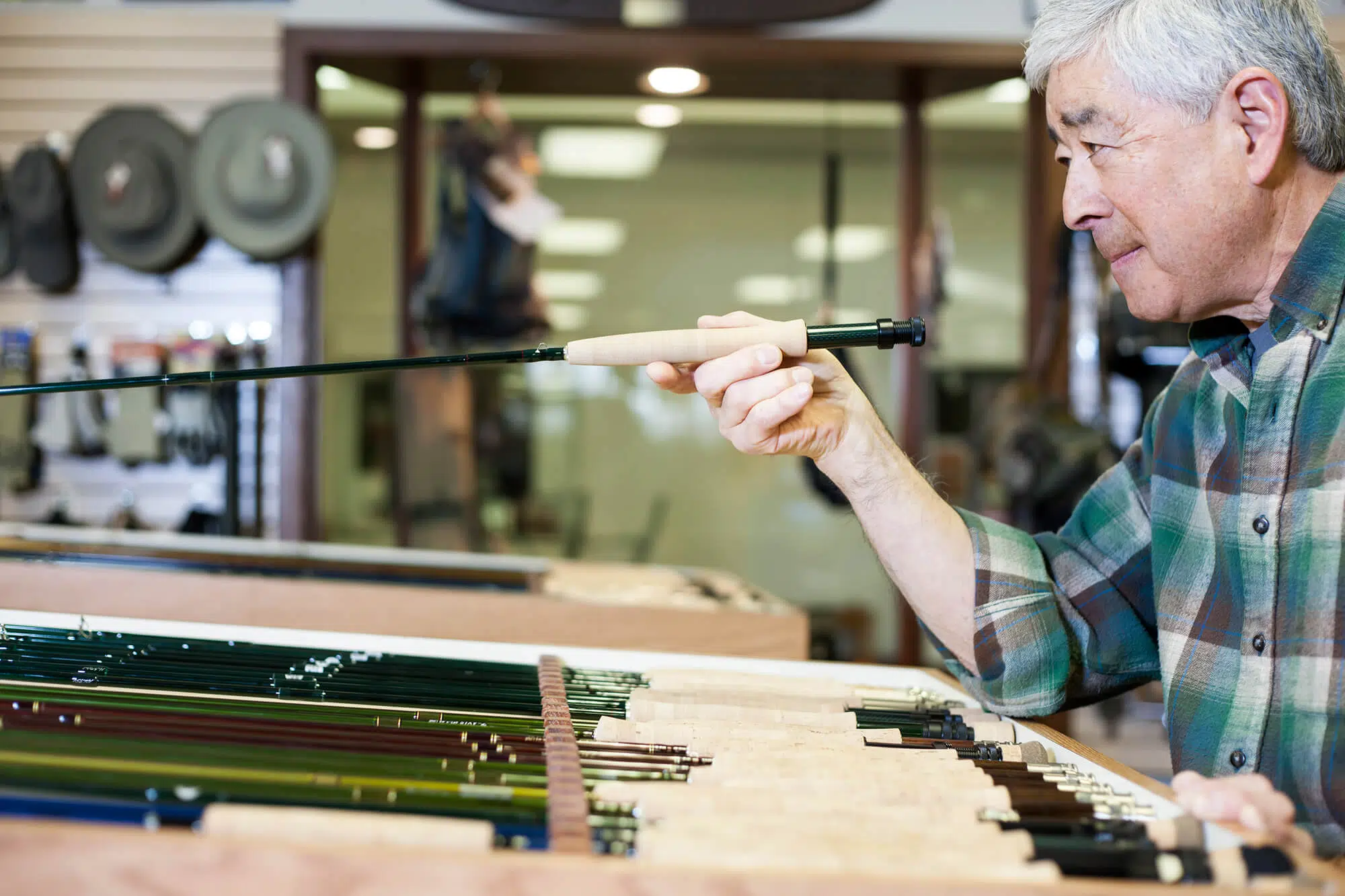
A custom rod starts taking shape before the first guide is wrapped, before the reel seat is fitted, and before a handle material is chosen. The blank sets the direction. It determines the range of applications the finished rod can realistically support, the way it loads, how it recovers, how it feels in hand, and how much room the builder has to fine-tune the final setup.
For custom builders, that makes blank selection one of the most important early decisions in the build. For store buyers, it creates a different kind of challenge. Fishing rod blanks are not as simple to merchandise as finished rods, and they rarely sell well when treated like generic inventory. A buyer has to understand which models match local fishing demand, which options builders are likely to ask for, and how the blank category connects to guides, reel seats, grips, thread, finish, and tools.
A good blank program does not have to be massive. It has to be understandable. The strongest assortments usually begin with clear applications, practical comparisons, and enough supporting components to help the customer move from idea to finished rod without confusion.
Start with the finished rod in mind
The most useful blank conversations begin with the rod the builder is trying to create. Length, power, action, lure range, line class, handle layout, guide train, and reel seat choice all matter, but they should not be evaluated as separate decisions too early. The first question is what the finished rod needs to do.
A blank intended for light finesse bass work has a different job than one meant for surf casting, musky fishing, steelhead drift setups, offshore trolling, or ultralight panfish applications. Those differences are not cosmetic. They affect how the rod loads, how much pressure it can handle, how it casts, and how well it supports the technique or species in question.
For store buyers, this means blank inventory should be organized around fishing use, not only by length or price. Customers and builders often think in applications first. They are trying to solve for a rod type, a technique, a water type, or a performance feel. A display or ordering process that reflects that thinking is much easier to explain than one built around disconnected model numbers.
Power should match the load
Power is one of the first blank characteristics builders should compare because it affects what the finished rod can handle. In practical terms, power describes the blank’s resistance to bending under load. A lighter-power model bends more easily, while a heavier-power option is built for more demanding pressure.
This matters because power influences far more than how “strong” a rod feels in a customer’s hand. It affects lure control, hook-setting authority, fish-fighting pressure, and whether the rod feels appropriate for the line class and target species. A blank with too little power can feel overloaded. A model with too much power can make a presentation feel stiff, reduce enjoyment, or work against the intended technique.
In a retail setting, buyers should think about power through the lens of customer expectation. A local builder asking for a blank to throw small swimbaits is not asking the same question as someone planning a heavy surf rod or a musky setup. If staff can connect power to the intended fishing pressure, the conversation becomes more useful and less abstract.
Action affects how the rod responds
Action is often confused with power, but the two terms describe different characteristics. Action refers to where the blank bends and how the bend moves through the rod under load. A faster action generally bends more toward the tip section, while a slower action distributes the bend deeper through the blank.
That distinction affects casting feel, lure presentation, hooksets, and fish control. A fast-action blank can feel responsive and precise in many applications, but it is not automatically better for every build. A moderate or slower action may be preferred when a deeper load, smoother casting rhythm, or more forgiving bend is important.
For store buyers, action can be one of the hardest concepts to explain because many customers use imprecise language. An angler may ask for a “stiffer” rod when they mean faster action. Another may ask for “more backbone” when the real issue is power. Staff do not need to turn every conversation into a technical lesson, but they should be able to separate the two ideas clearly.
The simplest retail explanation is this: power helps describe what the rod can handle, while action helps describe how the rod responds.
Length changes leverage, control, and casting
Length is one of the easiest blank details to compare visually, but it still deserves careful thought. A longer blank can support casting distance and line control in certain applications, while a shorter blank may improve accuracy, leverage, handling, or transport convenience.
The right length depends heavily on how the finished rod will be used. Surf, steelhead, fly, inshore, bass, kayak, travel, and offshore builds all create different length considerations. Store buyers should avoid treating length as a simple “longer is better” decision because that can lead to poor matches for the customer’s actual use.
A blank assortment should reflect the way local anglers fish. A shop near strong surf demand may need different length coverage than a store serving bass anglers who care more about technique-specific builds. A retailer supporting travel or kayak customers may need to think about storage and handling more than maximum casting distance.
Length also affects component planning. Guide count, handle spacing, balance, and finished weight all change as the blank gets longer or shorter. That makes length a practical buying decision, not just a specification on a label.
Line class and lure range keep the build realistic
Line class and lure range help define the practical working window of the blank. These ratings should not be treated as decorative specs. They help the builder understand where the blank is intended to operate and whether it fits the customer’s fishing style.
A mismatch here can cause disappointment even when the build is clean. If the blank is not suited to the lure weight being cast, the rod may feel underloaded or overloaded. If the line class does not match the intended pressure, the finished rod may not perform comfortably in real use. These are the types of problems customers remember because they affect every trip after the rod is built.
For store buyers, lure range and line class also help determine which blanks belong in stock and which are better handled through special order. A shop does not need to carry every possible option, but it should understand which ratings match repeat demand in its market. That keeps the assortment practical and reduces the chance of slow-moving inventory.
Store buyers should separate stock blanks from special-order blanks
Not every blank a customer might request deserves permanent shelf space. This is one of the most important buying decisions for shops building a rod-building category.
Stock blanks should usually reflect repeat demand. These are the models tied to common local applications, frequent builder requests, repair-related replacement opportunities, or proven store interest. Special-order blanks can support narrower needs without requiring the shop to carry too much inventory at once.
This distinction helps protect cash flow and floor space. Blanks take more room than many small components, and they often need explanation before a customer is ready to buy. A smaller, better-understood assortment can outperform a larger wall of products that staff cannot confidently discuss.
| Blank Decision Area | What to Compare First | Why It Matters |
| Application | Species, technique, water type, and finished rod purpose | Keeps the blank tied to real use |
| Power | Load range and fishing pressure | Helps match the rod to line, lure, and target species |
| Action | Bend profile and response | Influences casting feel, presentation, and hooksets |
| Length | Casting distance, leverage, control, and storage needs | Shapes handling and finished rod behavior |
| Line and lure range | Working window for the build | Reduces mismatched expectations |
| Stocking role | Regular stock or special-order option | Protects inventory discipline and shelf space |
This kind of framework gives store buyers a more practical way to compare blanks without turning the category into a guessing game.
Component choices should follow the blank
Once the blank is selected, the rest of the build becomes more focused. Guides, reel seats, grips, hook keepers, thread, finish, and tools should support the blank’s purpose rather than distract from it.
A light freshwater blank may call for component choices that protect balance and sensitivity. A heavier saltwater model may place more emphasis on durability, grip control, and guide strength. A surf application may require different priorities than a compact kayak build or a travel rod. The blank narrows the decision field.
This is where fishing rod blanks can strengthen the wider rod-building category for retailers. A customer buying a blank is often moving toward additional component decisions. If the shop can connect the blank to guide selection, reel seat choice, handle materials, and finishing products, the sale becomes part of a more complete build path.
That does not mean every blank display needs to become complicated. It means the store should make the next decision easy to understand. When the blank’s purpose is clear, related component recommendations feel more natural.
Builders notice whether the shop understands the category
Custom rod builders usually know when a shop is serious about blanks and when it is simply carrying them because the category looks attractive on paper. The difference shows up in organization, product knowledge, and the way staff handle questions.
A builder may ask about action, recovery feel, guide compatibility, handle layout, or whether a certain model is better suited to one application than another. Staff do not need to know every builder’s personal preference, but vague answers can weaken confidence quickly. Builders tend to return to suppliers and shops that treat the category with enough care to support informed decisions.
For store buyers, this means the blank program should grow at the same pace as staff knowledge. Adding too much too early can create an impressive-looking display that no one wants to manage. Starting with applications the shop understands best is often a stronger path.
Anglers Resource supports approved trade accounts through rod-building and component categories that can connect blanks to the rest of the build. The retailer’s advantage comes from using that product access with clear stocking logic and practical in-store guidance.
Local demand should shape the assortment
A blank assortment should reflect the market the shop actually serves. Regional fishing patterns, customer skill level, local species, seasonal demand, and builder activity all influence which blanks make sense.
A store serving surf anglers may need length, casting distance, and durability to carry more weight in the buying decision. A bass-focused retailer may need to think more about technique-specific actions and lure ranges. A shop with active custom builders may need more variety than one introducing blanks as a small support category. A fishing store near strong travel, kayak, or ultralight demand may need a different starting point altogether.
This local filter is one of the best ways to reduce dead inventory. A blank can be a good product and still be wrong for a specific store. Buyers should be comfortable saying no to options that do not fit their market, even if those models are technically strong.
A disciplined assortment is not a limited assortment. It is an assortment with a reason behind it.
Blank education improves customer expectations
Many customers understand finished rods better than blanks. That creates an opportunity for specialty retailers to teach enough to make the buying decision easier.
Simple explanations often work best. A customer does not need a lecture on every construction detail to understand why power, action, length, line class, and lure range matter. They need to understand how those choices affect the rod they expect to fish.
This type of education can prevent mismatched expectations. A customer may want sensitivity and heavy lifting strength in the same build, but those goals may need a careful compromise. Another may want casting distance without considering rod length, line, lure weight, or guide layout. Builders often manage those trade-offs naturally, but store staff can help customers think more clearly before a poor decision is made.
Good blank education does not push every customer toward the most expensive option. It helps them understand what the finished rod should do and which foundation gives the build the best chance of meeting that goal.
A blank program can grow in stages
A store does not need to launch a full blank department overnight. In many cases, a staged approach works better.
The first stage may focus on the applications the shop already understands. The next stage may add related components, better display support, special-order options, or deeper coverage for active builders. Over time, the store can expand based on actual demand rather than assumptions.
This staged approach gives staff time to learn the product group. It also gives customers time to recognize the shop as a useful source for rod-building conversations. When blanks are introduced with clear purpose, they can support more than one sale. They can lead naturally into guides, reel seats, grips, thread, finish, tools, and future build discussions.
For approved trade accounts, Anglers Resource can support that broader path through blank and component access, Fuji Rod Components, and technical product support. The strongest results still come when the retailer builds the category around real customer demand instead of simply adding inventory.
Better blank choices create better finished rods
Fishing rod blanks deserve careful comparison because they influence nearly every decision that follows. The blank affects how the finished rod loads, casts, recovers, balances, and handles pressure. It also shapes which components make sense and how the final build should be explained.
For custom builders, that makes blank selection the foundation of the project. For store buyers, it makes blanks a category that should be stocked with discipline, not guesswork. The right assortment should reflect local applications, builder demand, staff knowledge, and a clear path into related components.
A strong blank program does not begin with carrying everything. It begins with knowing what the finished rod is supposed to do, comparing the characteristics that matter first, and building the category around products the shop can explain with confidence.
When that happens, fishing rod blanks become more than unfinished rods in inventory. They become the starting point for better builds, cleaner buying decisions, and stronger customer conversations.