In the world of inshore fishing, the right rod is the key to success. It can mean the difference between a day of great catches and missed chances. With so many options available, choosing the best inshore fishing rods can be a challenge. This article is your guide, walking you through the important factors to consider. From types and materials to lengths and actions, whether you’re a seasoned angler or a beginner, we’ll help you make an informed choice for confident casting and successful fishing experiences.
Know Your Target Species And Fishing Environment
“Inshore” is a nebulous word that encompasses a variety of saltwater fish species and coastal fishing situations. Each species of fish possesses its own unique behavior, size, and strength, necessitating a specific rod configuration.
For instance, a light and sensitive rod with a fast action might be perfect for enticing the quick strikes of speckled trout in shallow waters, while a more robust rod with extra power could be essential for wrestling with the powerful pull of redfish among marshy mangroves.
Equally important is the surrounding fishing environment. The structure of the shoreline, the type of bottom substrate, and the presence of obstacles all impact the way you cast and retrieve your line. A rocky coast might require a rod with more backbone to control a hooked fish amidst the rugged terrain, while a soft mudflat could necessitate a longer rod for extended casting distance.
By thoughtfully aligning your inshore fishing rods choices with the nuances of your target species and fishing location, you ensure a harmonious blend of power, sensitivity, and maneuverability, elevating your potential for a fruitful and fulfilling inshore fishing experience.
Choosing Between Casting And Spinning Rods For Inshore Fishing
When standing at the crossroads of choosing between casting and spinning rods for your inshore fishing endeavors, several factors come into play, each with its own set of advantages and considerations. Casting rods, known for their robust construction and ergonomic design, offer exceptional accuracy in casting. They excel in handling heavier lures, making them a preferred option when pursuing larger, more aggressive species that require powerful hooksets. With casting rods, you have greater control over the trajectory of your cast, making them suitable for targeting specific structures or tight spots. However, they may require a steeper learning curve for beginners due to the mechanics of the casting reel, and they might not be as versatile when it comes to finesse techniques or using lighter lures.

On the other hand, spinning rods offer a user-friendly experience that appeals to anglers of all skill levels. Their open-faced spinning reels allow for easy line management, making them ideal for quick and effortless casting, particularly when employing lightweight lures or live bait. This versatility enables finesse fishing techniques like drop-shotting or using smaller jigs, making them particularly effective for enticing skittish or finicky species. Additionally, spinning rods are often more forgiving when dealing with backlash or line tangles, making them a great choice for beginners or those transitioning from other types of fishing. However, spinning rods may sacrifice some casting accuracy and distance compared to casting rods, particularly when dealing with heavier lures or windy conditions.
Ultimately, the decision between casting and spinning rods for inshore fishing hinges on your preferred fishing techniques, target species, and personal comfort. Casting rods offer pinpoint accuracy and robustness for tackling formidable opponents, while spinning rods provide versatility and ease of use, catering to finesse tactics and accommodating a broader range of angling scenarios. By carefully weighing these pros and cons, you can confidently select the rod type that aligns best with your inshore fishing objectives, enhancing your chances of a successful and enjoyable angling experience.
Factors To Consider When Buying An Inshore Rod
While the ideal rod specs can vary depending on your circumstances, let’s look at what makes a “general purpose” inshore fishing rod.
Rod Length
When considering a well-rounded length for inshore fishing, a range between 6.5-7 ft is often considered versatile and suitable for various inshore fishing scenarios. This length strikes a balance between casting distance, accuracy, and maneuverability, making it well-suited for a wide range of species and fishing techniques.
A 6’6″ to 7′ rod provides sufficient leverage for controlling larger fish while offering the finesse required for more delicate presentations. It allows you to cast accurately in tight spots, navigate around obstacles, and effectively work lures in different fishing environments such as marshes, flats, or nearshore structures.
Rod Action
For a general-purpose inshore fishing rod, a moderate-fast to fast action is usually the best choice. This action provides a versatile blend of sensitivity, power, and responsiveness that caters to a wide range of fishing techniques and species commonly found in inshore waters.
Moderate-fast action rods have a slightly more flexible tip, allowing for better sensitivity to subtle strikes and enabling you to work a variety of lures with finesse. They also provide some forgiveness when fighting fish, particularly when they make sudden movements or powerful runs. This action is well-suited for techniques like twitching soft plastics, jigging, and working topwater lures.

Fast action rods have a stiffer tip, offering enhanced casting accuracy and the ability to set the hook quickly, which is essential for inshore species known for their swift strikes. Fast action rods excel at techniques like spinnerbait fishing and using heavier lures in general, making them versatile options for targeting a diverse range of fish.
In essence, a moderate-fast to fast action rod strikes a balance between finesse and power, enabling you to effectively handle various inshore fishing scenarios, from delicate presentations to battling aggressive predators.
Rod Power
For an all-around inshore fishing rod, medium power is a good choice. A medium power rod offers a versatile balance between strength and sensitivity, making it well-suited for a wide range of inshore fishing scenarios and species.
A medium power rod provides enough backbone to handle medium-sized fish and the occasional larger catch, while still offering the finesse required for more delicate presentations and techniques. This versatility is essential for inshore fishing, where you may encounter a variety of species, from smaller panfish to larger predators.
With a medium power rod, you can effectively work a range of lures, including soft plastics, jigs, crankbaits, and topwater offerings. It provides the ideal blend of strength for casting distance and control, yet is forgiving enough to prevent tearing hooks out of the mouths of lighter-biting fish.
While medium power is a great all-around choice, it’s important to note that the specific power of your rod can also depend on the type of inshore fishing you do and the dominant species in your area. If you often target larger, more powerful fish, you might consider a medium-heavy power rod, while those who primarily pursue smaller species might opt for a medium-light power rod.
Building Your Custom Inshore Rod
One of the beautiful things about building your own inshore fishing rod is that you can tailor-make it for the specific species and environment that you are targeting. If off-the-rack options just aren’t doing it for you anymore, let’s consider what you need to know before creating your very own, custom-designed rod.
Inshore Fishing Rod Blanks
When building your own inshore fishing rod, understanding rod blank materials is crucial as it directly impacts the rod’s performance, sensitivity, and durability. Two primary materials used for rod blanks are graphite and fiberglass, each offering distinct characteristics suited for specific fishing scenarios.
Graphite blanks are known for their exceptional sensitivity, allowing you to detect even the slightest nibbles or bites from fish. This makes them highly suitable for finesse techniques and situations where feeling subtle strikes is vital. They’re generally lighter in weight compared to fiberglass, contributing to a more comfortable and less fatiguing fishing experience, especially during long hours on the water.
Graphite blanks typically offer faster actions, meaning they bend more in the upper portion of the rod. This results in increased casting distance and better hook-setting capabilities, making them ideal for techniques that require quick and precise strikes.
Overall, graphite blanks are great choices for targeting species that require finesse, such as trout, flounder, or snook. They are also preferred for techniques like jigging, twitching, and working soft plastics.
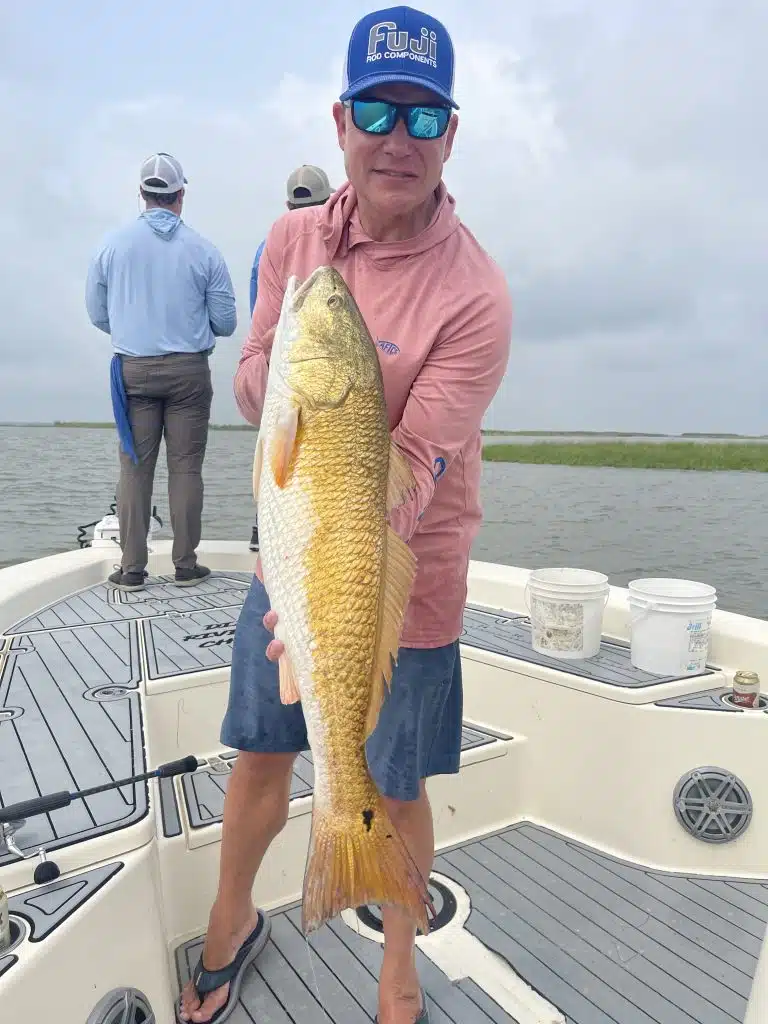
Fiberglass blanks, in comparison, are known more for their durability and resilience than their sensitivity, making them well-suited for situations where rods may be subjected to rough handling, impacts, or encounters with heavy cover. They generally offer more power and flexibility in the lower section of the rod. This makes them effective for battling larger, hard-fighting fish and handling heavier lures.
Fiberglass blanks tend to also be available in moderate to slower actions, providing a more forgiving bend that helps prevent hooks from tearing out of a fish’s mouth. They’re well-suited for targeting larger species like redfish, tarpon, or snapper, and they excel in scenarios where the ability to absorb sudden bursts of energy from powerful fish is essential.
It’s important to note that some rod blanks use a combination of graphite and fiberglass (composite) to harness the strengths of both materials. When choosing a rod blank material for your inshore fishing rod, consider the types of fish you’ll be targeting, the techniques you’ll be using, and your personal fishing style. By selecting the appropriate rod blank material, you can tailor your custom-built rod to your specific angling preferences and maximize your success on the water.
Inshore Rod Guides And Guide Trains
Choosing the right inshore rod guides and guide trains is a crucial aspect of building high-performing and reliable custom inshore fishing rods. The guides and their arrangement, known as the guide train, directly influence casting distance, line management, and overall rod performance.
Guides are available in a variety of materials. Ceramic guides are popular due to their smooth surface, reducing friction and allowing your fishing line to flow freely during casting and retrieval. They are highly durable and resistant to wear caused by abrasive lines and saltwater. Titanium guides are also available, and are lightweight, corrosion-resistant, and offer excellent durability. They are a premium choice, often used in high-end custom rods. Finally, stainless steel guides are sturdy and corrosion-resistant like titanium, but cheaper and heavier
Guide train layout refers to the arrangement of guides along the rod blank. The number and placement of guides affect how the rod bends and flexes during casting and fighting fish.
Modern guide layouts often follow a concept known as “spine orientation,” aligning guides with the rod’s natural flex for improved sensitivity and casting accuracy.
Many rod blank manufacturers provide guide spacing and size recommendations based on the specific characteristics of their blanks. Following these recommendations can optimize your rod’s performance. It’s also worth noting that different guides may be recommended for different line types, such as monofilament, braided, or fluorocarbon lines. Make sure the guides are suitable for the type of line you’ll be using.
By carefully considering guide material, style, size, spacing, and layout, you can tailor your inshore rod’s guide train to enhance casting performance, reduce line wear, and improve sensitivity. It’s a crucial step in creating a custom rod that’s perfectly suited to your fishing style and preferences.
Inshore Rod Handles And Grips
Selecting the appropriate grips and handles for your inshore fishing rods is a crucial step that significantly influences your comfort, control, and overall performance during your fishing endeavors. Several options are available, each offering distinct advantages tailored to different preferences and fishing styles.
Cork grips remain a classic choice due to their natural feel, lightweight properties, and exceptional sensitivity. Their comfortable grip absorbs moisture effectively, making them well-suited for long hours on the water. Cork grips come in varying grades, with higher-quality cork offering enhanced durability and aesthetics.
EVA foam grips, crafted from ethylene-vinyl acetate, offer a combination of lightweight design and robust durability. They provide a soft and comfortable grip that’s particularly ideal for extended fishing sessions. EVA foam grips are commonly used on rods targeting larger and more hard-fighting species, where a secure hold is of utmost importance.
For those seeking a balance between materials, hybrid grips combine elements like cork and EVA foam to offer the advantages of both worlds. These grips provide the benefits of cork’s natural feel and EVA foam’s durability, minimizing potential drawbacks.
Another innovative option is Winn grips, constructed from patented polymer materials. These grips offer a comfortable, tacky, and non-slip surface, even when wet. Winn grips are favored by anglers who frequently fish in wet conditions or saltwater environments.
Heat shrink tubing presents a versatile solution for customizing your rod’s handle. Applied over existing grips, it enhances both comfort and grip. With various colors and textures available, heat shrink tubing provides an opportunity to add a personalized touch to your rod’s design.
Custom handle designs, incorporating decorative threads, wraps, and finishes, can add a unique and personalized aesthetic to your fishing rod. This customization extends beyond functionality, allowing you to create a rod that reflects your individual style.
Finally, consider the rod length and handle style when making your decision. Longer handles offer increased leverage for casting and fighting fish, while shorter handles provide better maneuverability. Choose a handle style, whether split grips, full-length grips, or pistol grips, that aligns with your preferred fishing techniques.
Inshore Rod Reel Seats
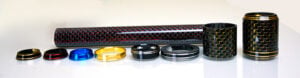
One of the first considerations when selecting a reel seat is ensuring compatibility with your rod blank. The inner diameter of the reel seat should match the diameter of your rod blank snugly, ensuring a secure fit that maintains the rod’s structural integrity. This compatibility is vital to prevent any unwanted movement or instability between the reel and the rod.
Reel seats come in a variety of materials, each offering unique attributes to enhance your fishing experience. Graphite reel seats are known for their lightweight design and excellent sensitivity. They are particularly well-suited for finesse techniques that demand a heightened awareness of subtle strikes. On the other hand, aluminum and stainless steel reel seats provide added durability and strength, making them suitable choices for rods targeting larger and more powerful species.
The type of fishing you plan to engage in plays a significant role in reel seat selection. For finesse techniques where sensitivity is crucial, such as light jigging or soft plastic presentations, a graphite reel seat might be the optimal choice. Conversely, if you intend to tackle robust species that require heavy-duty gear, an aluminum or stainless steel reel seat can provide the durability and sturdiness necessary for the task.
Reel seat attachment mechanisms also vary, with options such as sliding hoods, locking rings, and screw-down designs. It’s essential to choose a mechanism that securely holds your reel in place while allowing for easy installation and removal. A reliable attachment mechanism ensures a firm connection between the reel and the rod, contributing to improved casting accuracy and overall performance.
Aesthetics and customization are additional factors to consider. Reel seats are available in various finishes and colors, enabling you to match or contrast with other components of your custom rod. Many anglers take advantage of this opportunity for personalization, incorporating decorative reel seat inserts or custom thread wraps to create a rod that reflects their unique style.
Saltwater Rod Maintenance And Care
Before we conclude, it’s worth mentioning proper care for inshore fishing rods used in saltwater. Saltwater can be particularly corrosive and damaging to fishing gear due to its high salt content.
Here are some tips to help you keep your inshore fishing rods in top shape:
Rinse After Each Use: Thoroughly rinse your rod (and reel) with freshwater immediately after every saltwater fishing trip. This helps remove salt and any other corrosive elements from the equipment. Pay special attention to the reel, guides, and reel seat.
Disassemble if Possible: If your rod is designed for easy disassembly, take it apart after each use to clean and dry each section individually. This prevents salt and moisture from becoming trapped between the rod sections.
Use Corrosion Inhibitors: Apply a corrosion inhibitor or a light coat of reel oil to metal parts, including the guides and reel seat. This helps protect against rust and corrosion. Be sure to follow the manufacturer’s recommendations for application.
Clean Guides: Use a soft brush, toothbrush, or a specialized cleaning tool to gently scrub the guides and remove any salt buildup. Inspect guides for signs of corrosion, wear, or damage.
Store Properly: Store your inshore fishing rod and reel in a cool, dry place away from direct sunlight and moisture. Use rod holders or racks to prevent warping, and avoid leaving your gear in a damp or salty environment.
Check for Damage: Inspect your rod regularly for any signs of damage, such as cracks, dents, or loose guides. Address any issues promptly to prevent further deterioration.
Use Protective Covers: Consider using rod sleeves or covers to shield your rods and guides from scratches, impacts, and exposure to the elements during transportation and storage.
By following these maintenance tips, you can help prolong the life of your inshore fishing rod and ensure it remains a reliable tool for your saltwater angling adventures.
Final Thoughts On Inshore Fishing Rods
As you venture into the world of inshore fishing, your choice of the best fishing rod becomes a blend of expertise and personal taste. Armed with insights into rod materials, lengths, actions, and powers, your angling experiences gain precision, finesse, and strength. Whether it’s the elusive snook, the dance of speckled trout, or the spirited redfish that lures you, your carefully chosen inshore fishing rod becomes your trusted partner, enhancing each cast and adding excitement to every fishing outing. So, as you head out to the waters, let your rod amplify your skills and make your fishing adventures truly rewarding. Happy fishing!