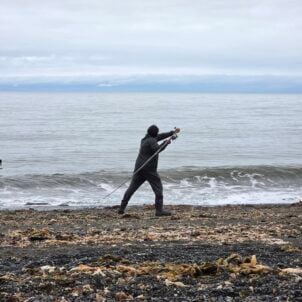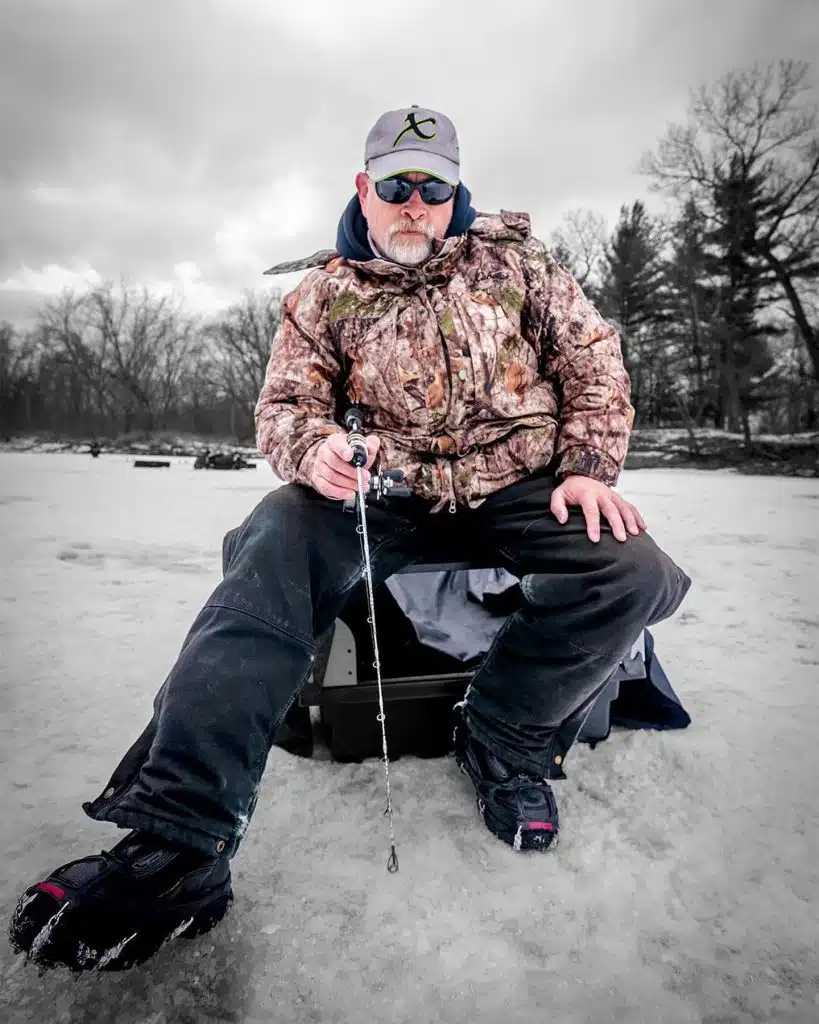
An ice fishing rod might be short enough to fit in a kitchen drawer, but building a good one takes more than shrinking an open-water design. Fine tips, tiny guide feet, and flexible blanks create unique challenges that can surprise even experienced rod builders, but when you get those details right, a custom ice fishing rod can be tailored around exactly how an angler fishes.
Veteran rod builder and instructor Randy “Buzz” Butters has spent decades working through those details. In his interview on Mastering Rod Building, he explains how blank selection, handle construction, and guide placement work together; sharing a few simple shop tricks that make building these small rods much easier, starting with the lure and fishing situation.
Choose the Blank Around the Lure
Saying you want a panfish or walleye rod is a good starting point, but Butters encourages builders to get far more specific. What will the rod actually fish? A tiny tungsten jig, a small spoon, or a heavier swimming bait worked in deeper water? Those presentations place vastly different demands on a blank, even for the same target species, and power labels alone rarely tell the full story across different manufacturers.
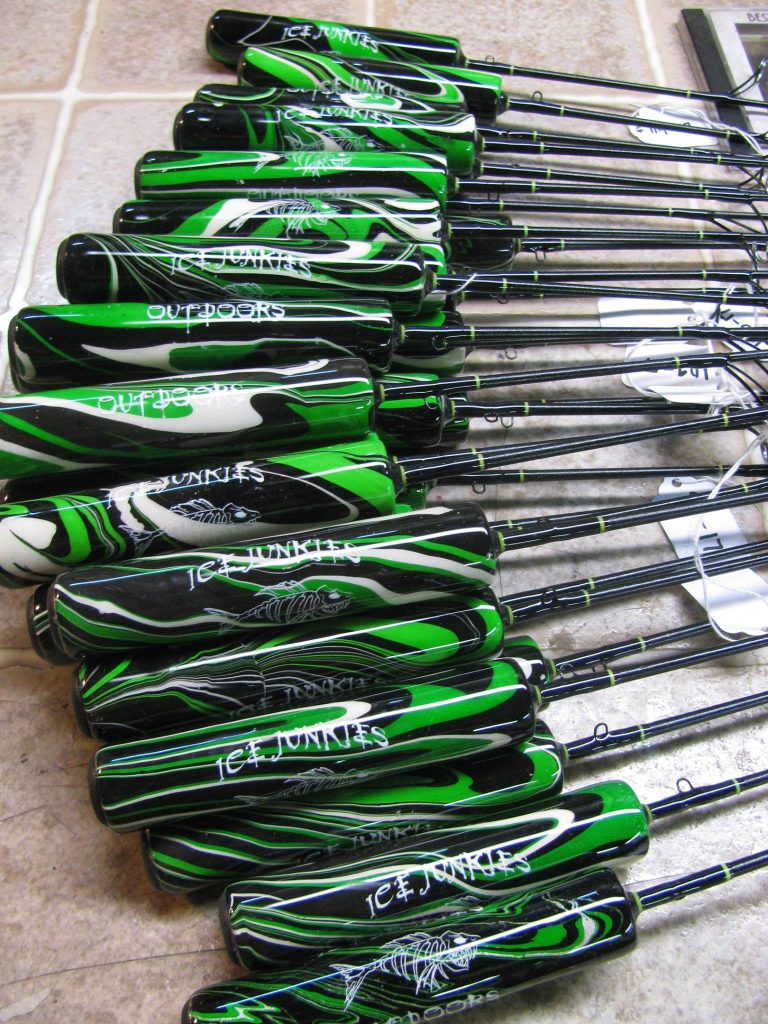
To prevent a disappointing build, Butters recommends asking your supplier which lures a particular blank handles best by specifying the size, weight, and expected fishing depth. Among the options he discusses are solid fiberglass and solid carbon models with tapers shaped for distinct jobs. At the finesse end, a power noodle blank pairs a flexible tip with a stronger lower section to detect subtle takes while keeping enough backbone to fight fish, whereas heavier spoons and jigs call for a stiffer response to work the lure effectively.
Plan for How You Will See the Bite
With finesse ice fishing, bite detection is often a visual exercise because thick gloves, light lures, and subtle takes make it hard to rely on feel alone. “You’re watching the tip of the rod, or you’re watching the line,” Butters explains. Crucially, a bite doesn’t always pull downward. When a fish lifts a jig, it removes weight from the tip or spring bobber, causing the indicator to straighten in what Butters calls a negative bite.
A spring bobber provides a visible reference as it bends under the jig’s weight, though some anglers prefer watching a noodle tip to avoid extra attachments that collect ice. Ultimately, you should build around the method the angler prefers, since personal preference matters when spending hours watching for tiny movements.
Match Rod Length to the Fishing Space
Before settling on ice fishing rod length, picture where the rod will be used. An angler sitting outside on a bucket has much more working room than someone tucked inside a small shelter, where a rod that felt fine in the shop might bump the wall and leave no room for a hookset. As Butters puts it, “It really comes down to where are you going to fish this rod.”
Always consider seat position, distance to the hole, and overhead clearance when choosing the right ice fishing rod length, keeping in mind that handle length matters just as much as blank length when measuring the complete setup in hand.
Build the Handle on a Support Tube
One of the biggest construction challenges comes from fitting a conventional handle assembly onto a very small, flexible blank. The gap between the blank’s diameter and the inside of the grip or reel seat can be substantial, and filling that space with tape or epoxy often fails to create a stable foundation if the blank flexes inside the assembly.
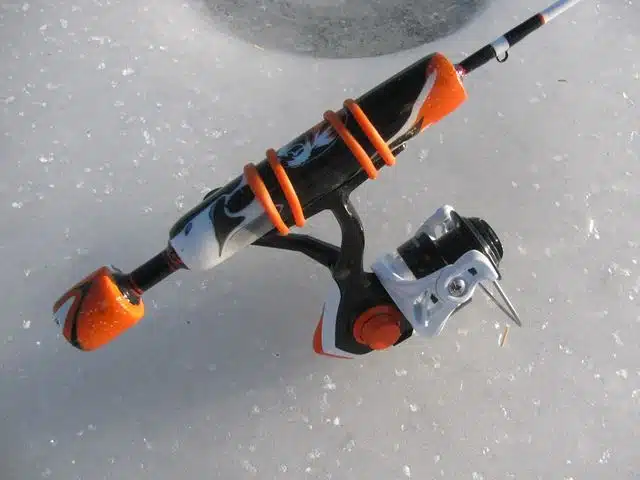
His solution is straightforward: “Build your grip on a support tube first, and put the blank into the support tube when you’re done.” By using a rigid tube (such as an arrow shaft or purpose-made tubing) as the foundation for the grip and reel seat, you can easily secure the blank inside using snug arbors and epoxy. This approach also gives builders the freedom to design custom cork or foam handles tailored to how the angler actually holds the rod.
Support the Blank While Wrapping
Another major challenge is wrapping guides onto a thin blank that bends under thread tension. To stop a fine noodle tip from wandering, Butters uses a simple wrapping tool consisting of a rigid metal tube with an EVA foam plug fitted in the end. Sliding the blank tip-first into the tube supports it immediately behind the guide being wrapped, ensuring that “nothing’s going to move” under thread tension.
Holding small guides in place also takes care. Narrow masking tape or guide-foot adhesive helps hold the foot while you start the thread wrap. Take your time getting the alignment right beforehand, as shifting a guide later can easily loosen the wraps on these delicate blanks.
Look for Small Feet and Open Rings
Ice-rod guides must balance two competing needs: fitting a very narrow blank while leaving enough ring room for line to move as ice builds up. Butters sums it up neatly: “We’re talking small guide feet, big rings.” Starting with narrow guide feet saves significant prep time, while larger ring openings (or single-foot wire fly guides) help delay icing issues.
When picking hardware, inspect the actual inner opening rather than relying on nominal guide sizes, and check that the tip-top tube fits the blank snugly without sacrificing a delicate tip.
Let the Bend Determine Guide Spacing
Short ice fishing rods don’t necessarily need fewer guides; in fact, a sharply bending noodle tip often requires more support than a stiffer rod of similar length. Butters might use seven or eight guides on a 30-inch power noodle rod, whereas a stiffer walleye rod might only need five or six. As he notes, “The action of the rod determines the number of guides that go on that rod.”
Always perform a static deflection check by running line through temporarily mounted guides to see how the line follows the blank’s curve under load. Adjust placement wherever the line forms sharp angles or leaves sections unsupported, taking advantage of a custom ice fishing rod build’s ability to match guide placement to the actual rod bend.
Keep the Finish Simple and Check the Outfit
Finishing an ice fishing rod doesn’t require specialized threads. Standard Size A works well, though Size B can make climbing onto fine guide feet easier. For the finish itself, two thin coats of conventional flexible rod finish will do the job nicely.
Before calling the rod complete, test it with the intended reel and line to confirm handle comfort, guide alignment, and smooth line travel under load. Pair the setup with the right reel type, like an inline reel to reduce line twist on light jigs, and ensure every detail ties back to the fishing scenario so you can enjoy the ultimate reward As Buzz sums it up, “Nothing is cooler than catching a fish on a rod you’ve built.”