Mike McFarland’s journey into fly fishing started on a cold winter day on Pennsylvania’s Little Juniata River, watching three trout sip insects off the surface while ignoring his bait entirely. Intrigued by the subtle dimples on the water, he picked up a $30 fiberglass outfit from a hardware store and taught himself the sport through relentless trial, error, and guidance from George Harvey’s classic instructional writings. Today, McFarland designs and builds fly rod blanks, specializing in fiberglass fly rods and drawing on decades of stream time, craft experience, and competitive casting.
Though his gear has evolved dramatically, his underlying philosophy remains anchored in practical fishing: a rod must perform effortlessly at the realistic distances anglers actually fish, delivering flies with a natural, intuitive loading feel that modern, overly stiff rods often miss. “A lot of times we have a 12-foot leader and maybe three to 10 feet of fly line out of the tip of the rod,” he says of fishing his home waters. “So if the rod doesn’t load and feel good till you hit 40 feet, to me it’s kind of worthless.”
From Discounted Blanks to Manufacturing
His introduction to rod building came right after high school when he grabbed a discounted bucket of Fisher blanks from a local shop to build an eight-foot four-weight. What began as a hobby funding his fly-tying materials quickly turned into a deeper craft. Encouraged by a guide friend to try fiberglass, McFarland discovered the gentle loading of a Lamiglas seven-and-a-half-foot four-weight blank. That connection led to a key collaboration with Todd Vivian at Lamiglas, where McFarland began experimenting directly with mandrels, prepregs, and taper patterns to shape blank behavior.
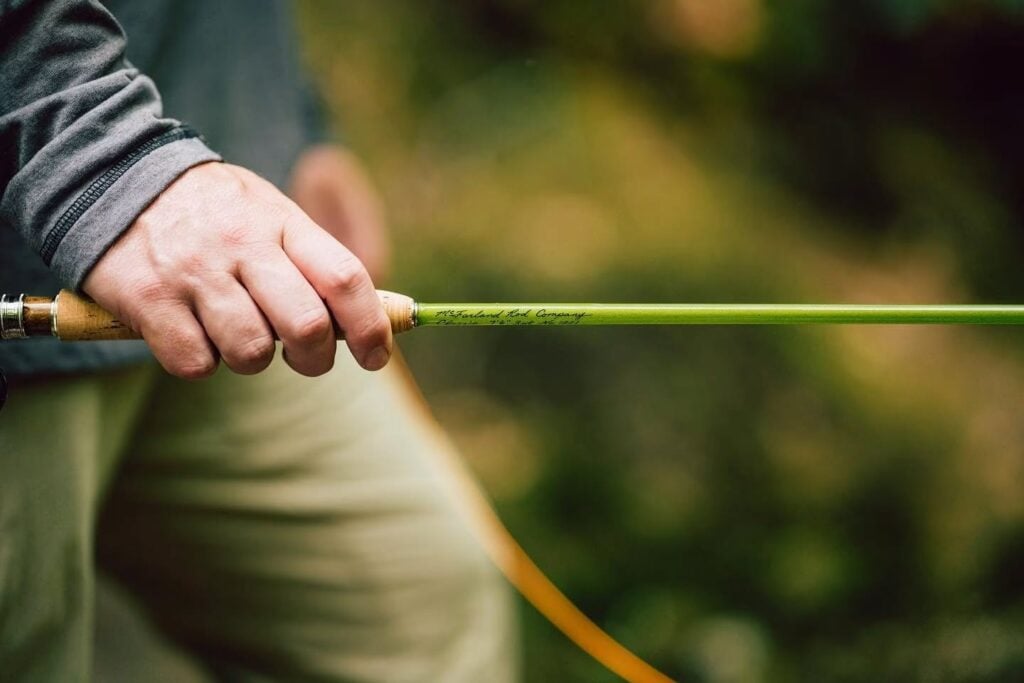
When sourcing blanks grew difficult, McFarland faced a choice: quit, switch entirely to bamboo, or step into full manufacturing. The turning point came when he negotiated an agreement to acquire former Diamondback rolling equipment from Cortland by building finished rods in exchange for the machinery. That deal secured the mandrels and rolling infrastructure needed to launch his own production line.
“The whole reason for me to get this equipment was to make my own stuff, make my own designs,” he says.
Fiberglass Fly Rods: Taper, Materials, and Design
Through years of testing materials and experimenting with fiberglass fly rods, McFarland developed a core principle: taper design dictates performance far more than raw materials alone. To test this theory early on, he turned a fly rod on a lathe out of birch molding strips inspired by John Betts. Despite its unorthodox look and integrated wooden handle, the rod cast a three-weight line cleanly even into a stiff breeze, proving that intelligent taper design can make an exceptional casting tool out of almost anything.
“I’m a firm believer that the taper of a rod is what makes a great rod,” McFarland says.
E-Glass vs. S-Glass in Practice
When choosing materials for his fiberglass fly rods, McFarland relies on woven E-glass for shorter rods, where added material mass helps load the blank at close range without requiring feet of heavy line past the tip. For longer builds, such as eight-and-a-half-foot rods, he leans toward unidirectional S-glass (used in his faster-action GTX series), which offers a crisp, lightweight response that feels familiar to anglers accustomed to graphite.
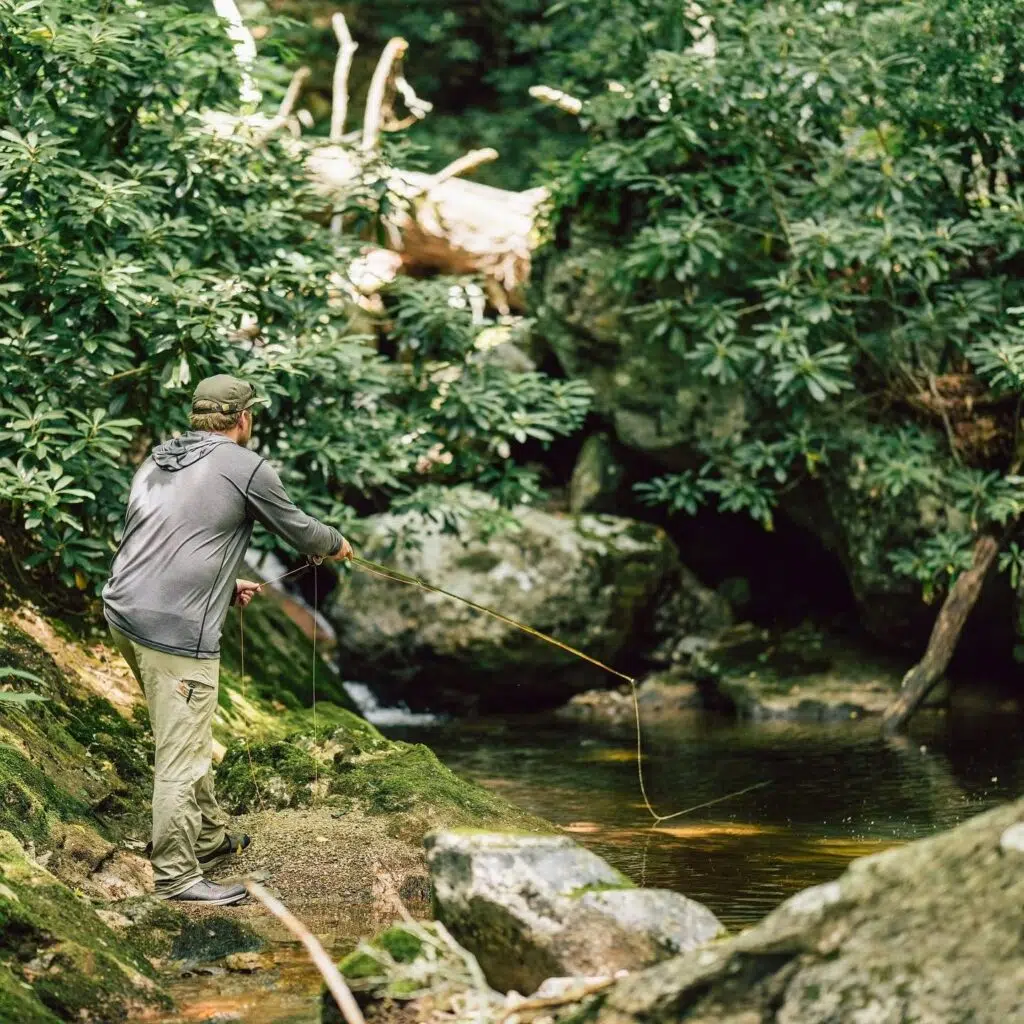
He resists simple material ratings, stressing that total rod weight and balance matter far more than catalog specs. On paper, fiberglass appears heavier than graphite, but a well-balanced build, like an eight-and-a-half-foot five-weight GTX coming in around 3.2 ounces, casts lightly in the hand during actual fishing conditions.
For custom rod builders, glass blanks present unique mechanical challenges, such as wide butt diameters that complicate standard reel seat fitting. To resolve this, McFarland often splices smaller-diameter blank extensions beneath the seat, offering clear instructions so builders can achieve seamless reel seat fits on thicker glass blanks.
Casting Dynamics and Big-Fish Applications
McFarland’s preference for deeper-loading actions in fiberglass fly rods also stems from competitive casting, where a rod that flexes into the butt section provides enhanced tactile feedback, improved directional control, and excellent accuracy. Rather than treating soft rods as weak, he designs tapers that engage the entire blank to generate power smoothly when paired with a deliberate stroke and late acceleration.
“I would love it if everybody started with a glass or a slow graphite,” he says. “You can feel what’s going on much easier.”
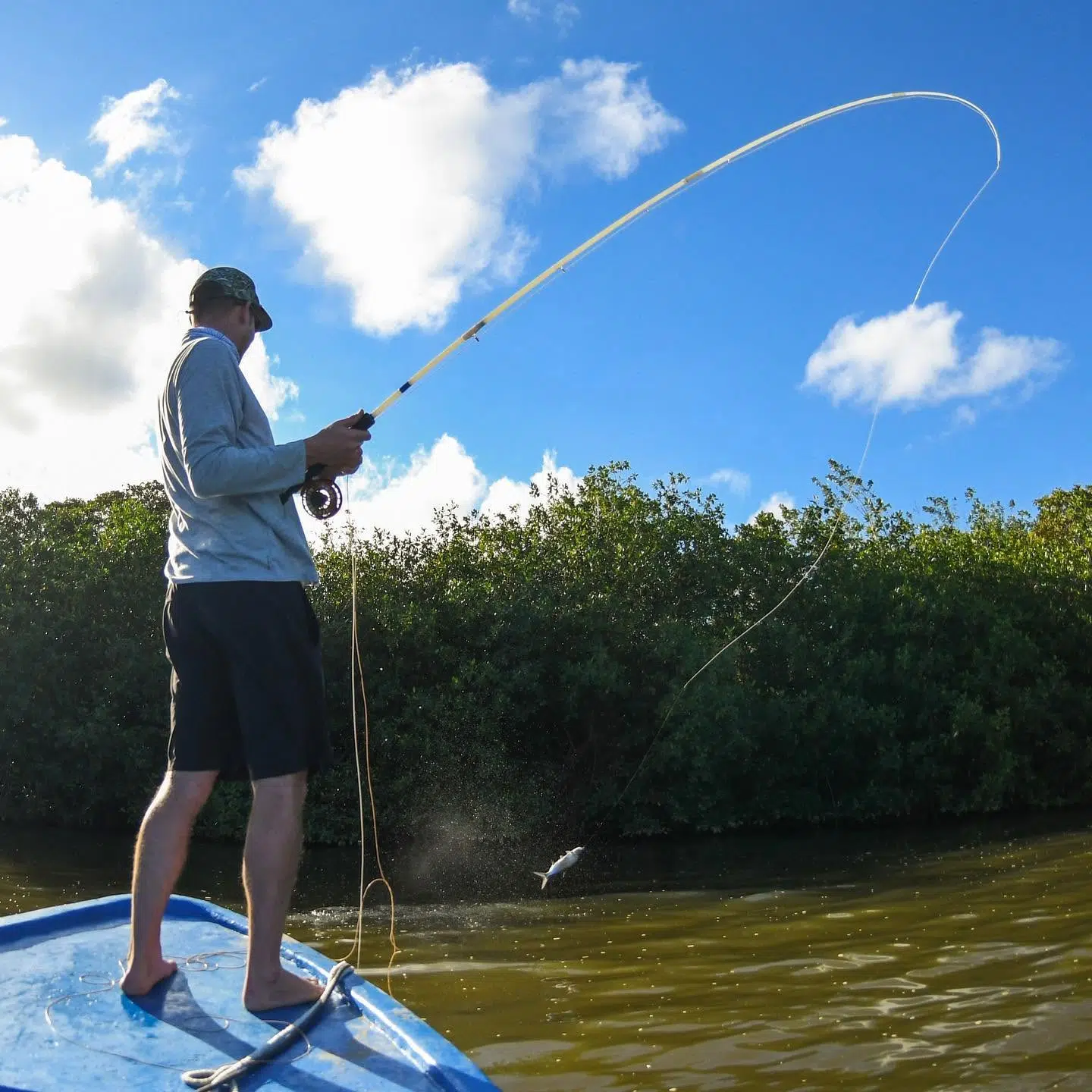
Beyond trout streams, McFarland sees huge potential for fiberglass in heavy-duty target fisheries like salmon, steelhead, and saltwater species due to the material’s structural resilience under heavy bend.
“It’s such a good material for big fish,” McFarland says.
Ultimately, rod selection comes down to matching the specific fishing environment, whether casting to close-range brook trout or targeting redfish on coastal flats. By evaluating tapers based on feel and distance needs rather than rigid specifications, anglers switching from stiff graphite often rediscover the tactile joy of casting a rod that fully engages on every throw.