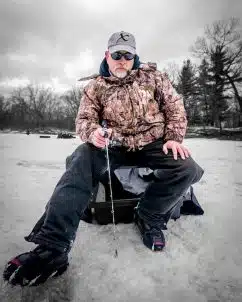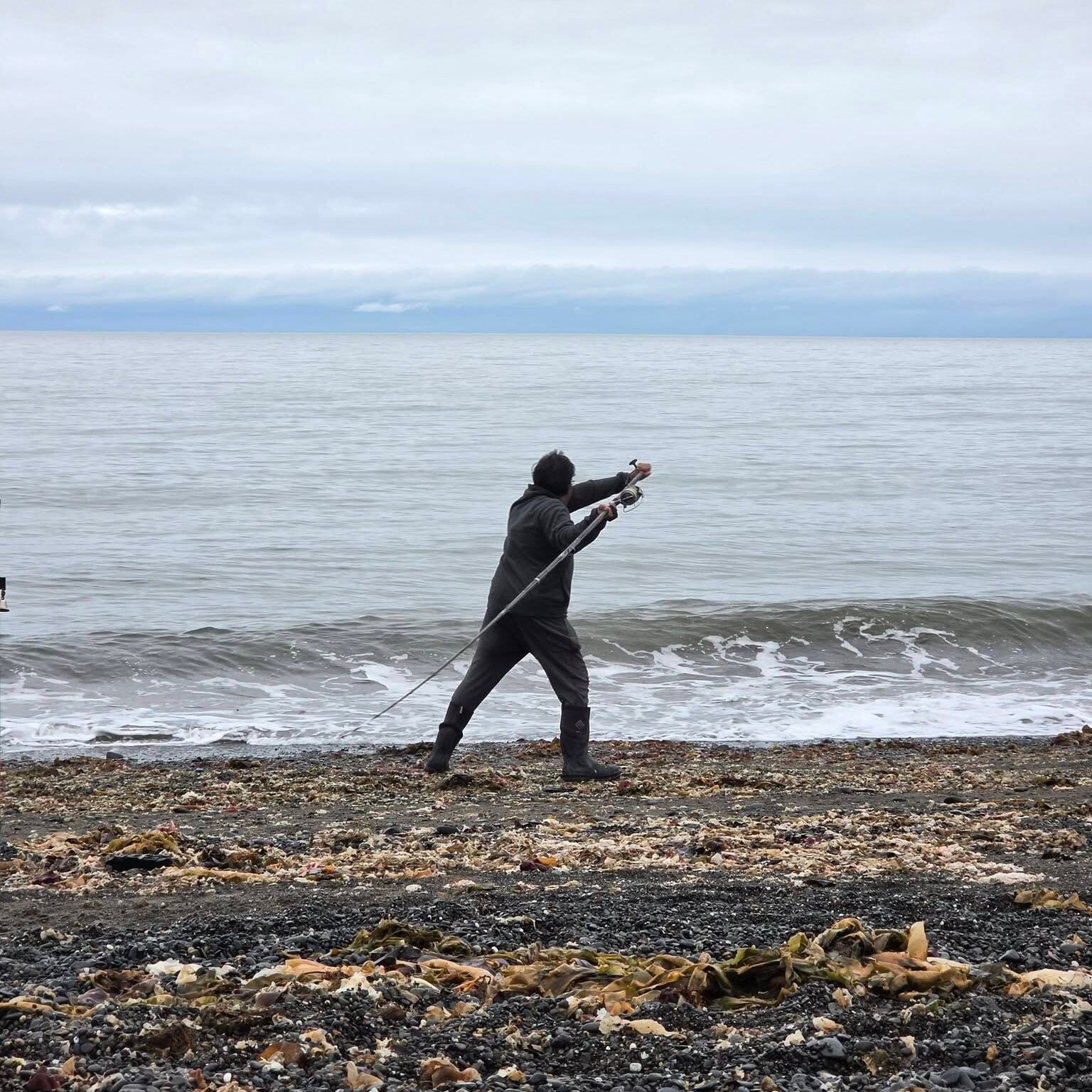
Tommy Farmer’s interest in distance casting began with a morning at Cape Hatteras that changed the direction of his life. On his first cast from Cape Point in October 1996, he caught a 45-inch red drum, but shortly after daylight, he watched North Carolina distance-casting champion Mike Langston send a cast hundreds of feet beyond his own. The fish was memorable, but that cast gave him something new to pursue. Farmer eventually became Langston’s friend, then his competitor, and years later surpassed his state record. Along the way, Farmer developed his own approach to designing surf casting rods for maximum distance, along with a teaching philosophy built around understanding how the caster, rod, reel, line, and payload work together.
His experience offers a useful starting point for anglers and builders trying to gain distance, since a longer rod or faster reel helps only when the entire outfit and the person casting it can use that capability.
Understand The Difference Between Tournament And Fishing Distance
Farmer reports a longest competition cast of 859.52 feet and a measured practice cast of 897 feet. Those numbers demonstrate what specialized equipment and highly developed technique can accomplish, but they do not describe throwing a chunk of bait into the surf. Tournament casts use aerodynamic sinkers without bait, specified line diameters, a firm casting surface, and often a tailwind, whereas fishing introduces a less cooperative payload, uneven footing, and wind blowing directly toward the beach.
“I would say an average cast for me on the beach is going to be between four and 500 feet with bait,” Farmer says. That distinction matters when designing surf casting rods for distance; the goal is an outfit that performs with the actual sinker, rig, and bait used on the water, because a setup built strictly for field numbers can become difficult to control under real fishing conditions.
Match Rod Length And Power To The Payload
For Farmer’s heavy drum fishing, the familiar starting point is “eight and bait” (an eight-ounce sinker plus a chunk of bait) and choosing a rod around the sinker alone leaves part of the casting load out of the calculation. While 13 feet has become the standard length in the Cape Hatteras drum fishery, rods around 12 feet were more common when he started, and his experience with longer tournament rods helped him bring additional length to the beach. “The additional length of a rod helps you in several ways,” he says. “It gives you a longer lever to cast. If you know how to use that lever, you can get more distance.”
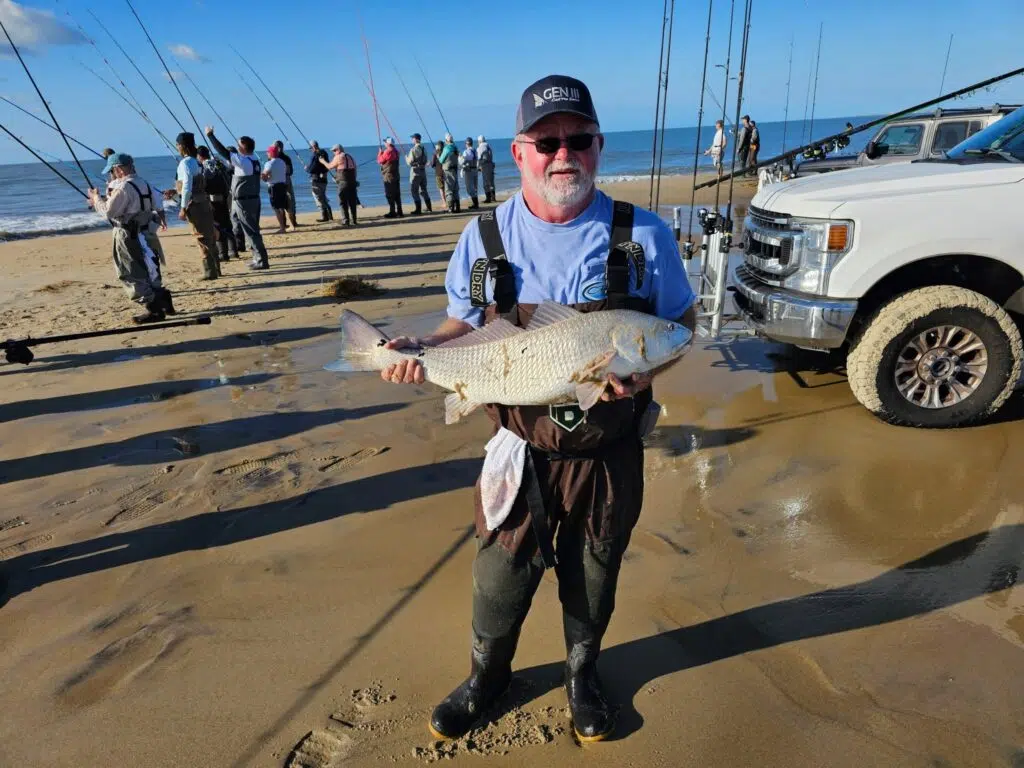
However, that leverage works only if the angler can load and accelerate the rod effectively. Farmer’s heavy 13-foot designs are powerful tools intended for substantial loads rating up to 12 ounces or more, so builders should establish the intended total casting weight first, rather than copying a heavy drum outfit for lighter fishing and ending up with more rod than the job requires.
Fit The Handle To The Angler
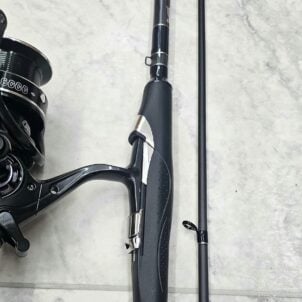
Handle length is one of Farmer’s strongest priorities when designing surf casting rods because a powerful blank with an undersized rear grip makes it difficult to generate the leverage needed for a heavy cast. To fit a heavy surf rod, he places the butt against the center of his chest and extends an arm straight forward along the blank, using that hand position as a starting point to locate the center of the reel seat. “If any of you guys are having a custom rod built to throw eight and bait, and the builder does not ask you about your handle length, then you need to find somebody else,” he says.
On his own heavy outfit, he places the reel-seat center approximately 32 to 32½ inches from the butt, though arm length, body proportions, and casting weight should determine the exact measurement, with handles shortened for lighter rigs. Farmer also separates tournament reel placement from fishing reel placement, noting that while low-mounted reels work for field casting, a higher, fixed position leaves usable butt length for fighting a fish once a large drum takes the bait.
Test The Guide Layout Before Finishing The Rod
Farmer’s guide layouts for surf casting rods developed through experimentation, moving taped-on guides on competitive outfits to see how small adjustments made a blank easier to load or allowed him to apply force more effectively. He describes the first guide above the reel as particularly influential, where shifting its distance changed how demanding or forgiving the rod felt during the cast. Rather than relying on rigid spacing formulas, builders should test the layout under load to ensure the line stays clear of the blank while preserving casting performance. Securing guides temporarily and testing the rod in a clear casting area with the intended reel and line allows for easy adjustments before wrapping and finishing, favoring direct comparisons over workbench predictions.
Build Around The Line And Shock Leader
The guide train on surf casting rods must also accommodate the line system, which for Farmer’s heavy conventional setup consists of 20- to 25-pound monofilament main line paired with a 50- to 60-pound monofilament shock leader. Unlike a short bite leader, the shock leader absorbs the stress of the cast and must wrap around the spool at least eight times when the rig is hanging in position.
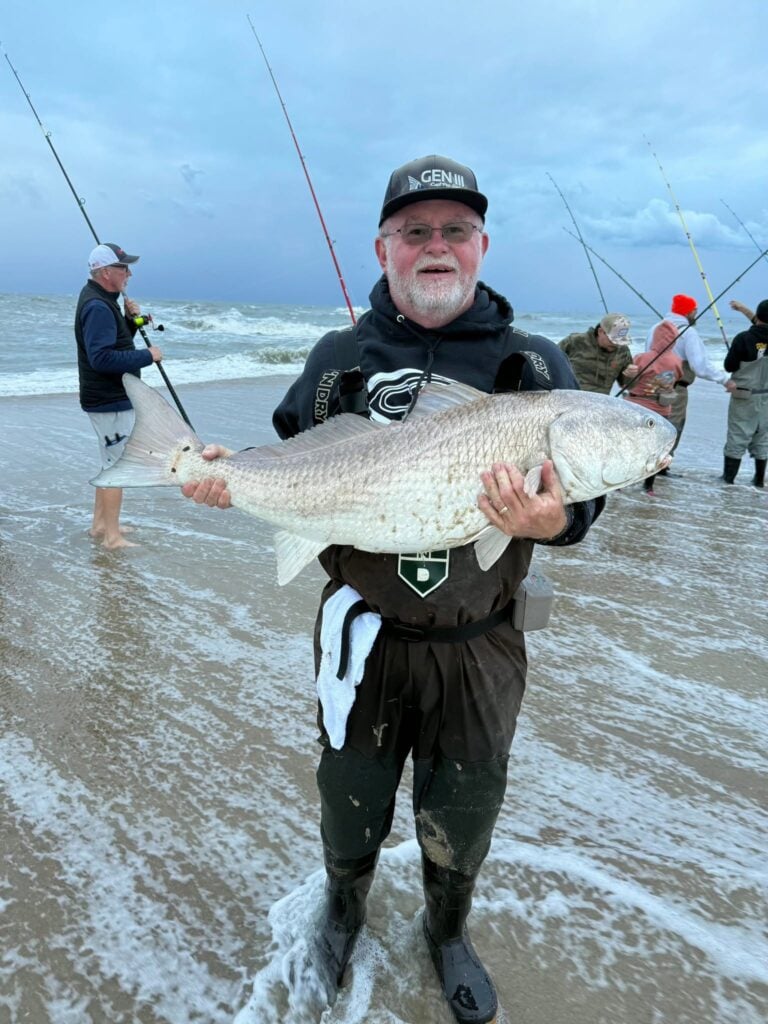
The connection knot must travel cleanly through the guides, leading Farmer to prioritize a compact knot that can be tied consistently in dark, cold, or wet conditions over one chosen purely for theoretical strength. “You’ve got to pick a knot that you can tie when it’s raining, when it’s cold,” he says, as an oversized connection can ruin a cast regardless of how well the blank suits the angler.
Keep The Rig Compact And The Reel Controllable
Farmer’s approach to terminal tackle and reel setup for surf casting rods focuses on control and streamlining. He uses a compact fish-finder rig with a short hook leader of roughly an inch to an inch and a half for distance drum fishing, keeping the bait close to the sinker to prevent the payload from separating and “helicoptering” in flight. Similarly, while his tournament reels are highly tuned, he deliberately keeps his fishing reels on the slower side. “My fishing reels I like on the slow side,” Farmer says, noting that predictable spool control helps the angler cast confidently in windy surf conditions without risking backlashes.
Improve Technique Before Adding More Power
Farmer’s teaching centers on footwork, body rotation, acceleration, and trajectory rather than raw force. He cautions anglers against running toward the water or hitting the rod hard early in the stroke, which causes spool slip and cuts off leverage. “Your body is the engine,” Farmer says. “Your body is the power plant.” He teaches casting through a broad arc—“Start slow, accelerate, finish hard and fast”—while aiming at a target roughly 45 degrees high to give the payload room to travel.
Let Practice Guide The Final Design
Farmer developed his own cast through years of deliberate practice and video review, often finding that what he felt during a throw differed from what the camera captured. That same practical approach helps evaluate surf casting rods, as a handle measurement or guide layout must feel right in execution. The best surf casting rods for distance are ultimately those an angler can load, control, and cast repeatedly under real fishing conditions by fitting the handle, matching the payload, testing the layout, and refining the technique.