Forward-facing sonar (FFS) has revolutionized the world of bass fishing, offering anglers a real-time underwater view and providing unprecedented insights into fish behavior. Few anglers have harnessed this technology as effectively as Easton Fothergill, the rising star of the 2025 Bassmaster Elite Series. A skilled rod builder and one of the top forward-facing sonar anglers globally, Fothergill recently shared his expertise on the Mastering Rod Building podcast. Here’s how to build the ultimate forward-facing sonar rod, drawing on his insights.
Why Forward-Facing Sonar Matters
Since first using forward-facing sonar in 2020, Fothergill has devoted countless hours to mastering this technology. Unlike traditional sonar, which provides static images of what’s beneath the boat, FFS delivers live, forward-facing views, helping anglers identify fish, structure, and bait in real-time. It’s a game-changer for targeting suspended or open-water fish, offering competitive anglers a strategic edge.
“Forward-facing sonar is just another tool,” Fothergill said. “It tells me if there’s bait in the area, if there’s good grass, or where the thickest, tallest grass is, which will likely hold bass. It’s not just about picking off individual fish—it’s about gathering information to position yourself for success.”
Designing the Perfect Forward-Facing Sonar Rod
When building a rod for forward-facing sonar fishing, customization is key. Every element, from rod length to power, should be tailored to match the specific presentation and hook type. According to Fothergill, the hook’s gauge—not size—is the most critical factor in rod selection.
1. Match Rod Power to Hook Gauge
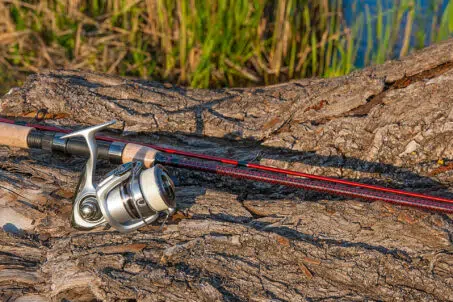
- Light Wire Hooks: Use a lighter rod, such as a 7’0″ medium light spinning rod, ideal for smaller baits like 3-inch minnows. This setup enhances casting accuracy and bait action.
- Medium Wire Hooks: Stick with a medium-power rod. This setup strikes a balance between sensitivity and strength, perfect for versatile presentations.
- Heavy Wire Hooks: Opt for a heavier rod, such as a 7’2″ to 7’3″ medium-heavy casting rod. This is crucial when using larger baits (5-8 inches) or targeting fish with jigs. The increased rod power ensures solid hook sets and control over larger fish.
2. Consider Rod Length for Casting Control
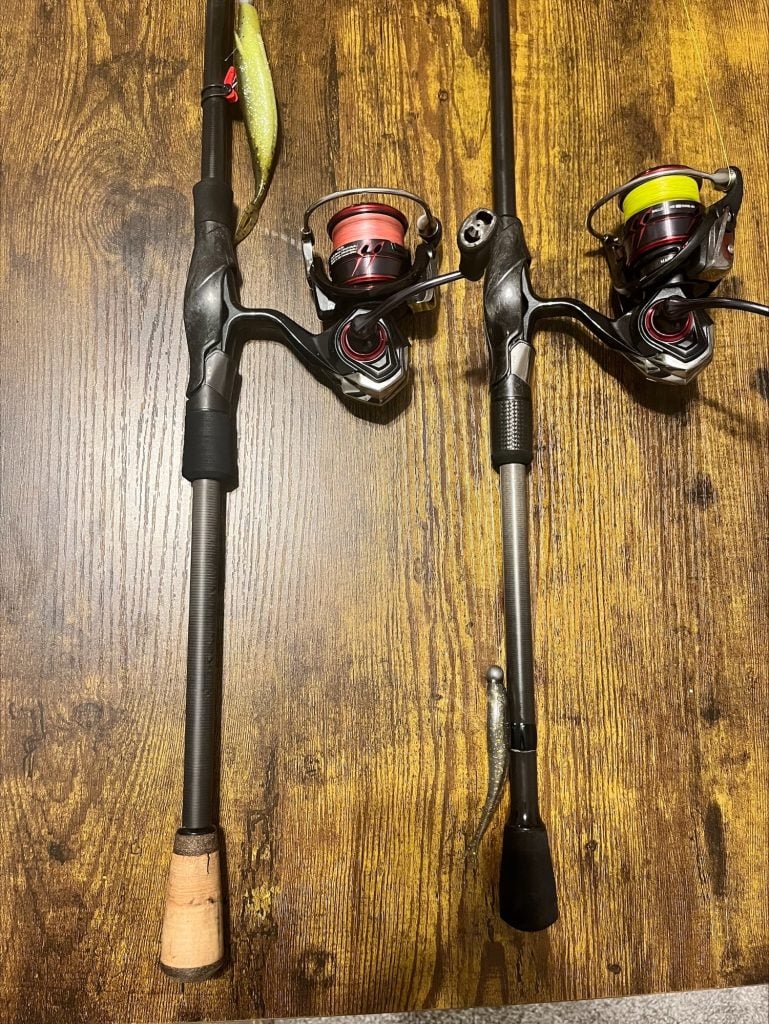
Fothergill recommends shorter rods for forward-facing sonar fishing, particularly when targeting specific fish. A shorter rod (around 7’0″) allows for controlled underhand casts, which are vital for accuracy, especially in windy conditions.
“For the minnow setup, I prefer a short handle,” he explained. “A long handle can interfere with the shaking action required for finesse presentations.”
3. Select the Right Reel and Line Setup
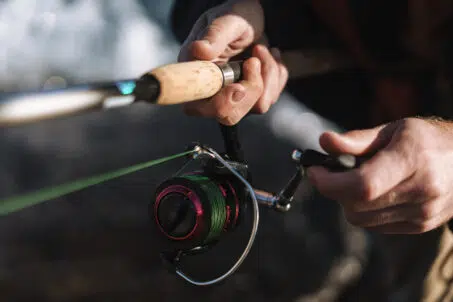
- Reel Size: A 2500-3000 size spinning with a smooth drag reel is ideal for most FFS applications. A quality drag is crucial when fighting fish on light line.
- Line Choice: Fothergill prefers 8-pound braid across all spinning setups, paired with a 12-pound fluorocarbon leader. The braid provides casting distance and sensitivity, while the short leader (about a foot long) enhances bait presentation without risking line twists.
- Knot Choice: He favors the Crazy Alberto knot over the FG knot, citing reliability and speed. “I’ve had the FG knot come unraveled at critical times. The Crazy Alberto knot takes half the time to tie and has never failed me,” he said.
Fishing Techniques with Forward-Facing Sonar
Fothergill emphasized that forward-facing sonar is not just for picking off offshore suspended fish individually. It is equally identifying areas with bait, finding structure, and when looking for healthy grass.:
- Winter: Focus on shad-imitating presentations using lighter setups and smaller baits.
- Summer: Transition to heavier gear and jigs, particularly when fish switch to crawfish patterns.
The ability to adapt techniques and tackle based on the sonar’s real-time data is a hallmark of Fothergill’s success.

The Future of Forward-Facing Sonar in Competitive Fishing
With evolving rules and debates about forward-facing sonar’s impact on fisheries, Fothergill acknowledges the need for a balanced approach. He supports diverse tournament schedules that feature both sonar-heavy and traditional fishing environments.
“Forward-facing sonar isn’t going away,” he noted. “But as long as tournament organizers create a balanced schedule, there will be opportunities for all types of anglers to succeed.”
Final Thoughts: Building Your Own Forward-Facing Sonar Rod
For custom rod builders and anglers looking to improve their forward-facing sonar game, the key takeaway is customization. Whether fine-tuning rod length and handle design or selecting the right line and reel, every detail matters.
By following Fothergill’s insights, you can build a rod that not only enhances your sonar fishing experience but also gives you a tactical edge on the water. As forward-facing sonar technology continues to evolve, the right rod setup will remain a crucial factor in turning information into bites—and bites into wins.