Choosing the right swordfish rod is crucial for a successful offshore fishing experience. Whether you’re considering building your own or buying from a reputable brand, understanding the unique demands of swordfishing can make all the difference. Swordfish rods are crafted to handle the intense pressures and specific challenges of deep-drop fishing, and knowing the key features of these rods can increase your chances of landing one of the ocean’s fiercest fighters. In this guide, we’ll explore essential aspects of designing swordfish rods, highlight key components, and share expert insights from Tyler Hass, co-founder of Check’n Bottom Outfitters.
What Makes Great Swordfish Rods?
Swordfish rods need a unique design to handle the extreme depths, strong currents, and powerful fish that define the sport. For Tyler Hass, a lifelong offshore angler and custom rod builder, every detail counts. “Our goal from day one was to build rods that could stand up to anything,” Tyler explains. “When you’re fishing for swordfish, you’re in extreme conditions and fighting some of the toughest fish out there. It has to be the absolute best quality.”

The foundation of a quality swordfish rod is the blank, or the rod’s backbone. Tyler recommends E-glass, a highly durable fiberglass material known for its resilience under heavy load. Unlike graphite, which is commonly used in other types of fishing rods for its sensitivity and lightness, E-glass offers unmatched strength and flexibility. “You want something that can take the abuse,” he notes. “E-glass can handle a lot more than other materials, and in swordfishing, that’s crucial.”
Key Components of a Swordfish Rod Setup
The Right Butt Section: Bent or Adjustable?
Swordfish rods typically feature bent butts, which provide the leverage needed to haul in large fish from deep water. According to Tyler, having a flexible rod butt can make a huge difference. “We use the Winthrop adjustable butts because they allow you to change angles based on the current and reel size,” he says. “That flexibility can be a game-changer when you’re fighting a fish 1,500 feet down.” For electric reels or larger setups, Tyler recommends the Winthrop T10X adjustable butt, which offers multiple positions to dial in the ideal fighting angle.
Guide Selection: Rollers or Rings?
For guide selection, Tyler advocates a mixed approach. “The tip is the only part of a swordfish rod that should be a roller,” he says, emphasizing the use of high-quality roller tips like those from Winthrop. “With all the line going in and out, that roller reduces friction and extends the life of your line. But for the rest of the rod, we use high-end ring guides because they’re lighter and don’t require as much maintenance.”

Check’n Bottom Outfitters often uses Fuji HB guides with silicon carbide (SiC) inserts and Batson Alps HXN guides with zirconium rings. These guides offer durability without the added maintenance required by rollers on every guide. “When you’re in extreme depths with heavy drag, every component has to perform at its peak,” Tyler explains. “Quality is everything.”
Determining the Best Rod Length for Swordfishing
Rod length varies based on location and conditions. Tyler notes that anglers in areas with fast currents, such as Florida’s Gulf Stream, often prefer rods over 60 inches. “A longer rod keeps the line away from the boat and makes it easier to manage scope in strong currents,” he says. In Texas and the Gulf Coast, shorter rods between 54 and 58 inches are common, providing enough reach without sacrificing control. “The Gulf’s currents aren’t as intense, so you can go shorter. It’s all about balancing reach and control.”
Choosing the Right Rod Action
A well-balanced swordfish rod has a sensitive tip that transitions into a powerful backbone, allowing anglers to detect the light “whacks” of swordfish when they strike yet still providing the strength to fight. “Swordfish have a delicate bite but fight like no other once hooked,” Tyler says. “Our rods have a lighter tip for detecting bites, but that tip shuts off quickly into a strong backbone to handle those intense, hour-long fights.”
Selecting the Ideal Power for Swordfish Rods
The power of the rod should match the weight and current conditions you’ll encounter.
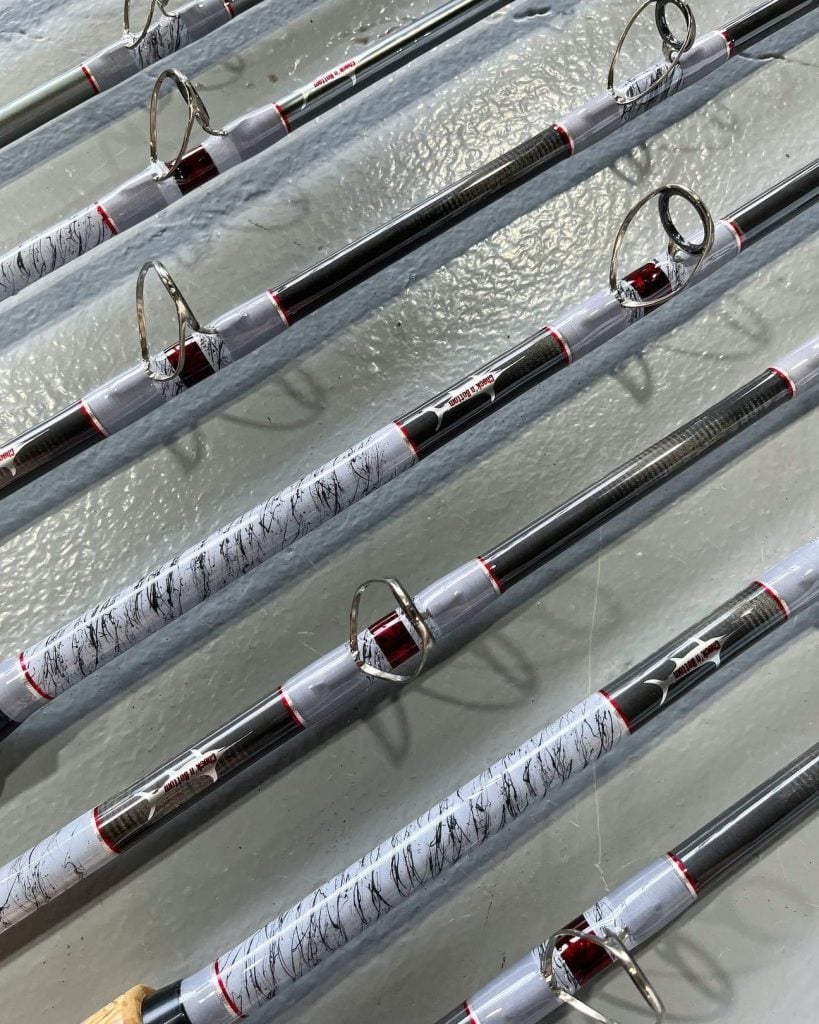
Tyler often uses rods capable of handling 3-6 pounds of lead in the Gulf, while Florida waters may require up to 15 pounds of lead to counter the Gulf Stream’s powerful currents. “You need a rod with enough backbone to handle heavy weights,” he explains, “but it has to be sensitive enough to let you know when a swordfish has struck. Finding that balance is key.”
Specialized Configurations: Buoy vs. Deep-Drop Rods
When targeting swordfish, many anglers use both deep-drop and buoy (or float) rods. The deep-drop rod is deployed straight down beneath the boat, while the buoy rod is set farther back, providing an additional bait at a different depth. “The buoy rod gives you more coverage, and in some cases, you’ll get bites on the buoy before the deep-drop,” Tyler explains. “You’re basically bobber fishing in 1,500 feet of water.”
Critical Features: Grips, Reel Seats, and Durability
While the blank and guides are crucial to a swordfish rod’s performance, the grip and reel seat shouldn’t be overlooked. Checkin’ Bottom uses EVA foam grips covered with X-flock for maximum durability. “Swordfish rods take a beating,” Tyler notes. “We use X-flock because it’s easy to replace if it wears down. It holds up well in harsh conditions, especially for charter captains who put these rods through the wringer.”

Cork grips are another popular choice, offering a classic look and comfortable feel. For long-lasting quality, Tyler emphasizes maintenance, noting that cork can be sanded and sealed as needed. “If you want a grip that will age well and still look good years later, go for cork and keep it maintained,” he advises.
Why Quality Matters
For Tyler, producing high-quality rods is about more than durability; it’s about creating a reliable, enjoyable fishing experience. “When you’re out there fighting a fish for hours, you want to know your rod can handle it,” he says. Check’n Bottom Outfitters takes pride in using the best components available, following a philosophy similar to that of premium brands like YETI. “We don’t build a million rods, but every rod we build is designed to be the best on the water.”
Final Thoughts on Choosing the Right Swordfish Rod
In swordfishing, every component counts. Choosing swordfish rods built for extreme conditions is essential for success. Tyler’s approach to rod-building emphasizes quality, durability, and attention to detail—key elements that contribute to the overall fishing experience. “You’re out there hunting for the fish of a lifetime,” he says. “With a quality rod, you’re not only giving yourself a better shot at landing it; you’re also making the whole experience more enjoyable.”
Whether you’re building your own or investing in a top-notch custom rod, understanding the components that make a great swordfish rod is invaluable. With a balanced action, reliable power, and premium materials, the right rod can turn a challenging fight into a rewarding catch.