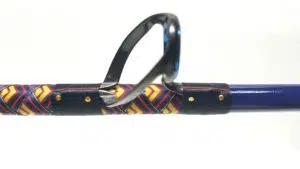
Fishing rod weaving is a crucial aspect of custom rod building, adding both aesthetic value and functionality to your gear. With intricate patterns and designs, rod weaving transforms a plain rod into a personalized masterpiece. Few people understand this craft better than Jim Upton, also known as “The Dragon Master.” Upton, a legend in custom rod building since the 1970s, is not only the author of A Guide to Thread Weaving for the Custom Rod Builder but also the inventor of the Wonder Weaver, a groundbreaking tool for creating complex weaves. In this guide, we’ll explore Upton’s journey into fishing rod weaving and draw on his insights for beginners who want to master this art.

Getting Started with Fishing Rod Weaving
Jim Upton’s journey into fishing rod weaving began out of necessity. An avid marlin fisherman on the West Coast, Jim initially started building and repairing rods because he found it more affordable than buying them. His experience as a light-line marlin fisherman taught him the value of rods that bent with ease, distributing pressure without breaking fragile lines, especially when his wife used two-pound test lines to fish Bonita.
Weaving Materials and Tools
For beginners, understanding the basics of weaving materials is essential. The primary tool for rod weaving is thread, which Jim explains needs to be durable and carefully chosen based on the design’s complexity. The Wonder Weaver, Upton’s invention, revolutionized weaving by enabling 360-degree patterns, allowing you to move beyond the traditional flat looms. This tool is still the go-to for serious rod weavers and is essential for complex designs that wrap fully around the rod.

Choosing the Right Weaving Thread
Selecting the appropriate thread can make or break your weave. Upton stresses the importance of paying attention to tension and thread size, which will impact the durability and appearance of your pattern. Beginners should start with simpler patterns to understand how different threads behave under tension before advancing to more intricate designs.
Essential Weaving Techniques for Beginners
Jim Upton’s early experiments with basic rod weaving techniques involved using books by pioneers like Dale Clemens. However, Upton became bored with simpler cross wraps and set out to challenge himself with more complex designs, which led to his creation of the 360-degree dragon weave that earned him his nickname.
Step-by-Step Guide to Basic Techniques
Beginners should first focus on mastering straightforward designs like cross wraps. These provide a strong foundation and help develop hand-eye coordination, thread tension control, and attention to symmetry. Upton also advises using a loom for single-axis weaves, which are easier to execute and great for learning the fundamentals.

Avoiding Common Mistakes
One of the most common mistakes is not paying enough attention to thread placement. Misalignment, especially in multiple-axis weaves, can ruin the entire pattern. Upton recommends a consistent method for moving threads and always checking for errors before completing a section of the weave.
Troubleshooting Tips
Upton’s advice for troubleshooting is to remain patient. It can take hours to correct a mistake, but the key is staying calm and methodically reworking the problematic section. “Pay attention to the thread tension,” Upton emphasizes, noting that loose or too-tight threads are the culprits in most weaving issues.
Choosing the Right Patterns and Designs
Selecting the right pattern is key to enhancing the aesthetics of your rod. Upton’s fascination with dragons began with a challenge: creating a dragon weave that wrapped entirely around a rod. This design took him over a year to perfect and led to the creation of the Wonder Weaver.
Complementing Your Rod’s Aesthetics
While Upton is most known for his intricate dragon designs, he emphasizes that you don’t need to start with complex patterns. Beginners should choose designs that complement their rod’s aesthetics, such as simple geometric shapes or nature-inspired elements. Over time, you can advance to more sophisticated weaves like Upton’s iconic dragons.

Customization Options
Upton’s weaves are all about personalization. Whether it’s using specific color threads or incorporating unique motifs like his famous “baby dragon” design, weaving offers limitless possibilities for customization. The Wonder Weaver allows for more advanced patterns by enabling multi-axis weaves, giving rod builders the freedom to get creative.
Advanced Techniques and Tips
As you progress from basic to advanced weaving techniques, the complexity of your designs will grow. Jim Upton’s journey into advanced weaving began when he decided to go beyond simple cross wraps and tackled complex patterns that wrapped 360 degrees around the rod. His invention of the Wonder Weaver made these intricate designs possible, allowing weavers to manage multiple threads and axes at once.
Incorporating Decorative Elements
Advanced weaves often include intricate details like varying thread colors, texture, and even 3D effects. Upton recommends experimenting with different types of threads and even using embroidery programs like PC Stitch to design custom patterns. These techniques help you create more visually striking designs.

Continuous Improvement
To continuously improve your skills, Upton suggests taking on more challenging projects and always being open to learning. “Once you understand the concept of moving a thread from right to left,” says Upton, “the process becomes easier”. Regular practice is crucial for refining your technique and developing your personal style.
Final Thoughts
Fishing rod weaving is an art form that combines patience, creativity, and technical skill. As a beginner, mastering the basics of thread selection and simple weaves will set a strong foundation. From there, the possibilities for personalization are endless, especially with advanced tools like the Wonder Weaver. Take inspiration from Jim Upton, whose innovative spirit led him to revolutionize the art of rod weaving, and start your own journey into this fascinating craft.