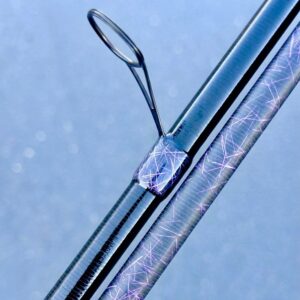
For a long time, rod builders treated epoxy finish as the last step in the process rather than one of the most important. Wrap the guides, mix the finish, get it on cleanly, chase the bubbles, and hope the final result does justice to the work underneath. But the truth is, the finish is not just a protective coating. It is one of the clearest indicators of how well a rod was built.
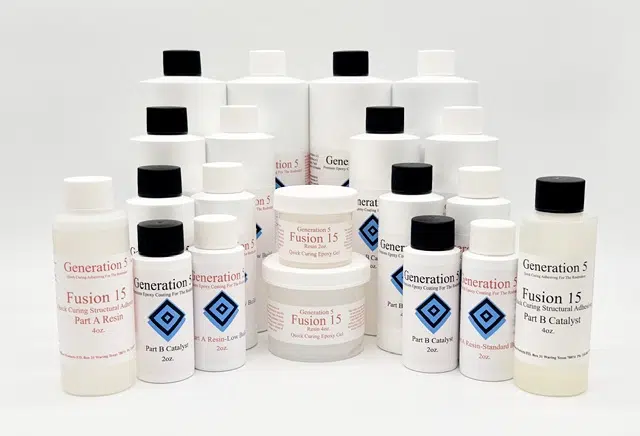
That is why the conversation around fishing rod epoxy resin has changed. Builders expect more now. They want a finish that levels beautifully, releases bubbles without a fight, keeps wraps looking clean, and helps the finished rod look every bit as refined as the craftsmanship that went into it. In other words, fishing rod epoxy resin has evolved, and it has evolved in the direction that matters most to rod builders: better real-world performance.
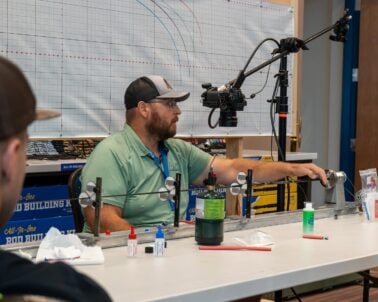
Andy Dear made that point clearly when discussing the latest changes in rod finish chemistry. He was not interested in changing a formula just to make something new. As he put it, “there were some things that I was not willing to budge on,” especially the bubble release and air release performance that had already made the finish stand out. He said, “we wanted to make sure that whatever change we made, resulted in something that had very similar performance to that.”
That mindset is what makes this topic worth paying attention to. The best improvements in rod building are not gimmicks. They solve problems builders actually have.
Why epoxy matters more than many builders realize
A guide wrap finish has to do a lot more than look glossy. It has to seal thread, protect the wrap, level evenly, resist breakdown, and apply in a way that does not make the builder fight the product the whole time. If it traps bubbles around guide feet, cures unpredictably, or makes the builder overwork the wrap just to get an acceptable result, then it is not doing its job nearly as well as it should.
That is one reason epoxy remains one of the most important materials in the shop. It is the point where appearance and function meet. A rod can have a great blank, high-end guides, excellent handle work, and clean layout decisions, but if the finish looks uneven or cloudy or overly heavy, that is what the eye sees first.
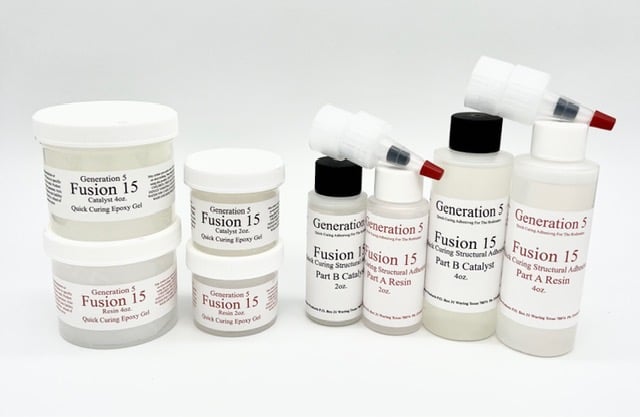
Modern rod finish has moved beyond the idea that builders should simply accept those tradeoffs. Andy explained that some of the chemistry used in prior systems delivered performance characteristics that were more valuable in aerospace-style applications than in rod building. In his words, some of that higher-end performance was “major overkill” for what rod builders really need. That is a useful reminder. In rod building, better is not about more exotic chemistry just for the sake of it. Better is about chemistry that helps wraps look better, apply easier, and hold up longer in actual fishing use.
Bubble release is still one of the biggest separators
If you ask experienced builders what they notice first in a finish, a lot of them will talk about bubbles. Not just bubbles in the cup, but the air that wants to hang around guide feet, tunnels, and wrap edges. That is where a finish proves itself.
Andy said the original air release performance was one of the defining qualities he wanted to preserve, calling it what “really sort of set it apart from everything else.” Even after reformulating, he said the air release protocol had only been modified carefully, and feedback suggested the bubble release might be even better.
That matches what builders actually notice on the wrapper. When a finish naturally releases air and settles into place, it feels like the product is helping instead of fighting back. Bill described it as a finish that seems to “fill in and push out those air bubbles,” especially around guide feet, without forcing the builder to babysit every wrap. That matters because every extra correction introduces another chance to overheat the finish, overwork the surface, or create a new imperfection while trying to fix a small one.
In practical terms, better bubble release means cleaner wraps, less unnecessary heat, and a more repeatable result.
Clarity matters, but color performance matters too
Rod builders talk a lot about clarity, and for good reason. Nobody wants a finish that dulls a wrap or muddies lighter thread colors. But clarity alone is not the whole story. One of the more interesting points Andy made is that some of the visual improvement builders see is not just about how clear the finish is. It is also about what the chemistry is doing optically.
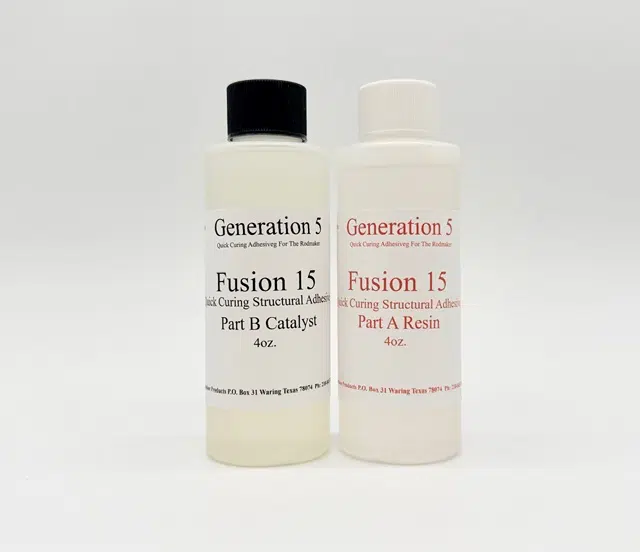
He explained that the blue component in the resin is an optical brightener, not just a visual mixing aid. As he described it, optical brighteners absorb ultraviolet light and re-emit it as visible blue light, which offsets natural yellowing and makes materials appear whiter and brighter. He summed up the practical effect in rod-building terms: “what we’re talking about here is making white thread look whiter and light color threads look lighter.”
That is a meaningful improvement for anyone doing white wraps, pale trim bands, or lighter decorative work where even a slight dulling effect shows up fast. It also helps explain why some finishes make thread colors seem to pop more than others. The result is not a loud or artificial effect. It is subtle. But subtle is exactly what you want on a custom rod. You want the threadwork to look cleaner, brighter, and more alive without the finish itself calling attention to what it is doing.
Modern finish is about balancing multiple properties
One of the smartest takeaways from Andy’s discussion is that no finish should be judged on one characteristic alone. A finish can be ultra-clear and still be frustrating to apply. It can cure quickly but level poorly. It can be thin enough to wet out thread beautifully but make builders fight runs and sagging. Great performance comes from the balance.
That is why he kept coming back to the broader picture: bubble release, pot life, leveling, odor, clarity, and ease of use all matter together. If the formula only excels in one area while forcing compromises everywhere else, builders will feel it immediately.
He also made an important point about usability for newer builders. If a product is too fussy, too unforgiving, or too dependent on perfect technique, it creates frustration instead of momentum. In effect, a good finish should help a beginner succeed while still giving experienced builders the performance they want. That may be one of the biggest ways epoxy has evolved. It is no longer just about surviving the finishing process. It is about making high-quality finishing easier to achieve.
Better leveling changes the look of the finished rod
A finish can look great going on and still disappoint after it starts to turn. Leveling is what determines whether the rod ends up looking clean and intentional or uneven and overworked.
Andy said one of the surprises in the reformulated finish was just how well it leveled. He described it by saying, “this finish seems to level unbelievably well,” and noted that feedback from builders kept pointing to the same thing.
That kind of performance is not flashy, but it shows up where it matters most. Better leveling means flatter, smoother, more uniform wraps. It means less excess build where you do not want it and fewer areas that require unnecessary cleanup. On minimalist rods, it helps the wraps look sleek and refined. On decorative builds, it helps preserve the detail underneath instead of burying it under an uneven top layer.
Odor and working feel matter too
There is another kind of performance that often gets overlooked until you spend enough time in a rod shop: how the finish behaves while you are using it. That includes odor, feel, and working rhythm.
Andy was especially direct on the smell issue. Referring to the new version, he said, “there is zero smell to this at all,” adding that there was “no odor, not just mild, not little, like nothing.”
That may not show up in a glamour shot of a finished rod, but it matters. Many builders work indoors, in garages, spare rooms, or smaller dedicated shops. A low-odor finish changes the experience of building, especially over long sessions. It is another example of what real product evolution looks like. The finish is not only protecting the wrap better. It is also becoming easier and more pleasant to use.
Fishing rod epoxy resin evolved because builders demanded more
The best way to understand the phrase “Fishing Rod Epoxy Resin Evolved” is not as a marketing claim, but as a practical observation. Builders have learned over the years what they actually need from a finish. They need one that releases bubbles naturally, levels smoothly, keeps lighter threads looking crisp, cures in a useful window, and does all of that without making them fight the process.
Andy made it clear he was not trying to make something radically different. He was trying to keep the performance that mattered most while improving sourcing, consistency, and the overall builder experience. That is exactly what meaningful evolution looks like in rod building. It is not change for its own sake. It is refinement that makes the work better.
And that is why epoxy finish deserves more respect than it often gets. It is not just the last coat on the rod. It is one of the final places where craftsmanship either gets elevated or exposed. When the finish is right, everything underneath it gets to shine. When it is better than what builders used to accept, the entire rod benefits.
Fishing rod epoxy resin evolved because rod building did. Builders expect more now, and the best finishes are finally being designed to meet those expectations.