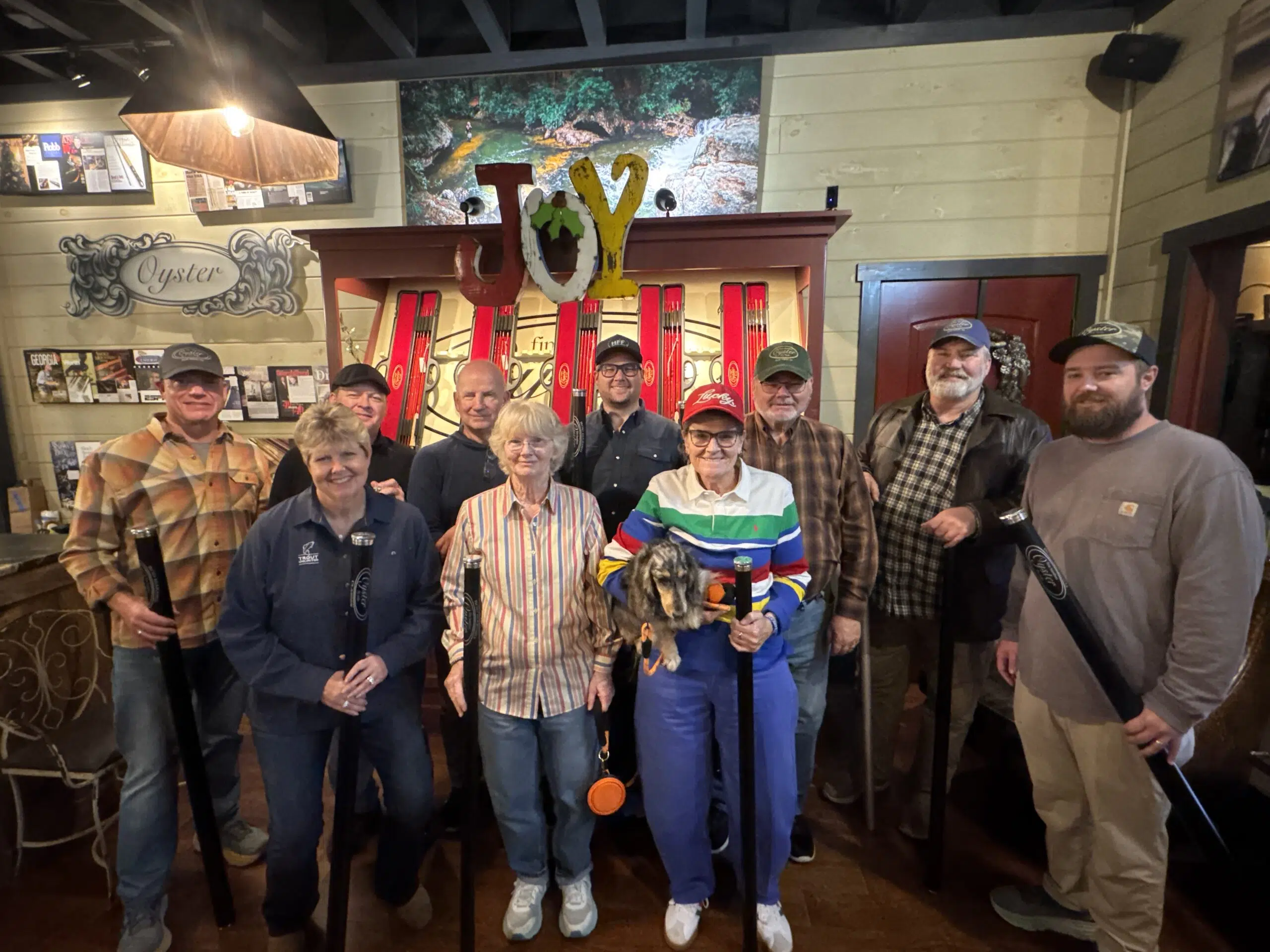
For a lot of rod builders, bamboo sits in a special category. It feels historic, technical, beautiful, and maybe just a little intimidating. That is part of what makes the Oyster Bamboo Rod Building Class so compelling. People sign up because they want to understand the process, build a rod with their own hands, and finally see what separates a bamboo fly rod from everything else they have built or fished before.
What becomes clear once the class starts, though, is that the experience is bigger than the rod.
After attending the class in Blue Ridge, Georgia, Bill Falconer came away impressed not only by the craftsmanship involved, but by how refined the entire operation has become. “The class is awesome, man,” he said. “It was so unbelievable.” That reaction was not just about the final product. It was about the way the week ran from start to finish, the way the instruction was delivered, and the fact that people with very different backgrounds all walked out with beautiful, functional bamboo fly rods.
The First Big Lesson Was the Teaching
One of the strongest takeaways from the class had nothing to do with splitting cane or planing strips. It had to do with instruction.
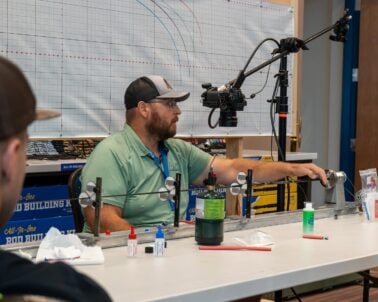
Falconer repeatedly came back to how well organized the class was, from the benches and tools to the pacing of each day. “It’s so incredibly well orchestrated and polished,” he said. “You are personally a very, very good instructor. And your team, Riley and Jacob… it’s expert instruction, man.”
That was not casual praise. Falconer and the others in his group had plenty of teaching experience of their own, especially in conventional rod building and repair. What stood out to them was how much Oyster and his team could communicate with so few wasted words. The process was broken into manageable steps, each one demonstrated clearly, explained simply, and then reinforced with hands-on help.
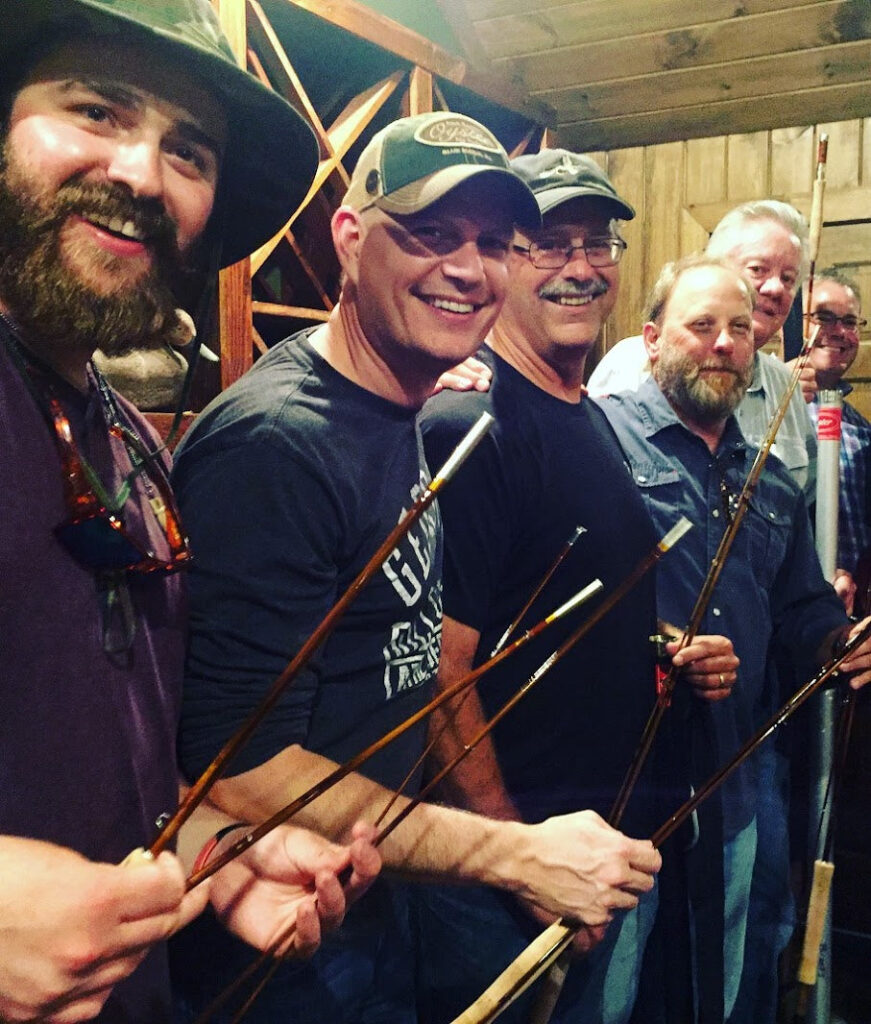
Oyster explained that approach in a way that sums up the whole philosophy of the class. “We could talk about these things all day,” he said. “But there we find that people can actually follow what you’re saying for about 25 seconds before they start to look around the room.” So instead of overwhelming students with theory, the class focuses on the exact information needed for the step at hand. “We try not to look at the big picture too much,” Oyster said. “We try to eat that elephant one step at a time.”
That structure matters because bamboo rod building is technical. It is easy to imagine the process as something reserved only for people with years of experience, or a naturally gifted hand for fine work. The class makes the opposite case. With the right instruction and guardrails, people can do much more than they think.
Everybody Really Does Build Their Own Rod
That may be the most surprising part of the class to anyone looking in from the outside.
Students are not showing up to watch a master builder do most of the work while they handle a few symbolic tasks. They are building their own rods. They do the steps. They make the choices. They work through the process with close guidance, but the rod that leaves with them is theirs in every meaningful sense.
Falconer made a point of emphasizing that. “You are building your own rod. You are doing every step,” he said. “This isn’t Bill builds it for you, and you just sort of watch and touch and sign.” For him, one of the most impressive things about the week was seeing people with completely different levels of experience all succeed. Some had built rods before. Some were anglers but had never built one. Some had never built a rod or even fly fished before. Still, everyone finished with “an actual beautiful, functional rod.”
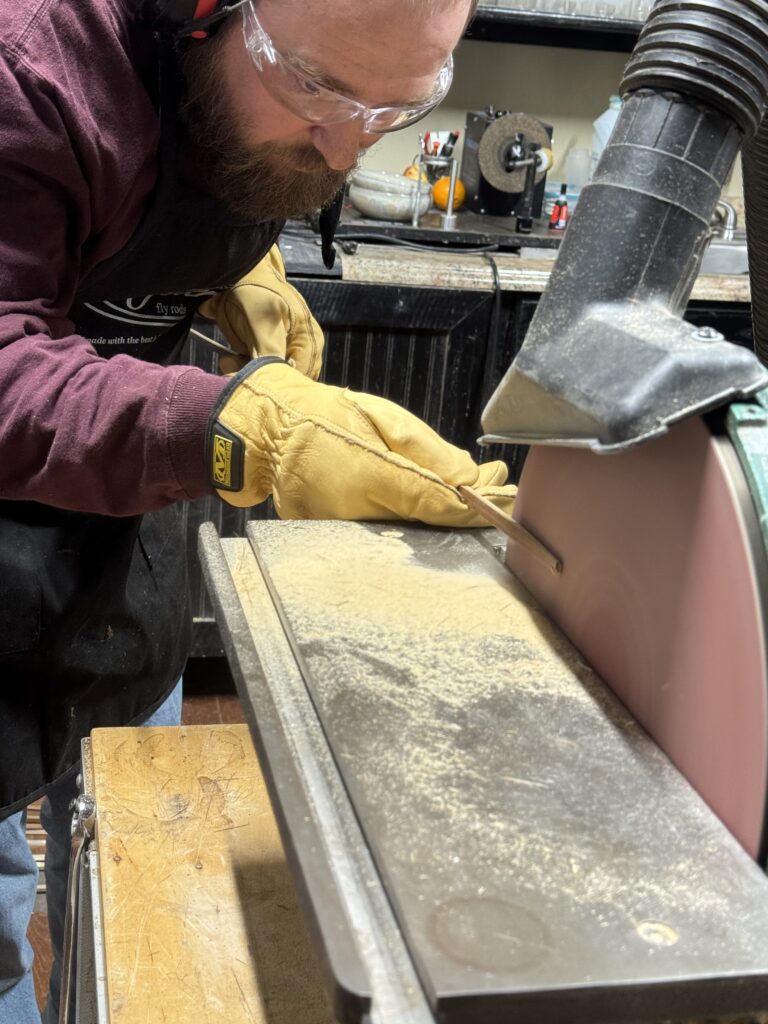
That says as much about the teaching as it does about the students. Oyster knows every class is going to include a mix of skill levels, personalities, and learning styles. The system has been refined over years to meet people where they are and get them to the finish line.
The Class Experience Is Part of Why People Come Back
A bamboo rod is the obvious result of the class, but it is not the only one.
Falconer expected to learn a lot. He expected to leave with a rod. What he did not expect was how much the class itself would feel like a shared experience. “I never expected to make these fast friends for life with the people that were in our class,” he said.
That became one of the biggest themes of the conversation. People showed up from different backgrounds, with different experience levels, and for different reasons. Some were serious rod builders. Others were simply curious. A few were starting almost from scratch. Yet within a day or two, the group dynamic had changed. Everyone had a common goal, everyone was learning the same process, and everyone was helping each other along the way.
Oyster was not surprised by that outcome. In fact, he sees it as one of the defining parts of the experience. “The people that come here the first time, they usually come for different reasons than the reason they come back,” he said. “They come the first time about the rod, the technicality of it, the craftsmanship of it, the project, the challenge of it. But the reality is, the reason we have people that come 10, 20, 30 times over and over and over again, there’s really not about the rod so much as the experience of the week.”
That helps explain why so many students rebook before they ever leave the shop. Falconer and his group did exactly that. “We’re already signed up for a 2027 class,” he said. “We signed up for another class before we left.”
Customization Is a Bigger Part of the Week Than You Might Expect
Another lesson from the class is that the end result is not some generic bamboo rod coming off a template. Each student is building a rod that is deeply personal.
There are decisions to make throughout the week, from rod model and hardware to grip shape, wood insert, flaming level, and engraving. Oyster and his team do not pressure anyone into upgrades, but they make the options available and let students choose what matters to them.
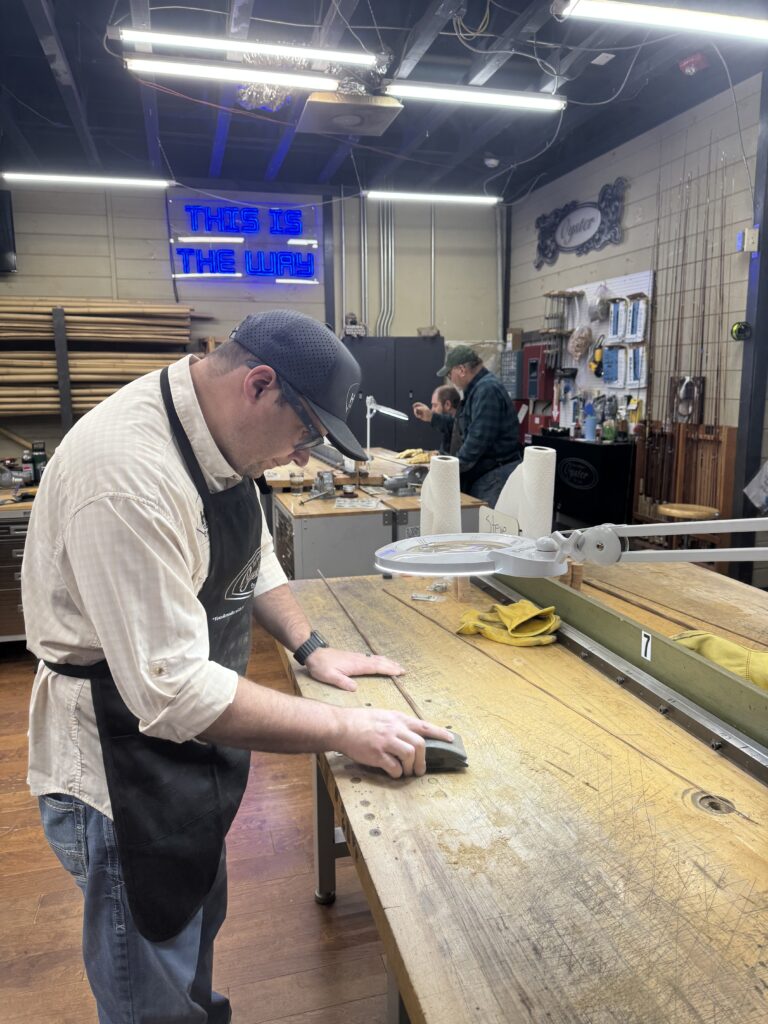
Falconer appreciated the way that process was handled. “There is no hard sell, there is no pressure,” he said. “There is just like, hey, here’s a high level overview what the schedule is going to look like. You’re going to have a few decision points.”
That level of personalization becomes even more meaningful once students see the engraving work up close. Oyster and Paxton engrave by hand, line by line, and students can watch it happen in the shop. Falconer was especially struck by how detailed and emotional those pieces could become. Describing one engraved portrait of a customer’s dog, he said, “The likeness is uncanny… she was like, in tears. She was like, it’s perfect.”
By the end of their class, every single student had opted for engraving. That says something not just about the quality of the work, but about how connected people feel to the rods they are making.
Bamboo Stops Feeling Fragile Once You Understand It
A lot of anglers still think of bamboo as delicate, old-fashioned, or more decorative than functional. The class pushes back on that idea in a very direct way.
At one point during the week, Oyster literally jumped up and down on a bamboo butt section to prove a point. Falconer laughed about how unnerving that moment was, but it stuck with the whole group. It drove home the reality that a well-made bamboo rod is not some fragile museum piece.
That was one of the biggest mindset shifts of the week. Falconer went in expecting to value the rod mostly as an artifact of the process. He came out seeing it as a legitimate fishing tool. “I got a tool. I got a fishing rod now, and I’m gonna fish it,” he said. “It’s perfectly capable of being fished hard. Just take good care of it.”
Oyster addressed the bigger misconception head-on. “What people forget was, for over a century, this was all there was,” he said. “Every fish caught on a fly rod was on a bamboo fly rod for over 100 years.” He was quick to acknowledge the advantages of modern graphite rods, but he was equally clear that bamboo’s fishing ability remains very real. “That in no way negates bamboo’s functionality as a fishing rod.”
He would know. Oyster fishes his own rods for everything from trout to tarpon. “If these weren’t functional fishing tools, I wouldn’t do it,” he said. “It’s the only thing that I fish.”
The Emotional Connection Is Different
Maybe the most interesting lesson from the class is the hardest one to measure.
Falconer has built plenty of rods. He understands materials, tools, and process. Even so, this project felt different to him in a way that was hard to explain. “The level of investment, and it’s personal,” he said. “It’s an n of one that I made in your shop with you guys on this day.”
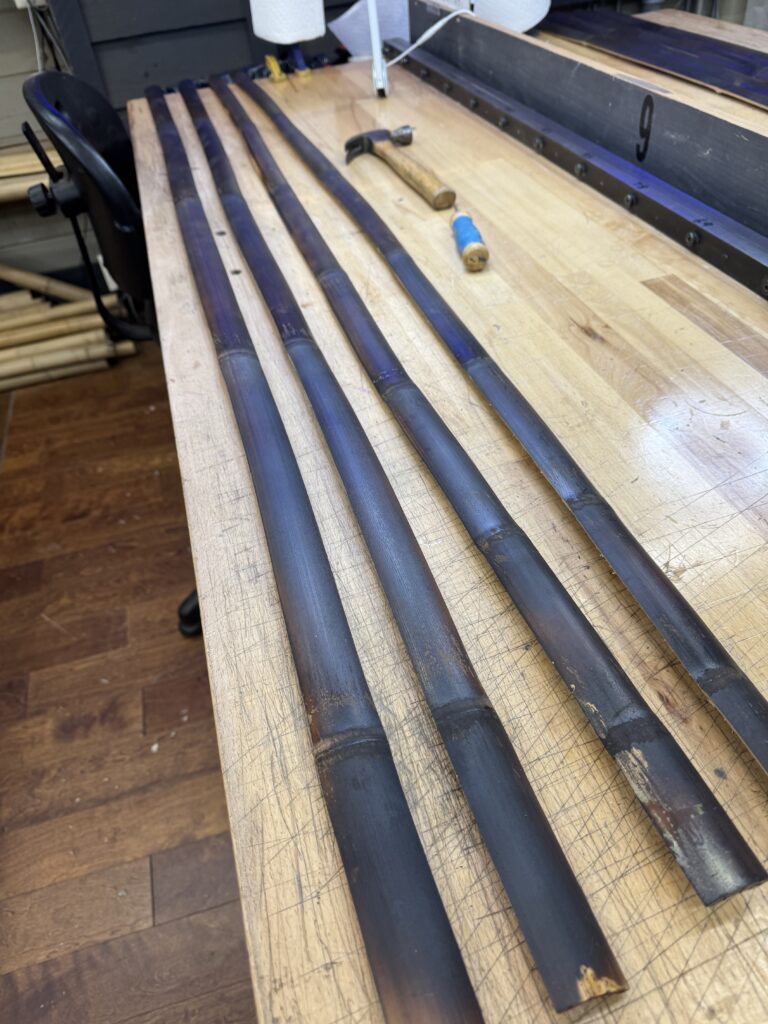
That feeling is part craftsmanship, part memory, and part the simple reality that the rod begins as raw cane and is transformed step by step by hand. Oyster gave one of the best descriptions of that difference when he compared graphite and bamboo. “You can kind of imagine a graphite fly rod as like a photograph,” he said. “It is completely accurate. It is precise.” Bamboo, by contrast, is something else entirely. “What we’re doing in here is we’re making oil paintings.”
That does not mean bamboo is better in some absolute performance sense. Oyster was careful about that. “It’s not that it’s technically better in any way,” he said. “It’s just that it’s got the history in it, the romance, the artistry of it, the craftsmanship of it.”
That may be the real reason the class leaves such a mark. Students are not just assembling components. They are learning a traditional craft, understanding the material at a deeper level, and walking away with something that feels as much like a story as a tool.
It Is Not Elitist. It Is Heritage
One of Oyster’s strongest points in the conversation was also one of the most important.
He does not like the idea that bamboo fly rods are somehow stuffy, exclusionary, or reserved for a certain kind of angler. “This is an American invention,” he said. “This is our heritage. This is our biggest contribution to fly fishing as an American angler.”
That perspective matters. In the wrong hands, bamboo can be talked about in a way that makes it feel distant or overly precious. Oyster clearly sees it differently. For him, it is not about prestige. It is about connection, tradition, and enjoyment. “This is a beautiful, romantic, fun way to go fishing, catch fish, take your kid fishing, go fishing with your friends,” he said. “It just enhances the experience.”
That attitude seems to shape the entire class. Falconer made a point of saying there was “none of that” elitism in the room. What he found instead was a welcoming environment, generous instructors, and a week that felt equal parts technical education, creative workshop, and fishing trip.
More Than a Class
By the end of the conversation, one thing was obvious. The Oyster Bamboo Rod Building Class is not just about learning how to build a bamboo fly rod, even though students absolutely do that.
It is about seeing a highly refined teaching system in action. It is about realizing bamboo is stronger and more fishable than many people assume. It is about building something with your own hands that carries memory and meaning beyond the finished product. And it is about spending a week in a place where the process, the people, and the setting all work together.
Falconer summed it up as clearly as anyone could. “Stop thinking about it. Just do it,” he said. “Find a way, pick a date, go do it. You absolutely will not regret it.”