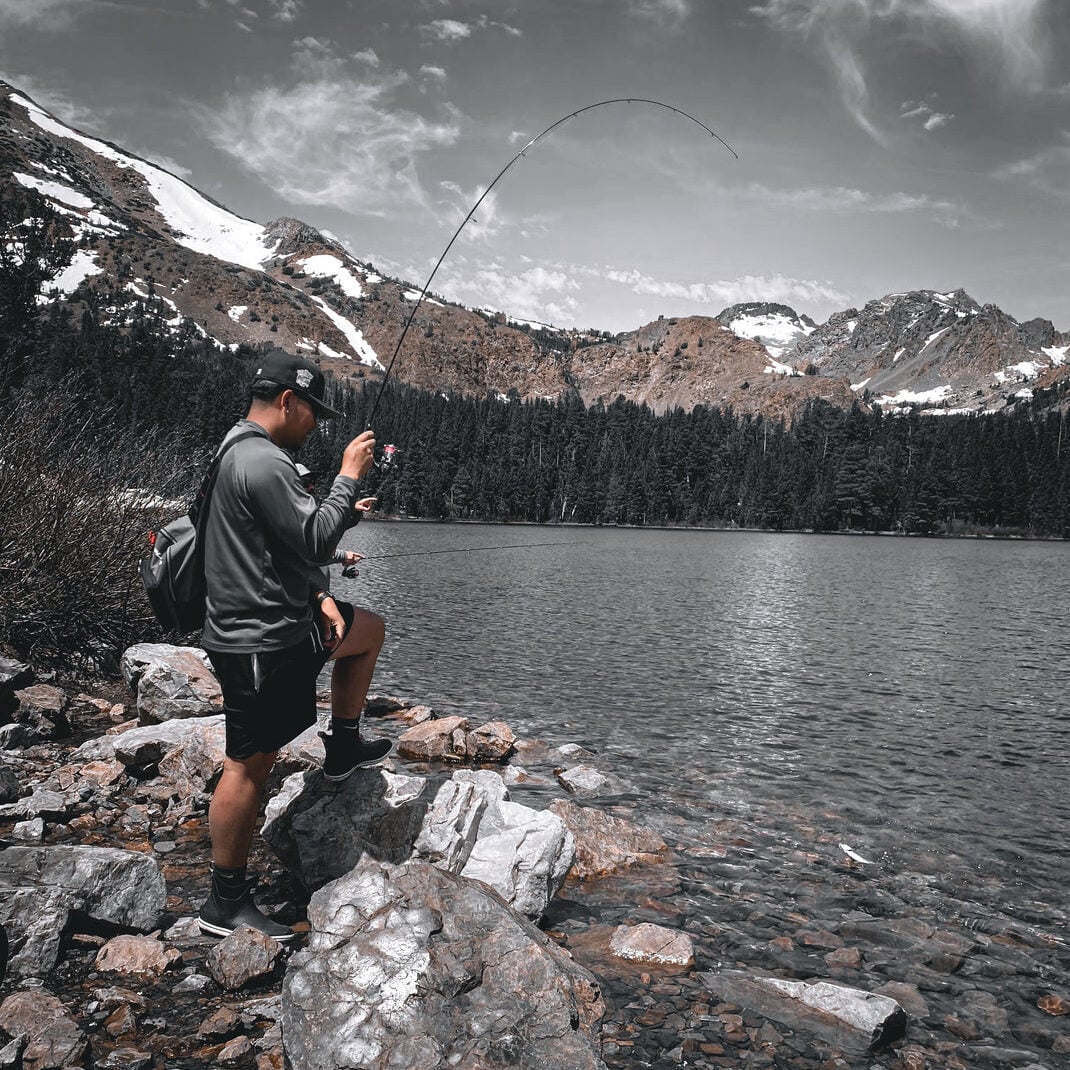
Choosing the right trout spinning rod is not just about finding something light, limber, and fun to cast. For anglers who fish small jigs, spoons, and light line, the right rod can make the difference between feeling a soft bite and missing it completely. That matters even more in places like Southern California, where trout fishing often means clear water, pressured fish, small lures, and the need to cast a long way from shore.
This rod recipe is built around that kind of fishing. It is aimed at anglers throwing mini jigs, small spoons, and light braid-to-fluorocarbon setups for stocked trout, mountain lake trout, and clear-water finesse situations. It comes from a conversation with Carlos of Carlitos Custom Rods, who builds ultralight trout rods around one main idea: keep the rod light, sensitive, and responsive from tip to butt.
Choosing the Best Trout Spinning Rod Blank
The blank is the heart of the build. Everything else matters, but the blank determines how the rod loads, how far it casts, how it protects light line, and how much of the bite makes it back to your hand. For this kind of trout rod, Carlos recommends staying in the ultralight range, with a blank that can handle light line and very small lures.
His go-to range is a rod between 7 feet, 6 inches and 8 feet long for lake fishing and larger bodies of water. That longer length helps with casting distance, especially when throwing small jigs and spoons that do not carry much weight. A shorter rod, somewhere around 6 feet, 6 inches to 7 feet, can still work well in creeks and small streams, where long casts are not as important and tight casting lanes may be more of a problem.
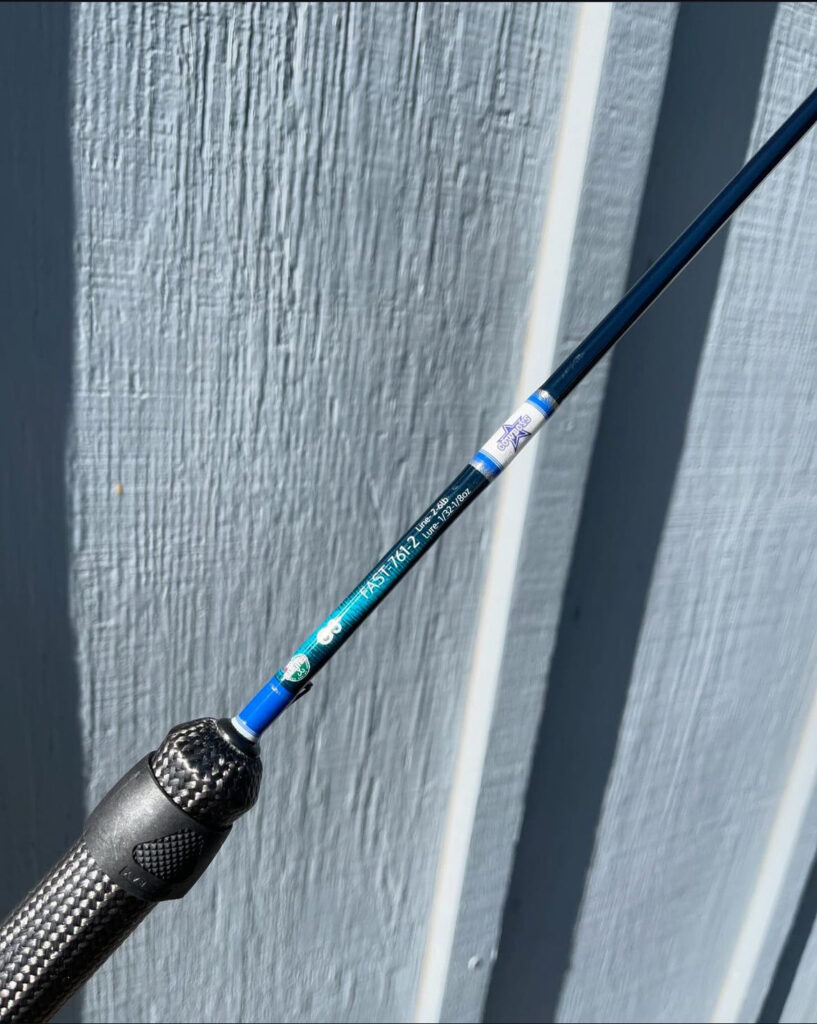
For line rating, the sweet spot is roughly 2- to 6-pound line. That gives the rod enough delicacy for light fluorocarbon leaders while still leaving room for anglers who prefer a slightly stronger setup. For lure rating, Carlos recommends a range around 1/32 ounce to 1/8 ounce. That covers many of the mini jigs used for trout, along with small spoons in the 2.5- to 3.5-gram range.
The action is where things get more personal. Carlos likes a fast-action rod with a touch of moderate action in the tip. In his own builds, he described it as a fast-action blank with about a “10 percent moderate” tip. In plain English, that means the very top of the rod has some softness and forgiveness, but the backbone starts working quickly once the rod loads. That soft upper tip helps work tiny jigs, feel light taps, and keep small hooks pinned. The faster backbone helps with hooksets, control, and casting accuracy.
That said, some anglers may prefer a full moderate action, while others may like a true fast action. A moderate rod can feel whippy to some people, while a fast rod can feel too stiff to others. Carlos’ practical advice is simple: before buying a blank, go to a local tackle shop and handle a few finished trout rods in the same general range. Feel how they load. See what feels natural in your hand. Ultralight rods can feel very different from one another, even when the specs look similar on paper.
Weight is a major part of this recipe. Carlos said his finished ultralight trout rods come in around 2.6 ounces, with the blank itself weighing around 1 ounce. That means the handle, guides, wraps, epoxy, and other components add only about 1.6 ounces to the finished rod. That is the whole philosophy of this build. The lighter the rod stays, the easier it is to feel tiny bites, control small jigs, and fish all day without fatigue.
Picking the Best Trout Spinning Rod Handle
For many spinning rods, the handle section would include a rear grip, foregrip, reel seat, butt cap, and winding checks. Carlos takes a different approach on many of his trout rods. Instead of a standard spinning reel seat, he prefers a Tennessee-style handle with slip rings. This is one of the most important parts of his recipe.
A Tennessee handle is usually a straight cork or carbon grip that allows the reel to be positioned where the angler wants it. Instead of locking the reel into a fixed reel seat, Carlos uses PacBay-style slip rings to hold the reel in place. The reason is weight and feel. By removing the traditional reel seat, he keeps the rod lighter and increases the direct connection between the blank, handle, reel, and angler’s hand.
That matters with tiny trout jigs. When fish are just nipping the tail of a small jig or barely touching the bait, a lighter and more direct handle can help the angler feel those subtle strikes. Carlos said this style of handle gives the rod a different feel and helps transmit what the jig is doing, along with the little taps and bites that can be missed on heavier rods.
Cork is still a strong choice because it is light, comfortable, and familiar. Carbon handles are another option for anglers who want a modern feel and possibly more sensitivity. Carlos mentioned both cork and carbon sensitivity handles, and either can fit the purpose if the builder keeps the weight down.
A traditional reel seat is not wrong, though. Some anglers prefer the locked-in feel of a normal spinning seat, and some builders may be more comfortable using one. If going that route, Carlos recommends keeping the components light. Cork is a good grip material because it is light and less expensive than many carbon options. He also spoke highly of Fuji’s newer carbon titanium reel seats, saying they cost more but still allow him to keep rods very light and sensitive.
Winding checks are partly practical and partly cosmetic. Carlos likes using them as finishing and decorative pieces on his rods, though not every builder uses them. On an ultralight build, the important thing is not to overdo it. Every little piece adds weight. The goal is a clean, light, sensitive handle section that supports the fishing style instead of fighting it.
Selecting the Best Trout Spinning Rod Guide Train
The guide train is another place where small choices matter. On an ultralight trout rod, the guides need to control light line cleanly, help with casting distance, and avoid adding unnecessary weight to the blank.
Carlos said he originally used a more traditional reduction train, starting with a 20, then a 16, then a 12, then an 8, followed by smaller running guides. Over time, he simplified and lightened the layout. His current approach is closer to a 20, 12, and 8 as reduction guides, then running guides around 7, 6, 5.5, and 5, with a size 5 tip-top.
The point is to keep the line path clean while cutting unnecessary weight. On a rod designed to cast tiny jigs and spoons, extra guide weight can dampen the blank and reduce the crisp, sensitive feel that the whole build is trying to preserve. Carlos said his modified guide train still gives him good casting distance while making the rod feel lighter and more responsive.
This is also why a builder should not just throw a generic guide set on the blank and call it done. The guide train needs to match the blank length, reel size, line type, and the small lures being used. A good guide layout should help the rod cast smoothly without making the upper third of the blank feel heavy or dead.
Deciding on the Best Trout Spinning Rod Guides
For guide materials, Carlos recommends spending a little more if the budget allows. His preference is titanium-framed guides with quality inserts, such as SiC. He sees those as a better fit for ultralight trout rods because they help save weight and maintain sensitivity.
This is not just about luxury. On a heavy rod, a few small differences in guide weight may not feel dramatic. On a trout rod that weighs only a couple of ounces, those small differences become more noticeable. Lighter guides can help the blank recover faster, feel more alive, and transmit more information back to the angler.
Carlos said customers sometimes ask for less expensive guide options, and that can still work. The key is to avoid making the rod heavier than it needs to be. If a builder is already paying for a sensitive ultralight blank and a light handle system, it does not make sense to load the blank down with heavy guides.
For anglers who fish braid to fluorocarbon, good guide inserts are also important because the leader knot will be passing through the guides on casts. Smooth, quality inserts help protect light line, reduce friction, and keep the rod casting cleanly.
Determining the Best Thread and Epoxy
Thread and epoxy may seem like small details, but they matter on a build where weight is the whole point. Carlos uses precise, light thread work and avoids piling on unnecessary finish.
Decorative wraps are fine, especially near the handle where they can give the rod some character, but this kind of trout spinning rod build should not be buried under heavy thread work. The rod is meant to be light and sensitive. The wraps should secure the guides and finish the build cleanly without turning into extra weight.
For epoxy, Carlos keeps it simple. He uses Flex Coat and said it has been good to him since he started building rods. More important than the brand is the amount. On his trout rods, he usually applies one coat of epoxy. Sometimes he uses two coats around decals or areas that need a little extra coverage, but for the guide wraps, one clean coat is usually enough.
That one-coat approach helps keep the rod light. Thick, heavy epoxy can make an ultralight rod feel slower and less crisp. It may look glossy and impressive, but it works against the purpose of this build. The finish should be clean, even, and protective, but not excessive.
Line Choice for This Trout Rod Recipe
Carlos also gave an important practical note about line. For anglers who are comfortable fishing braid, a very light braid in the 4- to 6-pound range can pair extremely well with this rod style. The braid helps with casting distance and sensitivity, especially when throwing very small jigs.
From there, he recommends tying on a fluorocarbon leader. The leader can be 2-, 4-, or 6-pound test depending on water clarity, fish size, and angler comfort. This setup gives the angler the casting and feel of braid with the low visibility and abrasion resistance of fluorocarbon near the lure.
That system fits the whole recipe. A light blank, sensitive handle, light guide train, small jigs, light braid, and fluorocarbon leader all work together. None of the parts are random. The goal is a rod that helps you cast farther, feel more, and fish tiny trout lures with better control.
Trout Spinning Rod Building Kit
If you’re looking to put together your own kit based on what Carlos does, start with the right blank. For lakes, you’ll want a 7-foot-6-inch to 8-foot ultralight blank rated for 2- to 6-pound line and 1/32- to 1/8-ounce lures. If you’re mostly hitting tight creeks or small streams, you might find a shorter 6-foot-6-inch to 7-foot blank is a better fit for your surroundings.
For the handle, I’d really point you toward a Tennessee-style cork or carbon grip with slip rings. It’s the best way to keep weight down and sensitivity up. If you just can’t get away from a standard reel seat, that’s fine—just pick the lightest quality one your budget allows and pair it with cork or a slim carbon setup.
When it comes to guides, stick with a light reduction layout—something like a 20, 12, and 8—then step down to small running guides in the 7, 6, 5.5, and 5 range, topped off with a size 5 tip-top. If you really want the best, go with titanium frames and SiC inserts. They cost a bit more, but on a rod this light, you’ll definitely feel the difference in responsiveness.
Keep your thread work clean and light and for the finish, a solid choice like Flex Coat is all you need. Just remember to be stingy with it—one clean coat is usually plenty for your guide wraps, and you should only go for a second coat if a spot really needs the extra coverage.
The finished rod should feel light in the hand, soft enough in the tip to work small jigs, fast enough in the lower blank to set hooks and control fish, and long enough to cast tiny lures across open water.
Off-the-Shelf Options for Trout Spinning Rods
Not every angler wants to build a trout spinning rod, and that is fine. The same recipe can help you shop for an off-the-shelf trout rod. Look for a spinning rod between 7 feet, 6 inches and 8 feet if you fish lakes, reservoirs, ponds, or bigger water where casting distance matters. Look for something shorter if you mostly fish creeks and tight streams.
The best match will be an ultralight rod rated around 2- to 6-pound line and capable of casting lures down around 1/32 ounce. Pay close attention to weight. A rod that looks good on paper but feels heavy in the hand may not give you the sensitivity this style of fishing requires.
Also pay attention to the handle. Most factory rods will use standard spinning reel seats, but some will still be lighter and more sensitive than others. A bulky handle, heavy reel seat, and oversized guides can make a rod feel dead, even if the blank itself is decent.
The best factory option will be the one that comes closest to this custom recipe: ultralight power, moderate-fast to fast action, long enough for casting distance, light enough for all-day fishing, and sensitive enough to feel small jigs and soft trout bites.
Final Thoughts
A good trout spinning rod is not just a scaled-down bass rod. It is its own tool, built around light line, tiny lures, casting distance, and bite detection. Carlos’ recipe puts weight and sensitivity first. The blank is light. The handle is simple. The guide train is trimmed down. The thread and epoxy are kept clean and minimal. Even the line system supports the same goal.
For anglers fishing small jigs and spoons for trout, especially in clear water or pressured fisheries, that kind of build makes sense. You want a rod that helps you feel what the lure is doing, detect light strikes, cast small baits farther, and protect light line once a fish is hooked.
Whether you build one yourself, have a custom builder make one, or use this recipe to shop for a factory rod, the lesson is the same: start with the fishing style, then choose every part of the rod to serve that purpose. For this kind of trout fishing, that purpose is simple. Keep it light, keep it sensitive, and let the rod tell you what is happening at the end of the line.