When Air Carbon Mesh started showing up in rod building videos, it did not take long for the arguments to start.
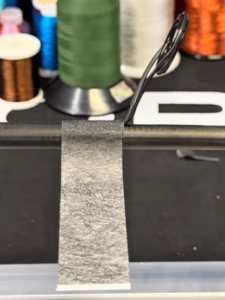
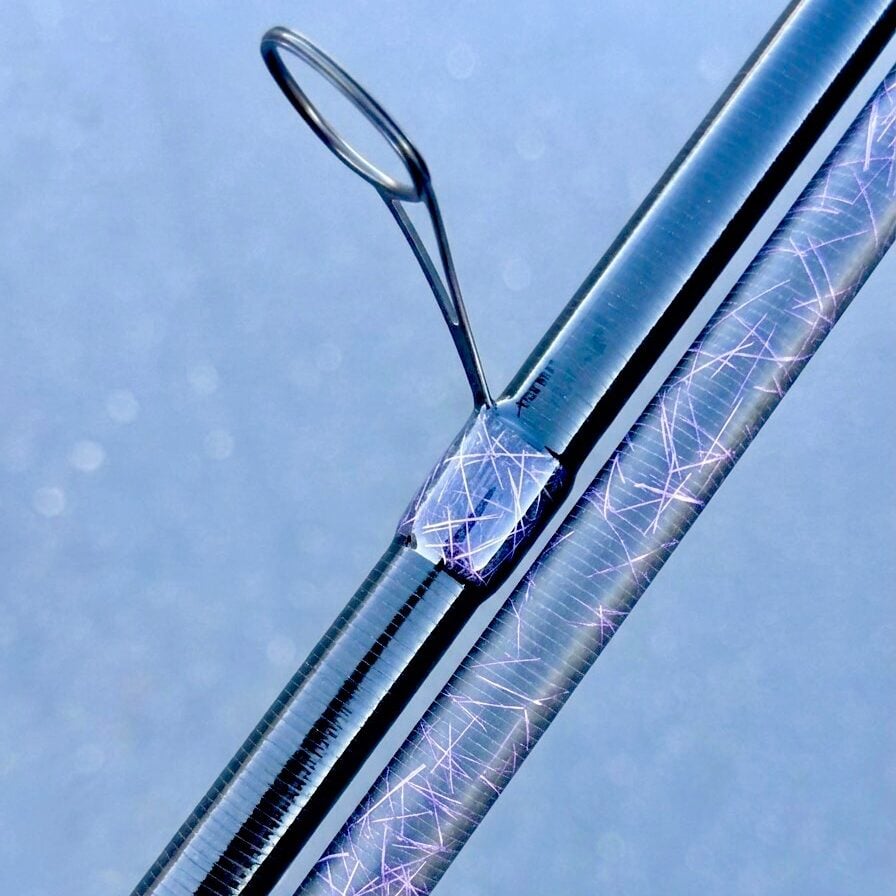
For some builders, the material looked like a breakthrough. Instead of wrapping guides with thread, builders could use a thin strip of carbon mesh to secure the guide foot, apply the right activator and finish, and end up with a clean, strong, low-profile guide wrap. For people who had always been intimidated by thread wrapping, it made rod building look simpler and more approachable. For performance-minded builders, it offered the promise of a lighter, more functional way to attach guides.
For other builders, it looked like a threat.
Custom rod building has always been more than just putting components together. Thread wraps, trim bands, inlays, color choices, decorative work, and the careful look of a finished rod are all part of the craft. To some builders, replacing thread with carbon mesh felt like removing one of the most visible signs of handwork from a custom rod. If guide wraps could be done faster, cleaner, and easier with a strip of mesh, what did that mean for the tradition of thread wrapping?
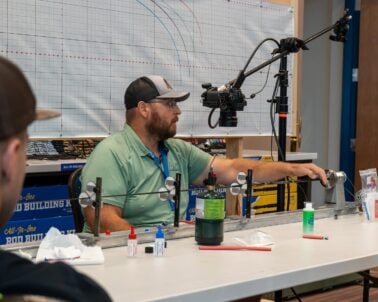
Alex Maslov has heard the criticism. As part of the team at North Fork Composites and Edge Rods, he has also been close to Air Carbon Mesh from the manufacturing side. And from his perspective, much of the backlash misses the point.
“One thing that people have to realize,” Maslov said, “is, hey, one, it’s optional. Nowhere is this mandatory that you have to use it.”
That may be the simplest answer to the question. Is Air Carbon Mesh bad for custom rod building? Not if builders understand it as another option rather than a replacement for everything that came before it.
A Manufacturing Solution That Became A Rod Building Debate
Maslov said Air Carbon Mesh was not originally developed as a hobby product meant to disrupt custom rod builders. It came out of a manufacturing challenge. Edge Rods and North Fork Composites were looking for ways to improve efficiency, reduce labor, and build rods with a competitive advantage. Guide wrapping is one of the most time-consuming parts of rod manufacturing. Every guide has to be placed, aligned, wrapped, finished, and cured. In a factory setting, any process that can save time without sacrificing strength or performance is worth exploring.
“We didn’t make this for the rod builder,” Maslov said. “We made this for us and when I say for us, we made it for Edge Rods and North Fork Composites to have a competitive advantage.”
That statement might sound blunt, but it helps explain the whole debate. Air Carbon Mesh was not born as a decorative shortcut. It was born as a production solution. The company wanted a way to attach guides that was strong, light, repeatable, and efficient.
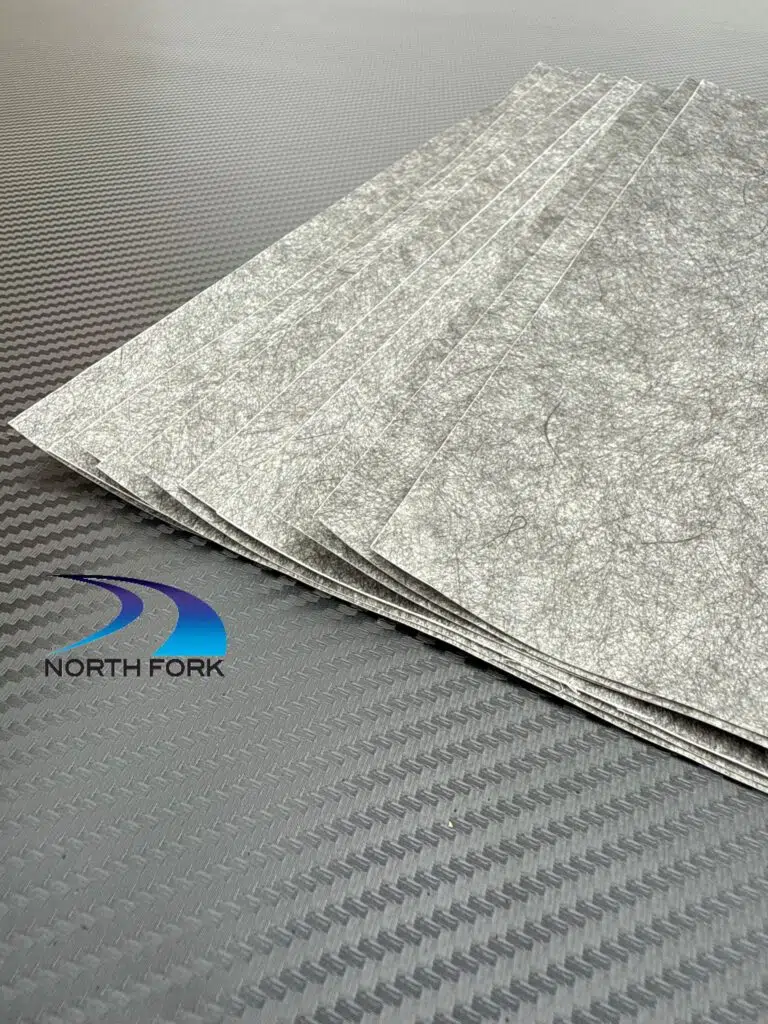
Maslov said the company had tried other ways to solve that problem over the years, including co-curing guides to blanks. In that process, guides would be placed on the blank before it went into the oven. The blank, guides, and outer wrap would all cure together. In theory, it could remove several steps from the rod building process. In practice, it brought other problems.
“You stick that blank into the oven, that’s where your issues with curvature start,” Maslov said. “There’s nothing more frustrating than putting a perfectly straight blank into an oven, and even with guides that are aligned, when it comes out, it’s got three different curves to it.”
Air Carbon Mesh offered a different solution. Instead of baking guides into the blank, the company found that a long-strand carbon mesh, used with the right adhesive system and finish process, could hold guides with serious strength while keeping the wrap light and clean.
Why Strength Changed The Conversation
The strength of the material is one reason Maslov believes some of the criticism has become more emotional than practical. He said that when they first started testing Air Carbon Mesh as a guide wrap, they found that the guide itself was not the weak point.
“You don’t really realize what you have until you wrap it,” Maslov said. “You discover that not only is it strong, not only is it permeable, but you can’t really rip a guide off with your hands, and the blank starts breaking before the guide rips off.”
That kind of claim gets attention because custom builders care about durability. A rod can look beautiful, but if guide wraps fail, the build has failed. From Maslov’s view, Air Carbon Mesh deserves to be judged first on whether it works. And by that measure, he believes it has proven itself.
But he also understands why some builders reacted strongly. Thread wrapping has history. It has skill behind it. It is one of the main places where a builder’s hand shows up in the finished rod. A builder can spend years learning to make perfect wraps, clean trim bands, smooth transitions, and decorative patterns. When a new material appears and lets a beginner attach guides with less traditional skill, some people are going to feel like something valuable is being cheapened.
Maslov does not see it that way. In fact, he sees Air Carbon Mesh as a way to bring more people into rod building, not push traditional builders out of it.
An Easier Entry Point For New Rod Builders
Since the general release of Air Carbon Mesh, Maslov said the company had shipped about 35,000 sheets. He does not believe all of those sheets are going to experienced, full-time custom builders.
“There are not 35,000 dedicated rod builders that are constantly building,” he said. “I hope that this becomes an event where guys that are trying to build their very first rod, because of how they saw the video, it becomes easy for them.”
That may be one of the most important pieces of the story. Air Carbon Mesh may not be aimed only at master builders. It may be especially useful for the person who has never built a rod before, or someone who wants to repair a guide on a rod that matters to them, but does not want to learn thread wrapping from scratch just to make that one repair.
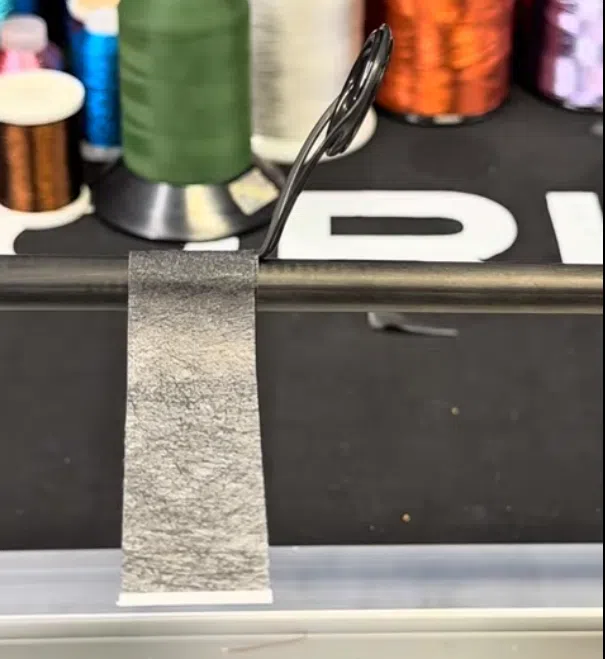
Maslov said the company has heard from people who are not traditional rod builders at all.
“The amount of new, never built a rod before, intimidated by wrapping with thread, or I just want to repair a guide, and I never want to learn how to wrap, we’ve seen just an explosion of guys,” he said. “Our email is flooded with, ‘Hey, I’ve never built a rod, but I want to repair a guide that’s my grandfather’s rod.’”
To Maslov, that is something the rod building world should welcome. If a material gives people the confidence to repair a rod, build a first rod, or take the first step into the craft, then it may help grow the community instead of shrinking it.
“We should be excited about the fact that there are new guys coming in,” he said.
Does Air Carbon Mesh Replace Traditional Thread Work?
That does not mean Air Carbon Mesh replaces the artistic side of custom rod building. Maslov’s own prediction is more practical than that. He thinks many serious builders may still do decorative thread work where it has the most visual impact, especially around the first guides and lower section of the rod, then use Air Carbon Mesh farther up the blank on the running guides.
“We made a prediction as a company,” Maslov said. “Guys will spend their time on their first and second guide with thread, with inlays, and then on the running guides, they will use Air Carbon Mesh that is carbon gray all the way up, because it’s black thread.”
That is a much different vision than Air Carbon Mesh replacing custom rod building. In that version, a builder still has full freedom to make a rod beautiful. He can still use thread, inlays, trim, and color where they matter most. But on the smaller running guides, where many builders already use simple black thread, he may choose Air Carbon Mesh because it is functional, fast, and clean.
“If this doesn’t take away from custom rods,” Maslov said, “the guys that want to have a dedicated beautiful rod with inlays and shades and whatever it may be, they’re going to do it. But they’re going to be smart about it and say, look, the majority of my time is spent here. I know this is functional. I know this works. I’m going to go ahead and use Air Carbon Mesh on the runners all the way up, because it’s just black.”
That is probably the most balanced way to think about the material. Air Carbon Mesh does not remove thread from the builder’s bench. It gives the builder another decision to make. On some rods, thread will still be the right answer. On some rods, Air Carbon Mesh may be the better choice. On many rods, both may make sense.
Why Air Carbon Mesh Has Its Own Learning Curve
The key is understanding that Air Carbon Mesh is not thread. It may replace thread in one specific job, but it does not behave like thread, and Maslov said some of the confusion around the product comes from builders treating it as if it should.
One of the biggest points of controversy has been color preserver, often called CP. In traditional thread wrapping, CP is usually thought of as a way to keep thread color from darkening under finish. Some builders dislike it. Some use it often. Some have strong opinions either way. When Air Carbon Mesh instructions called for CP, some people reacted as if the company was telling them to use a disliked thread-wrapping product in a new setting.
Maslov said that reaction misses what CP is doing with Air Carbon Mesh.
“Never, in a million years, did I think I would be explaining that CP does not work on Air Carbon Mesh like it does on thread,” he said.
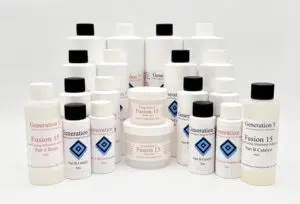
With Air Carbon Mesh, CP is not being used mainly as a cosmetic color-preserving step. Maslov said it acts more like an activator. The material has a binder and small openings in the mesh. As the mesh overlaps on itself, some of those openings can close. The right compound helps open those pores back up so finish can flow through.
“It causes a chemical reaction,” Maslov said. “It’s like trying to coat your guide with just Part A or Part B of an epoxy. I mean, you’re following part of the steps.”
That distinction matters because Air Carbon Mesh depends on finish permeating through the material. If the finish does not flow through properly, the system does not work as intended. Maslov said builders do not need to flood the wrap with CP like they might on thread. They need only a small amount.
“Use a tiny amount,” he said. “Not the same amount that you would use, that you put on thread, and just recognize that it causes a chemical reaction.”
A Few Rules Builders Need To Understand
Air Carbon Mesh also has to be cut and finished correctly. Maslov said builders need to pay attention to the direction they cut the material. The material has a dramatic strength difference depending on the direction of the fibers. Cut the wrong way, and the strip will be much weaker. Cut the right way, and it will resist pulling apart.
“The effect is staggering,” Maslov said. “It’s like a 5x strength one direction versus the other. So you want to cut it always on the short end.”
That is another reason Maslov pushes back against the idea that Air Carbon Mesh is some kind of lazy shortcut. It may be simpler than thread wrapping in some ways, but it still has a process. Builders need to understand the material, cut it correctly, activate it correctly, and finish it correctly.
He also warned against thinning the first coat of finish with acetone or denatured alcohol. Some builders may be used to modifying finish when working with thread, but Air Carbon Mesh responds differently. Those solvents can fuse the binder and close off the mesh rather than helping the finish move through it.
“The only thing that we tell folks to do that are used to doing it with thread is don’t thin your first coat with acetone or denatured alcohol, because that will fuse the binder,” Maslov said. “It’ll do the opposite of what you want that binder to do.”
In other words, a builder who wants to judge Air Carbon Mesh fairly needs to use it as Air Carbon Mesh, not as thread. It has its own rules, and misunderstanding those rules can lead to bad results or bad opinions.
The Emotional Side Of The Backlash
Still, the emotional side of the debate is real. Maslov said some of the criticism has gotten personal, with people invoking legendary builders and suggesting that Air Carbon Mesh somehow dishonors the craft. He pushed back on that idea, especially when critics bring up the history of custom rod building as if innovation itself is disrespectful.
He mentioned Dale Clemens, one of the major figures in rod building history, and said people have claimed Clemens would be “turning over in his grave” because of Air Carbon Mesh. Maslov does not buy that.
“I actually had Gary jump on a live because, at one point, it got out of control,” he said. “He said, look, he would be one of the most thrilled people about how this makes rod building simpler.”
That comment gets to the larger question behind the argument. Is the purpose of custom rod building to preserve every traditional method exactly as it has been done before, or is it to build better rods by whatever thoughtful methods are available?
For Maslov, innovation and tradition do not have to be enemies. A builder can respect thread work and still use carbon mesh. A builder can care about beauty and still care about efficiency. A builder can make a highly personal custom rod and still choose a modern material where it makes sense.
Another Tool, Not The End Of The Craft
That may be where the debate should land. Air Carbon Mesh is not bad for custom rod building. It is bad for only one narrow version of custom rod building: the version that says there is only one right way to do things.
For everyone else, it is another option. It can help a beginner get started. It can help someone repair a meaningful old rod. It can help a factory reduce labor. It can help a performance builder save weight. It can let a custom builder spend more time on decorative work near the handle and less time wrapping small running guides that were going to be plain black anyway.
That does not make it perfect for every build. It does not mean thread is outdated. It does not mean every rod should use it. And it certainly does not mean decorative wrapping is going away.
But it does mean custom builders now have another tool to think about.
Maslov’s view is simple: nobody is being forced to use Air Carbon Mesh. But if the material is strong, light, functional, and capable of bringing new people into rod building, then maybe the custom rod world should be less worried about what it replaces and more interested in what it makes possible.
As he put it, “This doesn’t take away from custom rods.” It just gives builders another way to build them.