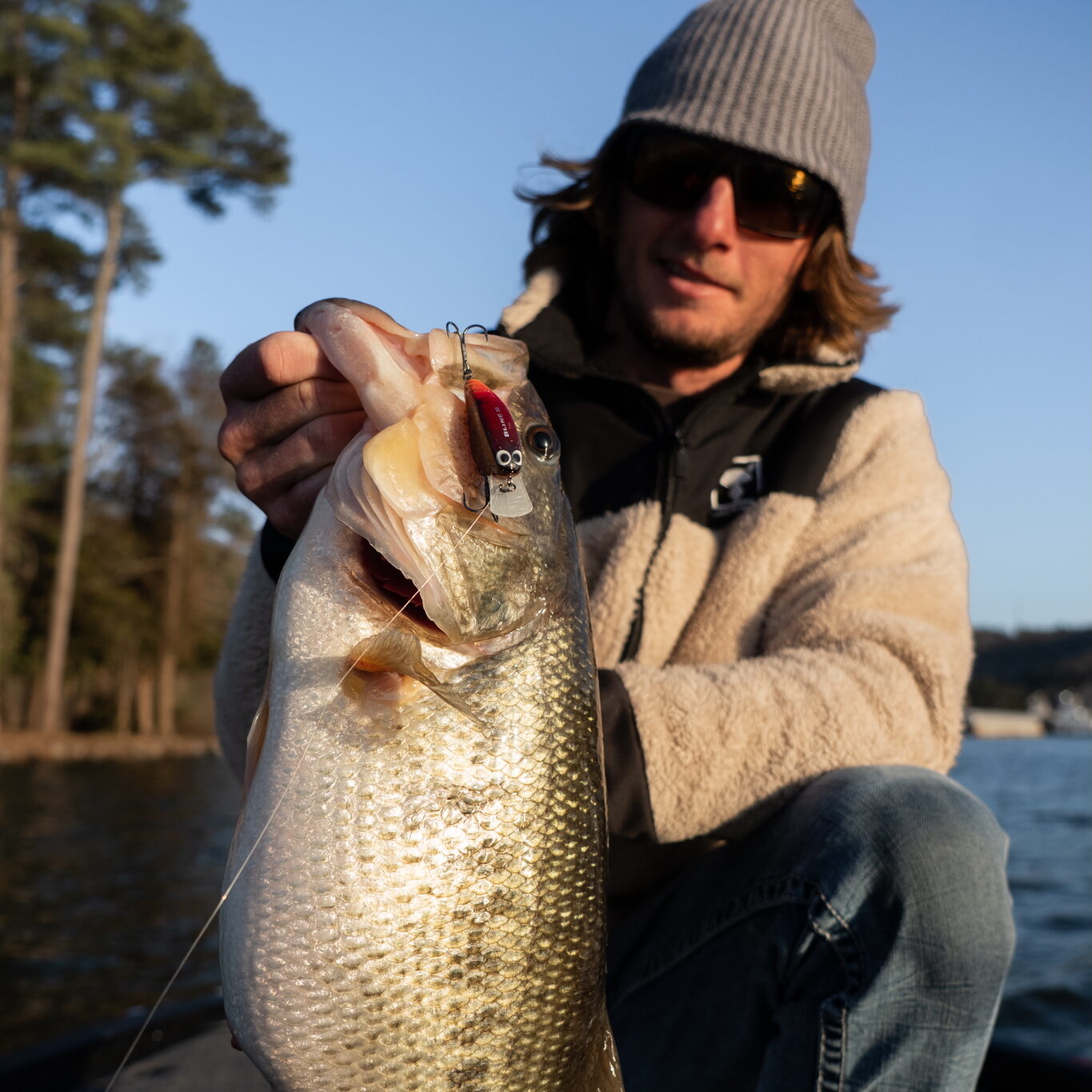
Crankbaits get labeled as simple cast-and-retrieve lures, but Elite Series angler Beau Browning looks at them differently. “It is so far from that. It is a very technical technique.” In Beau’s world, crankbait fishing is a game of small details, and the rod is where those details start to matter fast.
A purpose-built crankbait rod helps you cast farther, keep treble hooks pinned, and land the kind of fish that only barely gets the bait. If you have ever felt like you are getting bites but not converting them, or you keep losing fish right at the boat, Beau’s approach will make you rethink crankbait rods from the blank to the handle, and all the way down to hooks, line, and even gear ratio.
Why Crankbait Rods Need Give, Give, And Give
Beau describes the foundation of a great crankbait rod in one sentence: “The three biggest things that you want that crankbait rod is give, give and give.”
He is talking about three moments that decide whether you catch fish or just feel them.
The first moment is the cast. A moderate, parabolic blank loads deeper, launches a crankbait more efficiently, and helps you cover more water with every throw. Beau says a crankbait rod needs “load being for throwing that bait a long ways.”
The second moment is the fight. Treble hooks do not have much margin for error, especially when a bass jumps and starts shaking. A rod that stays loaded keeps steady pressure and keeps those hooks buried. “That load is going to keep your pressure when he’s jumping and head shaking.”
The third moment is the bite itself, and this is where a lot of anglers get surprised. Beau points out that bass eat by opening their mouth and pulling water in. “That bass comes up to eat it… he’s going to open his mouth and suck that water in and suck that crankbait in with it.” If your rod is too stiff, you can mess up that whole process. “If you’re throwing a pool cue and he comes up and tries to suck it in, that bait’s not going back in.”
That is why Beau leans toward moderate actions for most traditional crankbaits like squarebills, flatsides, and standard divers.
The Biggest Mistake Most Anglers Make With Crankbait Rods
If you want one fast correction, Beau does not hesitate: “The biggest mistake you see crankbait fishing with guys is they throw too heavy of a rod.”
Crankbait fishing feels like power fishing because you are moving fast and covering water, but your hooks are not built like a jig hook. Beau uses a simple mental trick. Look at a treble hook and “cover the two of the three so you just have one.” Then really look at it. “It’s not a very big hook. It’s a tiny hook.”
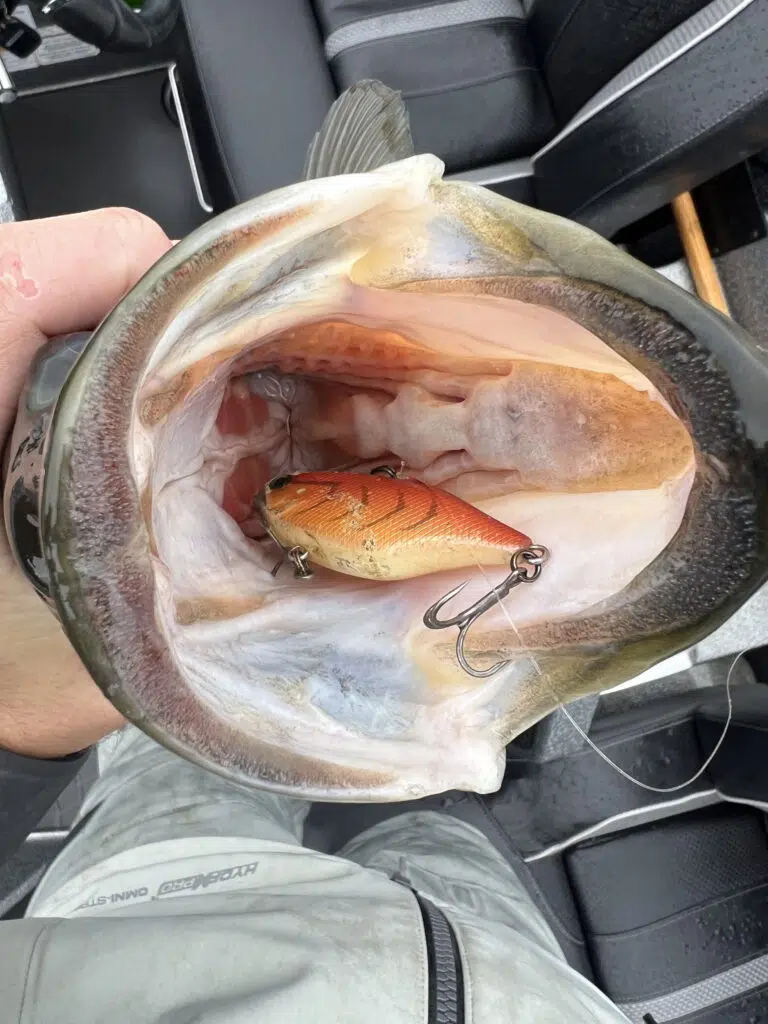
That perspective changes how you approach everything. Softer does not mean weaker. It means your rod is working with the hook, not against it, and it keeps fish pinned even when they are barely hooked.
Beau’s Lengths For Crankbait Rods And Why They Work
Squarebill and target casting rods: 6 foot 10 to 7 foot
For squarebills and target casting, Beau likes shorter rods because accuracy matters more than raw distance. “I like like a 6’10, 7 footer for throwing small crankbaits.” He explains that his confidence came from the first rod that really clicked for him. “The first crankbait rod I ever owned… it was a 6’10… and I fell in love with that rod for the sole fact that when I was target casting, I could roll cast and accurately throw it right where I wanted it.”
When you are rolling casts around docks, stumps, laydowns, and little rock sweet spots, shorter rods help you hit angles without feeling like you are wrestling a long handle and a long blank all day.
Standard deep cranking rods: around 7 foot 5 to 7 foot 6
As he moves deeper, Beau wants more length to help him bomb casts and keep that bait digging. “Deep cranking I like a 7’5 to even… a 7 and a half-ish range rod.” That extra length gives more leverage, more casting distance, and better control when a fish eats way out there at the end of a long cast.
Handle Length Is Not A Detail It Is A Performance Upgrade
Beau is blunt about this because so many anglers ignore it. “One of the most unthought about things is handle length.”
For squarebills and target casting, he wants a shorter handle so it does not interfere with roll casts. “If you’re roll casting… you don’t want a big long handle that’s going to be hitting you in the side.” His preferred range is “a 10, 11, 12 inch from butt to trigger.”
When he steps up to longer deep cranking rods, he wants more handle to help with two-handed casting and leverage. “Then I want like a 14-ish, really 13, 14.” Those numbers may not sound dramatic, but once you start making hundreds of casts, that handle length either feels perfect or it feels like it is fighting you all day.
Graphite Vs Fiberglass For Crankbait Rods
Beau’s preference is clear. “I have never been a glass fan.” His reason comes down to weight and feel. “I’m all about lightness in a rod. I want to get as light as I can.” Lighter crankbait rods help you fish longer and stay more connected to what the bait is doing.
At the same time, he is not dismissing fiberglass entirely. “Some of the glass rods are the best cranking rods out there.” The bigger takeaway is that action and load profile matter first. Material comes after that, and it should match how you fish and what you can comfortably throw all day.
Line Choices For Crankbait Fishing
Beau keeps his system consistent: “I throw fluorocarbon on everything.” From there, he adjusts pound test based on bait size and cover.
On smaller crankbaits like a 1.0, he avoids going too heavy because heavy line can kill the action. “If you go get in 14, 16 pound, it’s going to make the bait not work.”
For general squarebill fishing when he is not in gnarly cover, he likes 14-pound fluoro because it is a clean middle ground. “It’s heavy enough to where I don’t ever have to worry about it breaking, light enough to where it’s going to let the bait do what it needs to do.”
When he is crashing a 2.5 through wood, he steps up. “I’m going to 16, sometimes even 20.” He likes the heavier diameter because it helps the bait “crawl through that wood better” and can actually reduce hangups compared to lighter line in the same cover.
For giant deep divers like a 10XD, he is often in more open water and focused on bottom contact, so he commonly moves back toward 14-pound.
Gear Ratios For Crankbait Reels
For most of his cranking, Beau lives in the middle. “Typically I’m throwing a 6.3:1 on just about everything.” It is fast enough to manage slack and keep a rhythm, but not so fast that it becomes tiring.
When he goes to a big bait like a 10XD, he drops down for torque. “I have a couple of the 5:1… I use those for the 10XD.” The reason is simple and practical. “The higher gear ratio goes, the less torque you have.” A big crankbait pulls hard, and he wants the reel “working with me” so he is not burning out his elbow and shoulder.
Choosing Crankbait Depth And Maintaining Bottom Contact
Beau’s rule is straightforward: “I’m normally cranking, I’m trying to keep bottom contact most of the time.” If he thinks fish are in five feet on rock, he wants a crankbait that runs that zone and stays in contact so it deflects, hunts, and triggers bites.
Grass is the exception. In grass, he is watching where the grass tops out and then choosing a bait that runs just over it. He likes squarebills for some of that because they are easier to manage than lipless baits. “It’s so much easier to be in tune with that bait and how deep it runs.”
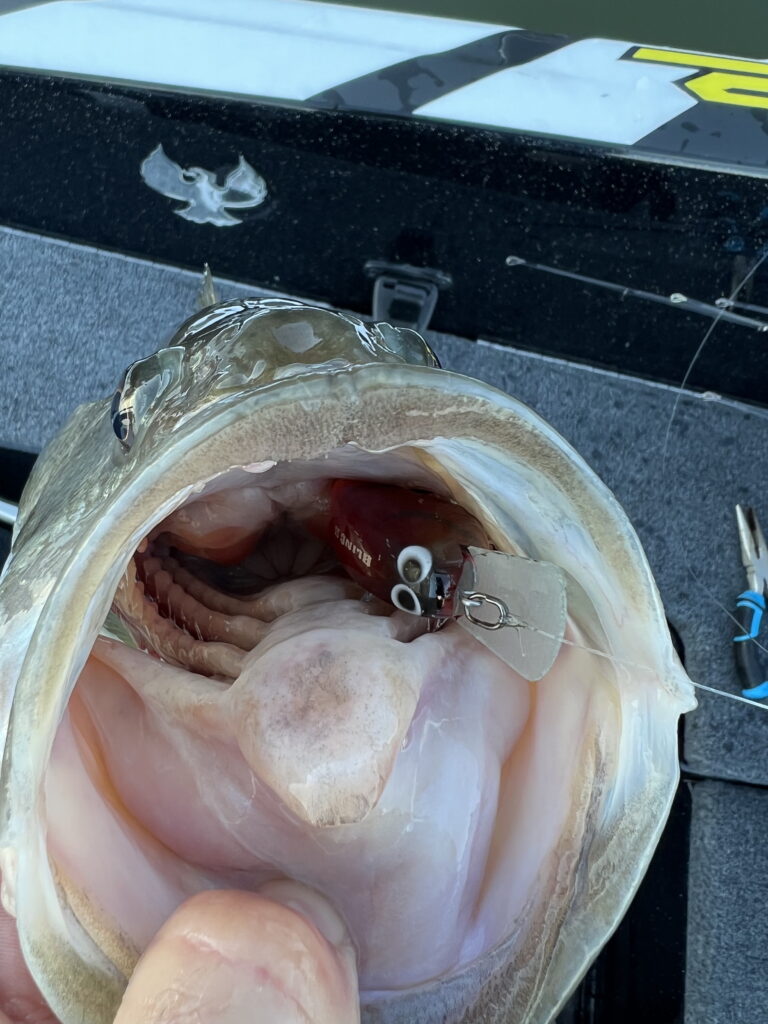
And when he is dealing with offshore fish and a big deep diver, he is not easing it along. He is “digging at the bottom” and trying to “rip a trench through there” to force reaction strikes.
Traditional Crankbaits Vs 10XD Style Baits Are Two Different Rod Conversations
Beau makes a clear distinction. “When you go to throw the big 10XD, that’s going to be totally different.”
Traditional crankbaits usually use smaller trebles that reward a softer rod and steady pressure. The 10XD world changes because the hooks change. On that bait, “that is a big freaking treble. That’s a beast of a hook.” Because the hooks are bigger and stronger, Beau moves toward longer, more powerful rods. “You’re going to like a longer… even an 8 footer… and we’re going into like heavy, moderate fast now.”
He compares the workload to throwing big baits. “You’re going into big bait fishing… it is like towing a water skier with your rod and reel all day.” With that much resistance, your rod and reel have to help you survive the day while still keeping the bait doing what it is designed to do.
Hooks Upgrades And What Beau Changes For Tournaments
Beau will practice with stock hooks. “I’ll practice fish a tournament with stock hooks.” He also gives modern companies credit. “Stock hooks are great. They’ve just gotten better.”
But when it is tournament time, he wants every edge he can get. “Most times, for a tournament, I’m changing my hooks out.” He mentions premium options like Ryugi and Ichikawa when he is chasing maximum sharpness and performance.
In heavy cover, he also likes a treble with an inward-point design. “I like to tend to go towards like a Mustad triple grip.” His reasoning is about reducing hangups and keeping fish pinned. “It keeps it from getting hung up” and “they’re pretty much locked into it most of the time.”
And for anglers who want a great option that is easy to find, he calls one out specifically. “An honorable mention… is the Gamakatsu G-Finesse.”
Beau’s Knot Choice Is Simple And Consistent
He does not overthink it: “I tie a Palomar on everything that I throw.” The reason is consistency. “It’s a strong knot, it’s a consistent knot.”
The Real Goal Of Crankbait Rods Is Not The Easy Bite
When fish are fully eating the bait, almost anything works. Beau says when they are choking it, “you can catch that fish on a flipping stick.”
The rod starts to matter when the bite is not clean. This is where crankbait heartbreak happens, and Beau describes it perfectly. “That six pounder nips that back hook and he’s got one… and it’s skin.” That is the situation where give, load, and the right action turn a loss into a landed fish.
A crankbait rod might work fine when bites are easy, but Beau’s whole point is that a great one “works great” when bites are tough, hooks are barely in, and you cannot afford mistakes.
If you build or buy crankbait rods using Beau Browning’s framework, start with the fundamentals. Focus on the right moderate action for traditional baits, choose length based on accuracy versus distance, treat handle length like a real performance feature, and match line, hooks, and reel speed to the job. When you do that, crankbait fishing stops feeling random and starts feeling repeatable.