Drop shotting has a reputation as a finesse-only tactic, but Bassmaster Classic champion Easton Fothergill relies on it for far more than open-water, light-line situations. For him, drop shot rods are a problem-solver when bites are hard to come by, when the bottom is dirty, and even when the target is tight cover like dock posts, grass edges, and cypress trees.
Easton put it as plainly as possible: “That’s the first bait that I pick up when the bite gets really tough and I don’t know what to do. It has bailed me out more times than anything else.” The reason it works so consistently is simple. A drop shot keeps the bait suspended above the weight, so you can hold it in the strike zone without dragging the bait through everything on the bottom.
If you want to build or choose the best drop shot rod, this article breaks down Easton’s real-world system: rod length, action, hook styles, reel size, line and leader choices, weight selection, and how he fishes the rig in different scenarios.
Prefer to watch the full conversation? Here’s the full Mastering Rod Building episode with Easton Fothergill on drop shot rods:
Why Drop Shot Rods Keep Producing When The Bottom Gets Messy
A drop shot is often at its best when other bottom-contact tactics get compromised. Easton described a situation that shows up on lakes across the country: “A lot of times there’s like, a muck or a film on the bottom. Anytime your bait touches bottom, it may be algae or literally just like mud.” In those conditions, dragging a bait can make it come back fouled, slimy, or just less believable.
Drop shotting solves that by letting the weight take the abuse while keeping the bait clean and visible. As Easton said, “Who cares if your weight gets all messed up, your bait’s still above that dirtiness on the bottom, you can keep it clean.” That is one of the best arguments for owning purpose-built drop shot rods. You’re trying to keep a controlled, suspended presentation stable, not just “feel” the bottom.
What A Drop Shot Rig Is And Why The Details Matter
Easton’s definition is straightforward: “A drop shot is any sort of rig with a weight on the bottom of your line, and your hook is actually… some variation… some length above your weight.” Even though the concept is simple, he’s quick to point out that the performance comes from details. “A drop shot is pretty simple when you first think of it, but then you can dive into all the details and stuff, and it’s actually very intricate.”
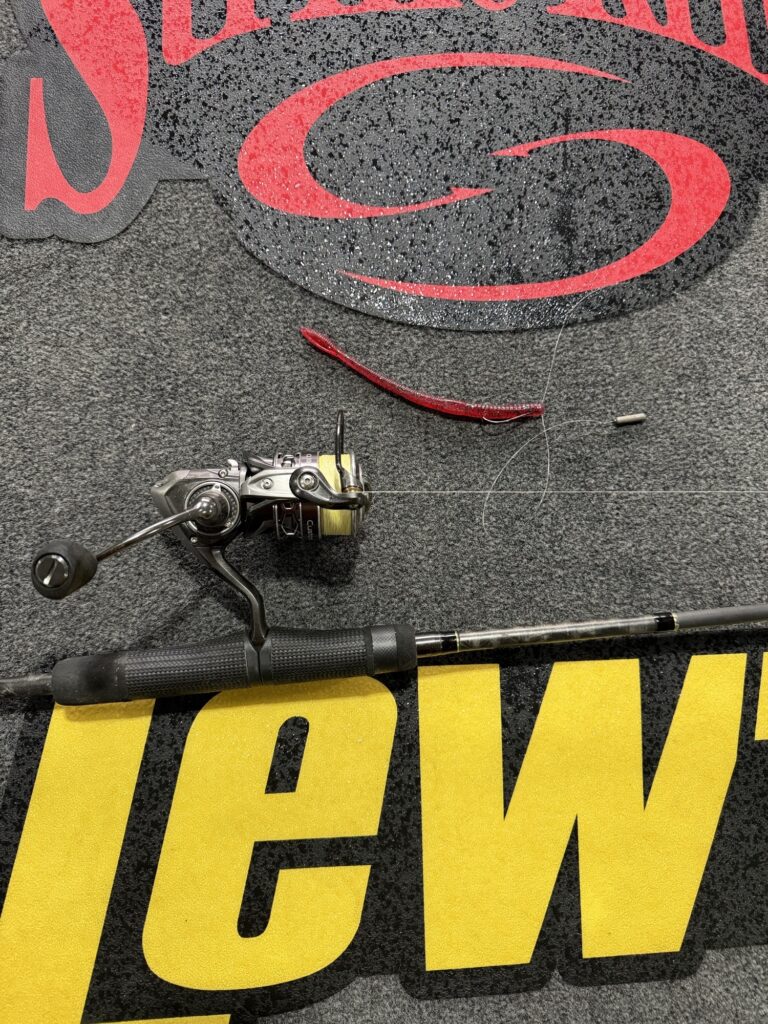
The most important detail for drop shot rods is the hook style you plan to use. Easton fishes two primary hook categories, and each one calls for a different rod action and a different hookset approach.
The Two Drop Shot Rod Setups Easton Relies On
Setup 1: Open-hook finesse drop shot rods (the “reel set” system)
When Easton is using a small, open finesse hook, he wants a rod that protects the hook and keeps fish pinned. “With the open style, finesse hook, it’s going to be a pretty light rod,” he said. The reason is the hookset. “You’re reel setting more than jerking them,” Easton explained. When you’re fishing that light-wire hook, the rod needs to load smoothly and stay loaded so the fish can’t shake free.
He also prefers a shorter rod for this style when he’s using electronics. “If I’m using my electronics to use the drop shot, it’s going to be a short rod, probably about a seven foot rod,” he said. That shorter length helps control the rig, especially when you’re making repeated, precise presentations and managing fish on light leader.
Drop shot rod build notes for the open-hook setup: a 7-foot spinning rod, medium power, with a more moderate action that bends deeper into the blank is the goal. Easton wants “a good parabolic bend all the way down” so the rod can maintain pressure without popping the hook free.
Setup 2: Worm-hook drop shot rods (the hook-driving system)
When Easton steps up to a worm-style hook, his drop shot rod changes dramatically. “That’ll be a much faster action rod,” he said. “I’m not really looking for parabolic bend… more of a fast or even an extra fast rod, because I’m more worried about driving that hook in.” This setup comes into play when cover is a factor, especially around grass or tight targets where you need solid penetration and control quickly.
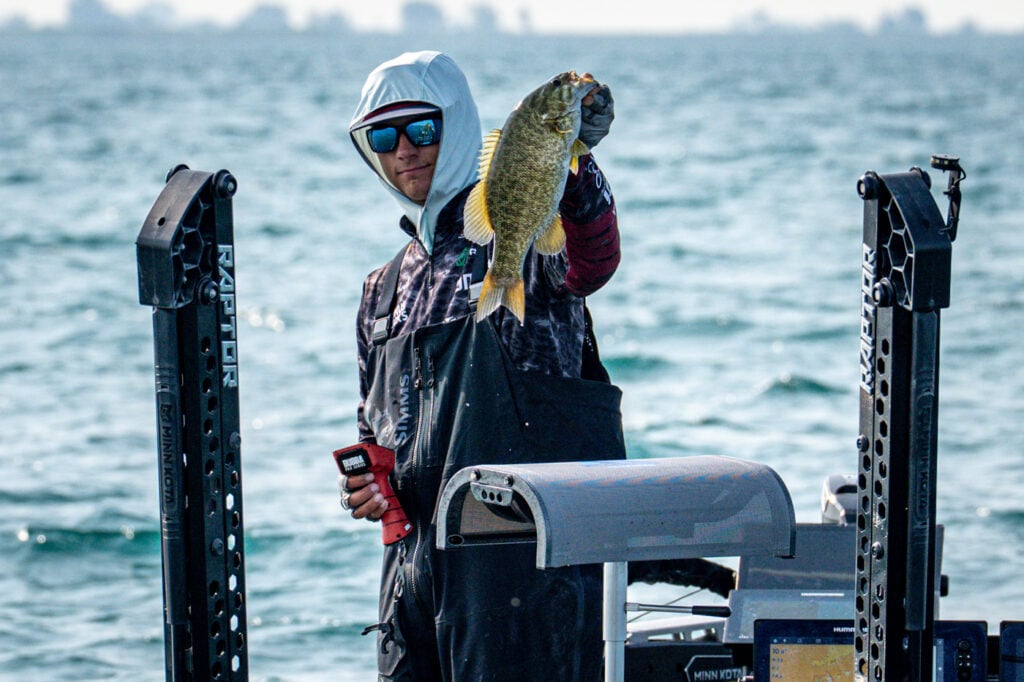
Easton summed up the decision cleanly: “It’s typically, whether it’s open water or cover is the biggest determinant.” If you’re around cover, a faster action drop shot rod makes it easier to drive the hook and move fish out of trouble.
The Spinning Reel Size Easton Uses For Drop Shot Rods
Reel size can become a rabbit hole, but Easton keeps it consistent. “I’m a big 3000 reel size guy,” he said. “Pretty much I’ve settled on for everything now as a 3000.” For most anglers building a drop shot setup, a 3000 size spinning reel pairs well with 7-foot drop shot rods and manages light braid smoothly while giving you a dependable drag for light leader.
The Best Line And Leader For Drop Shot Rods
Easton starts his drop shot system the same way regardless of rig type: “Anytime I’m using a drop shot, no matter what kind of rig it is, it’s eight pound braid.” From there, leader strength changes based on hook style and where he’s fishing.
With the open finesse hook, he stays lighter. “Open style hook, typically will be eight or 10 pound leader,” he said. With the worm-style hook, he steps up. “With the worm style hook, it’ll be more of a 12 pound leader.”
He also keeps leader material consistent: “With this setup, it’ll always be fluoro.” Fluorocarbon leader makes sense for drop shotting because it offers abrasion resistance, good feel, and a cleaner look in clear water, all while maintaining the strength needed for light-wire hooks and steady pressure.
Drop Shot Weights Shape Size And What Easton Actually Carries
Easton tested different weight styles and landed on one shape as his everyday choice. “I’ve kind of just settled on the teardrop for everything,” he said. “It’s just the best all around weight.” Teardrop weights tend to come through mixed bottom well and offer consistent feel, which is why many anglers lean on them when building a system for varied fisheries.
Weight size depends on conditions, but Easton starts light unless he needs more. “Typically, I will start with the lightest weight I can possibly get away with,” he said. When he wants to trigger fish or maintain control, he is willing to increase weight. “There is times where you need a heavy weight to get them, to get a reaction strike out of them.”
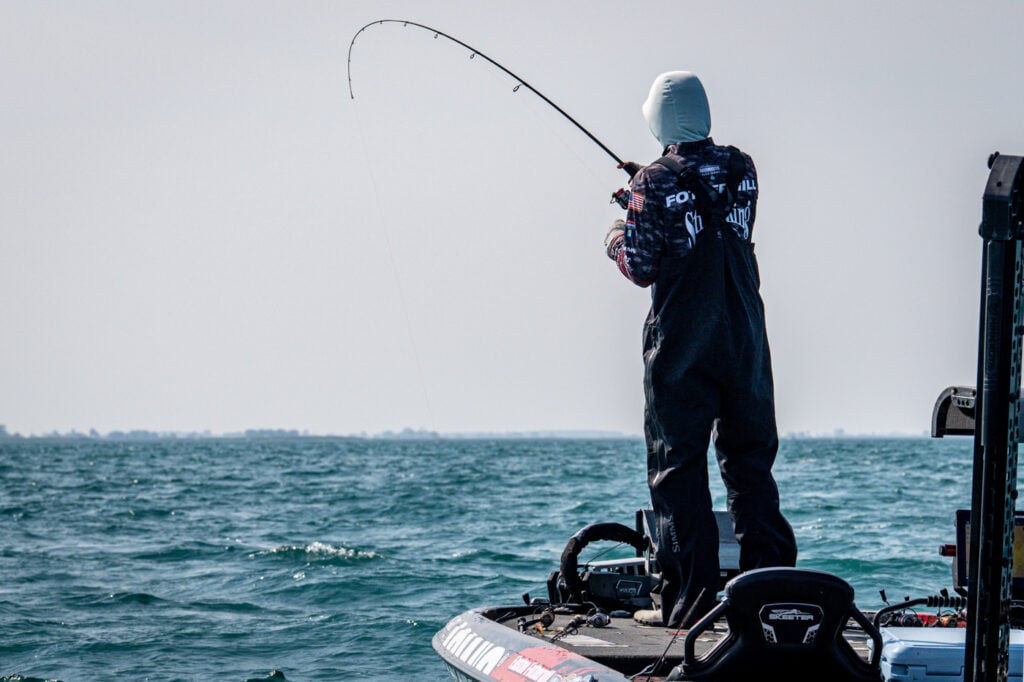
If you want one starting point that matches his day-to-day approach, Easton keeps coming back to a quarter ounce. “A quarter is the best all around weight,” he said.
The Long Cast Drop Shot Rod Approach Most Anglers Overlook
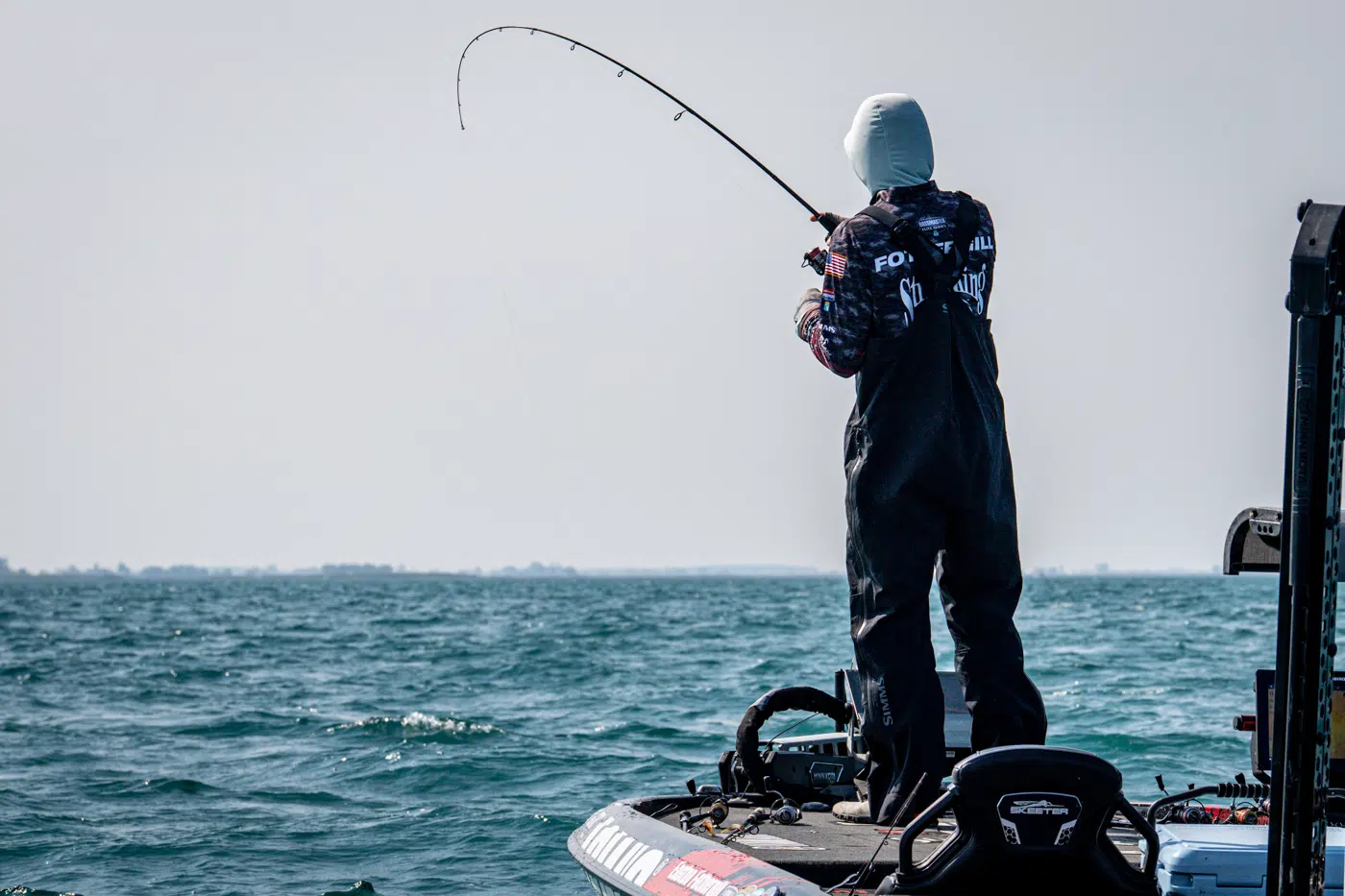
Drop shotting is often taught as a vertical finesse method, but Easton uses it to cover water, especially in big wind and waves when maintaining bottom contact matters. “A lot of times, smallmouth fishing, especially where I’m from up north, you got the giant waves, big winds,” he said. “I actually cast the drop shot on super heavy weight and put a little swimbait on it, and I’ll just reel on the bottom. That’s how I can keep bottom contact super efficiently.”
To do that, he extends rod length. “I’ll use like, a seven foot six,” Easton said. The extra length helps him “bomb it out there even further,” which is the entire point of the technique.
The bait choice is simple and effective. “No, I’m just nose hooking it right through the nose,” he said. “It’s always a paddle tail… I’m straight reeling it, and the paddle tail just be kind of quivering in the back.” That turns the drop shot into a bottom-contact, long-cast presentation that still benefits from the rig’s ability to keep the bait suspended above the weight.
Leader length matters here too. On long casts, the line angle becomes shallow and the bait rides closer to the bottom than most people expect. “It’s going to be a much longer leader, maybe even like, a three foot leader,” Easton said. “Even with a long leader, it’s only going to be… a foot or two off the bottom, if that.” For anglers building drop shot rods for windy fisheries, this is a powerful adjustment that can make the technique feel completely different.
Drop Shot Rods In Cover Docks Shade Lines And Tight Targets
A major misconception is that drop shotting only belongs in open water. Easton treats it as a precision tool around isolated targets. “It’s very, very… I’m throwing at targets when I’m using a drop shot,” he said. He isn’t randomly working water. He’s putting the bait where a fish already wants to live.
Docks are a great example. Easton looks for positioning clues that repeat day after day. “Typically they’ll be on the post that’s closest to the shade line because they want to be near the sun, but just out of it,” he said. When he’s fishing dock posts with a drop shot, he focuses on the posts that sit closest to that shade edge, because that is where fish can hold comfortably and still feed.
This is also where drop shot rods can shine when fish are pressured. “That’s another instance where I feel the bite is really tough,” Easton said. “That’s what I’m gonna be pitching around all the dock posts as a drop shot, just because I’m so confident that if there’s one there, it’s gonna pick up it.”
Cadence Matters Why Easton Dead Sticks A Drop Shot So Often
Many anglers want to shake a drop shot constantly, but Easton often does the opposite. “Dead sticking is almost usually more powerful than sitting there and shaking it,” he said. That one sentence explains a lot about why the right drop shot rod action matters. A rod that loads smoothly and holds pressure makes dead-sticking easier, because you can keep the rig pinned in place while still staying connected enough to detect the bite.
A Real World Proof The Santee Cooper Cypress Tree Fish
If you want a clear example of why the worm-hook drop shot setup belongs in your system, Easton’s Santee Cooper story is hard to beat. “Last year I was at Santee Cooper, and I had a fish on bed next to a cypress tree,” he said. Traditional bottom baits weren’t getting the job done, so he made the switch. “I ended up going to that worm style hook on drop shot,” Easton explained, even though most anglers would not think to pick it up in a cypress forest.
The presentation required patience and precision. “It took… five or six tries to get the bait where I wanted, just because it was such a tight spot with all the branches,” he said. Once the bait was placed correctly, he relied on the rig to hold it above the bottom and in the fish’s space. “All I did was hold it tight,” Easton said. “I sat there for probably two to three minutes, didn’t move.” Eventually the fish committed. “Finally… boom, started swimming off,” he said. The result was exactly the kind of bite tournament anglers build patterns around: “It was a seven and a half pounder on day one.”
Drop Shot Rods Around Grass Edges And The Power Shot
Grass is another area where drop shot rods can be more effective than most anglers realize. On grass edges, Easton likes the worm hook and a spinning setup. “The grass edges, I’ll be using that worm hook on a spinning rod,” he said. He believes the drop shot will often outproduce other baits after the fish get pressured. “You can start with your traditional jigs and Texas rigs, and you may get a big bite,” Easton explained. “But I think when you throw a drop shot in there, you’ll catch everyone that lives in there.”
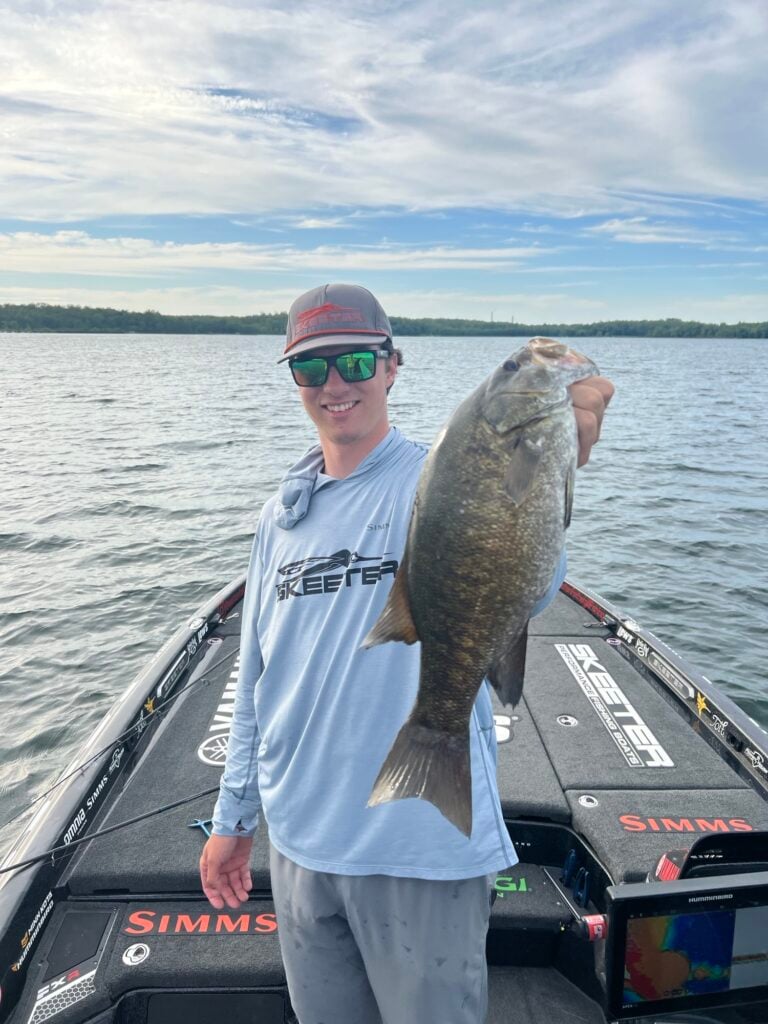
When he wants to go farther into the grass, he shifts into a heavier, more aggressive version of the technique. “I call it a power shot,” Easton said. “If I want to go up in the grass, I’ll actually use it on baitcaster and start flipping with a drop shot.” The line system scales with the cover. “I beef up the setup,” he said. “It’s 30 pound braid to 20 pound fluoro.” This style blends flipping and drop shotting into a cover system, and it calls for drop shot rods with the backbone and action to move fish out fast.
The Simplest Way To Pick The Best Drop Shot Rod
If you want to build or buy drop shot rods that match how Easton fishes, start with two questions. First, are you fishing open water, or are you around cover. Easton’s own rule is that cover often makes the decision for him. Second, are you using a light-wire open finesse hook, or a stouter worm-style hook. The open-hook system rewards a softer, parabolic rod that supports a reel-set hookset and keeps fish pinned. The worm-hook system rewards a faster action rod that drives the hook and gives you control around grass, docks, and tight targets.
Most importantly, keep the presentation honest. Easton has proven over and over that the drop shot is not just about doing more with the bait. Sometimes it’s about doing less. As he said, “Dead sticking is almost usually more powerful than sitting there and shaking it.” When your drop shot rod matches your hook and your application, the technique becomes what Easton says it is for him: the first thing you reach for when you need bites and do not know what else to do.