Fishing rod wraps can elevate a rod from a functional tool to a work of art, displaying both skill and personal style. From beginners to seasoned builders, wrapping techniques add creativity and uniqueness to every rod. Leaders like David Boyle, who created Visual Wrap and Visual Weave software, and Mary Christy, an accomplished rod artist and instructor with ThreadCentral.net, have been pivotal in advancing rod wrapping by providing essential tools, patterns, and tutorials. “For me, there’s no end to what you can create,” says Christy. “Rod wrapping is the canvas, and thread is your paint.” Here are seven types of wraps every rod builder should learn.
1. Closed Decorative Cross Wraps
Closed decorative cross wraps are essential to rod-building techniques, creating intricate geometric patterns with crisscrossed threads. These patterns for fishing rod wraps require precise layout and consistent spacing for balanced, eye-catching designs. David Boyle’s Visual Wrap software streamlines the process: “The idea was to help rod builders see what their wraps would look like before they started, so they could make changes digitally instead of halfway through a real wrap,” Boyle explains. This software allows builders to visualize wraps in 3D, preview color choices, and make adjustments to fit any blank.

Mary Christy, who includes detailed instruction on cross wraps in her courses at ThreadCentral.net, emphasizes the importance of practice and patience: “When you take your time with cross wraps, you end up with a result that has a truly professional look. And with a tool like Visual Wrap, you’re able to test out your design and save hours of frustration.”
2. Color Fades and Shading Wraps
Color fades and shading wraps take rod wrapping to an artful level by creating seamless transitions between colors. While difficult to achieve manually, digital tools help builders visualize complex gradients before threading. “The color fade, when done right, really draws the eye along the rod,” Boyle shares. “With Visual Wrap, builders can experiment with shades and tones before committing to a thread, which makes a world of difference.”
Christy specializes in teaching fades and shading techniques, and her tutorials include tips on color theory, thread selection, and placement for smooth transitions. “These wraps add depth to your work,” she explains. “I always tell my students that a good fade looks almost like it’s been airbrushed. It’s about taking the time to find the right color combinations.”
3. Multi-Layer Weaves
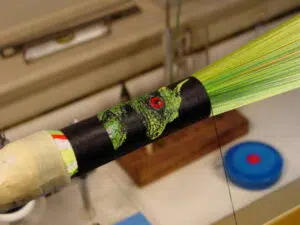
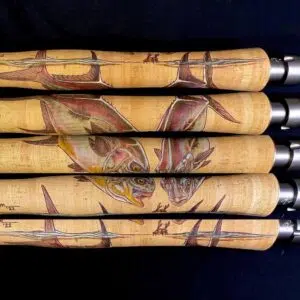
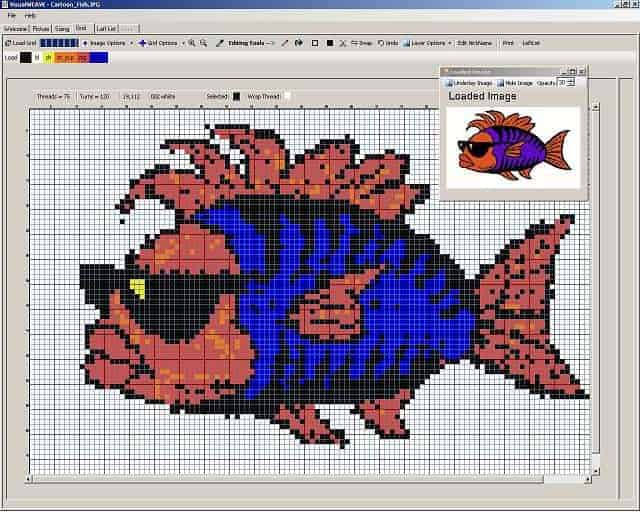
Multi-layer weaves introduce texture, dimension, and vibrant color to rods, creating elaborate designs like symbols, images, and geometric patterns. Visual Weave software, another innovation from Boyle, simplifies the process by allowing users to import designs, size them to the blank, and preview results. Boyle emphasizes the flexibility of his software: “You can import almost any image, tweak it, and generate a left list [the guide for weaves], so the final product looks like what you envisioned.”
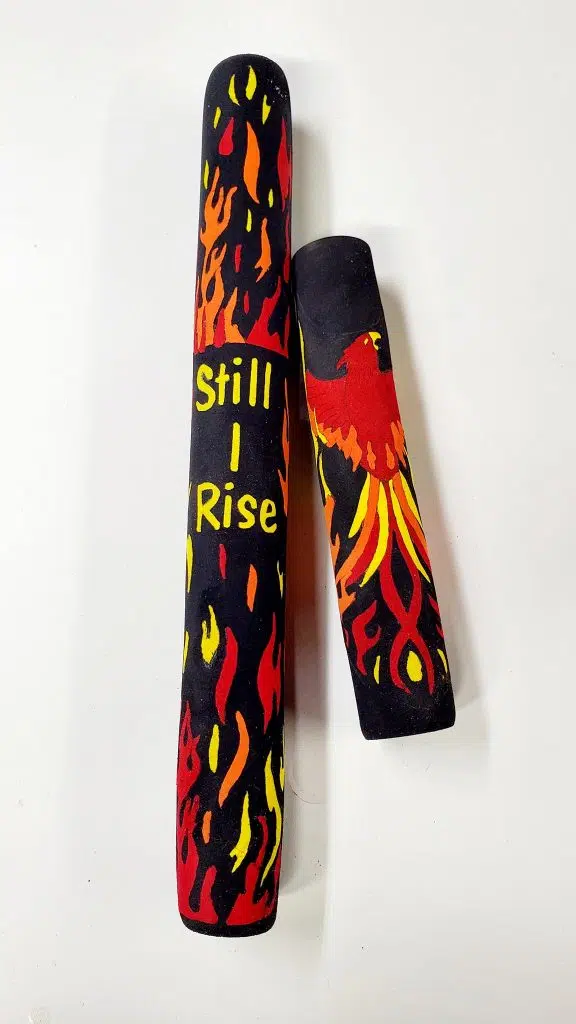
Mary Christy’s courses also cover multi-layer weaves, showing builders how to break down complex designs layer by layer. “It’s one of the more challenging wraps, but the payoff is incredible,” Christy says. “Once you get the hang of it, you can do portraits, logos, or any image that resonates with you or your customer. It’s an art form of its own.”
4. Side Patterns
Side patterns, with their unique asymmetrical designs, add a subtle but striking element to rods. Side patterns were once difficult to execute with precision, but Visual Wrap has made them accessible to builders of all skill levels by offering customizable designs and templates. “Side patterns are tricky because they can easily overpower the rest of the rod,” says Boyle. “The software helps by letting you preview placement and balance, so it’s a tool to help you plan, not just a decorative choice.”

Christy often includes side patterns in her fishing rod wraps, encouraging builders to experiment and find a style that suits their overall vision. “A well-placed side pattern is like a signature,” she explains. “It’s understated but unique, and it adds something special that catches the light differently.”
5. Carbon Fiber Accent Wraps
As carbon fiber has become more popular in custom rods, wrapping techniques have evolved to complement its sleek, modern look. “The color and texture of carbon fiber are so unique, and a custom wrap should enhance that instead of distracting from it,” Boyle points out. With Visual Wrap, builders can experiment with color and pattern combinations that work with the rod’s materials rather than competing with them.
Christy, known for her attention to detail, integrates carbon fiber accents in her designs to elevate rods further. “With carbon fiber, you’re dealing with a different level of craftsmanship,” she says. “When paired with the right thread colors and subtle wraps, carbon fiber adds a level of sophistication that really appeals to high-end clients.”
6. Custom Logo and Branding Weaves
For those looking to personalize their rods, custom logo and branding weaves are the way to go. Visual Weave software allows builders to convert images into weave patterns, generating detailed left lists that make intricate designs manageable. Boyle says, “I always wanted Visual Weave to be more than a tool; it’s a way to help builders create something personal and meaningful.”
Christy stresses the importance of creating weaves that reflect the builder’s style or the client’s identity. “When you’re weaving a logo or a brand symbol, it’s not just about accuracy; it’s about representing something personal,” she explains. Her classes on custom weaves cover everything from setting up the design to choosing colors and final execution, making sure each detail reflects the vision behind it.
7. Freestyle and Experimental Wraps
Freestyle wraps are perfect for builders looking to push their creative boundaries. These wraps combine various techniques, colors, and patterns to create something entirely unique. Boyle encourages innovation with his software: “With Visual Wrap and Visual Weave, builders have the freedom to experiment digitally before committing to a design on the rod. It’s about removing the limitations so creativity can take over.”
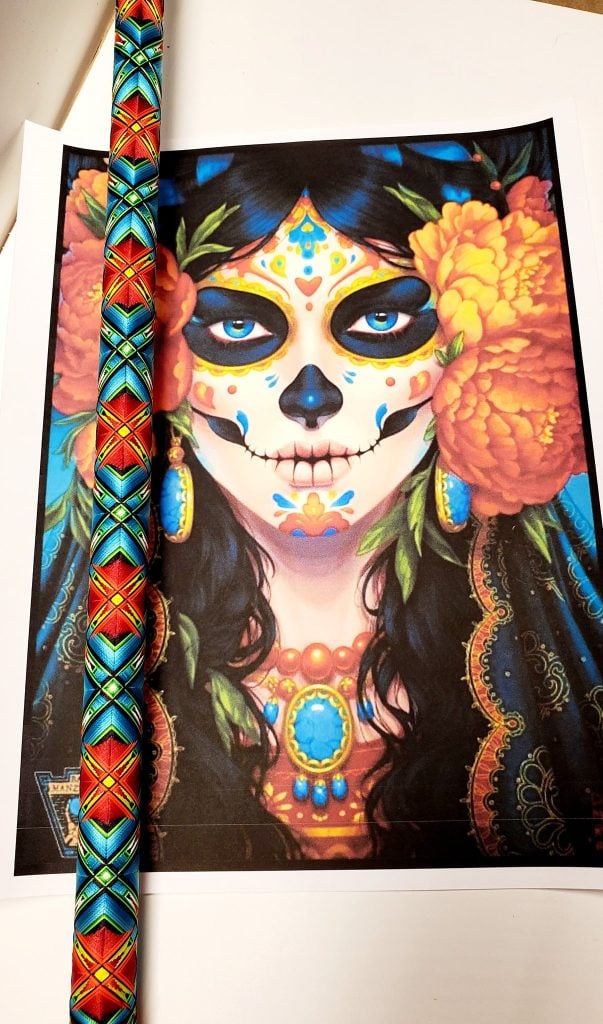
Christy also believes freestyle wraps are essential to advancing a builder’s skill. “Once you understand the basics, freestyle is where you really get to explore your own voice,” she says. “Some of my favorite projects are ones where I didn’t plan the whole wrap, but rather let the process guide me. It’s all about finding that spark and seeing where it takes you.”
Final Thoughts: Mastering the Art of Rod Wraps with Expert Tools and Guidance
Thanks to trailblazers like David Boyle and Mary Christy, rod builders today have an array of resources to master fishing rod wraps that were once difficult to achieve. Visual Wrap and Visual Weave empower builders to envision, adjust, and perfect designs before touching a thread, while Christy’s hands-on courses and tutorials break down each technique in accessible ways. “We’re just at the beginning,” Christy says. “The more builders we bring into the community, the more creative and advanced we can all become together.”
Boyle agrees, adding, “Whether you’re an old hand at rod building or just getting started, these tools make it easier to create something incredible.” Mastering these seven wraps will not only improve your skills but also bring each rod to life in unique, creative ways that anglers and builders alike will appreciate.