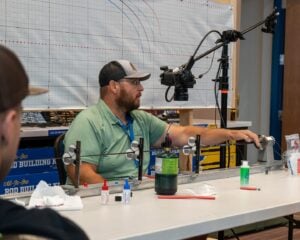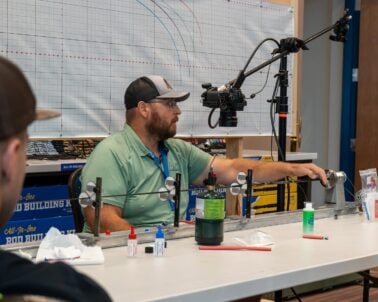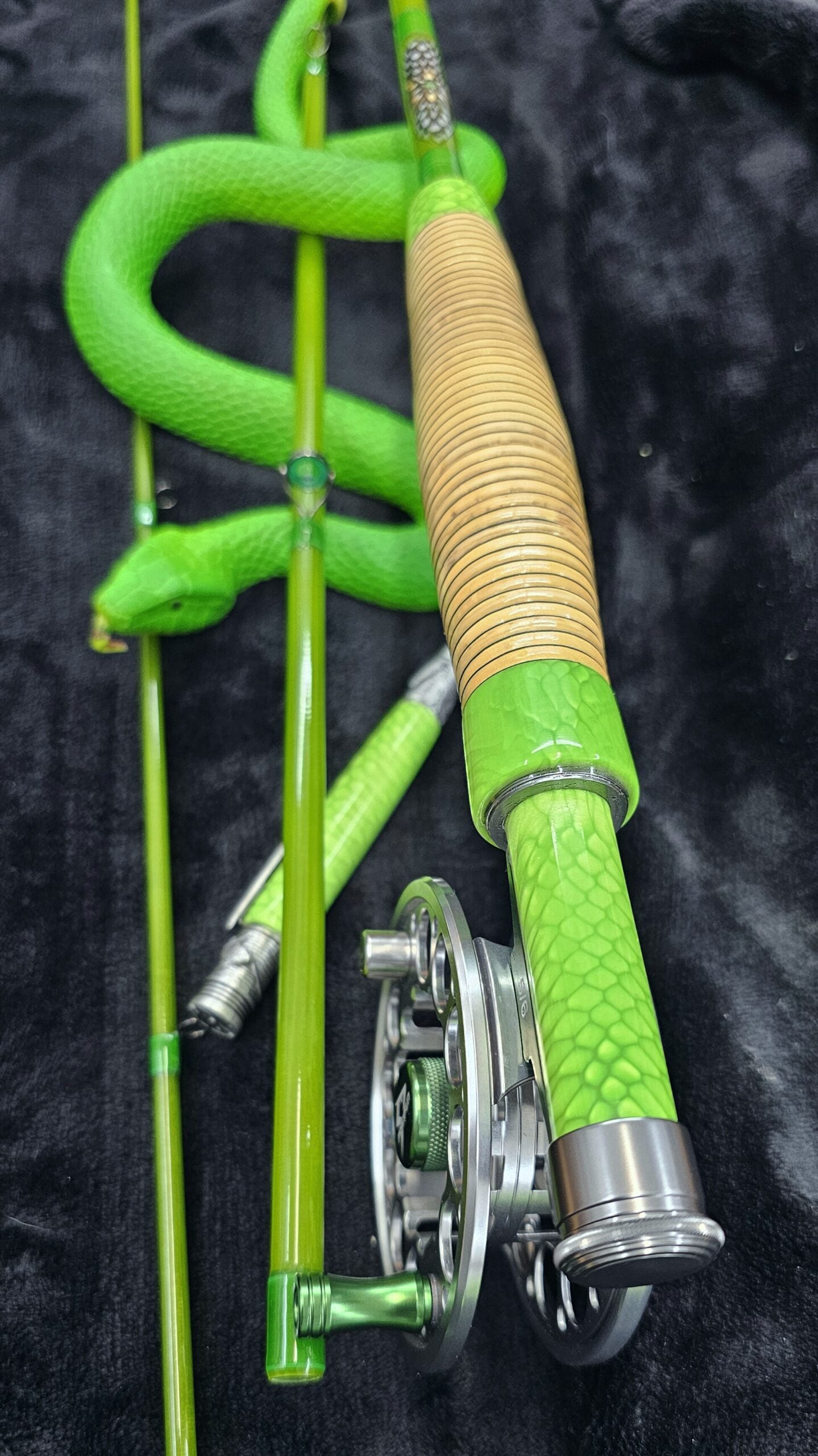
Custom rod building has always lived somewhere between problem-solving and art. A builder starts with a blank, guides, thread, grip material, reel seat, finish, and a customer’s fishing style, then tries to turn those pieces into something that feels right in the hand and performs on the water. For years, that meant choosing from the parts available in catalogs, modifying what could be modified, and accepting that some components simply did not exist in the right size, shape, color, or material. Today, 3D printed fishing rod components are giving builders another option, making it possible to create highly customized parts that can be designed around a specific rod, fishing application, or builder’s vision.
That is beginning to change. As 3D printers have become more accessible, some custom rod builders are using them to make fishing rod components that are difficult, expensive, or impossible to buy off the shelf. Winding checks, trim pieces, reel seat bodies, butt caps, grip shells, ergonomic handle forms, and other custom parts can now be designed, resized, printed, tested, and refined in a rod builder’s own shop.
Few builders are better suited to talk about that shift than Mark Crouse, also known as the Munich Rod Man. Crouse has been building rods for more than 50 years, having started at age 12 in Germany after his mother brought home what she thought was a fishing rod. It was actually just a blank. With no guides, no handle, and no reel seat installed, Crouse had to figure out how to turn it into a fishable rod. He taped the guides on, wrapped the handle with parachute cord, and made it work.
When he caught a fish on that first rod, he was hooked.
That early need to improvise still shows up in his work today. In a recent interview on the Mastering Rod Building podcast, Crouse talked about the way builders once had to solve problems with whatever materials, tools, and information they could find. “When I was growing up, we didn’t have internet, we didn’t have documentation on everything,” Crouse said. “There were hardly any books printed about it, so it was trial and error.”
That same trial-and-error mindset is now pushing him into one of the more interesting corners of custom rod building: 3D printed fishing rod components.
Why 3D Printing Is Gaining Ground In Rod Building
The rise of 3D printed fishing rod components in custom rod building is not really about replacing every part on a rod. It is about giving builders another way to solve very specific problems. A builder may need a winding check in a size no one sells. A customer may want a reel seat in a color that has disappeared from the market. A grip may need to fit one angler’s hand, not the average hand. A butt cap may need to match a particular design instead of looking like the same rubber cap found on hundreds of other rods.
For Crouse, the lightbulb moment came outside the rod-building world. He was at a friend’s metal shop when his friend printed a temporary part for a Harley-Davidson motorcycle so the rider could get home. The part was not holding an engine together, but it was strong enough to do the job it needed to do.
“I thought, man, if it can bring enough strength to hold that for a while, it will work for a fisher,” Crouse said.
That is the kind of practical thinking that makes 3D printing attractive to rod builders. Fishing rod components do not all carry the same structural load. Some parts need to be extremely strong. Others need to be light, accurate, comfortable, decorative, or precisely sized. A printer gives the builder a way to experiment with those details without waiting on a manufacturer to make a special run of parts.
Crouse does not approach 3D printing as a gimmick. He approaches it the same way he approaches every part of a custom rod: as a way to build something the customer cannot simply buy somewhere else. “Our big thing was to make rods that you couldn’t buy,” he said, talking about the early days of his rod-building career. That idea still fits today. If a builder is only assembling catalog parts, the rod may be custom in layout and finish, but many of its pieces are still standard. A 3D printer gives the builder another path toward something truly one-off.
What Fishing Rod Components Can Be 3D Printed?
The most practical 3D printed fishing rod components are often the smaller parts that help finish, fit, or personalize a build. Crouse has experimented with reel seat bodies, winding checks, trim pieces, butt caps, grip shells, and other custom fitments. These are the kinds of parts where size, shape, color, and fit matter, but where traditional inventory can be limiting.
A winding check is a simple example. Most builders have boxes full of them, but that does not mean they have the exact size, color, or profile they need for the rod on the bench. Crouse joked that after decades of building, he may have a thousand winding checks in his shop, but still not the right one when he needs it. With a printer, he can open a file, change the size, and print the part.
“With the printer, I just take two steps over, pull up my file with winding checks, change the size, print,” Crouse said. “Ten minutes later, I’m back in the game.”
That kind of speed changes the way a builder thinks. Instead of designing around what is available, the builder can design around what the rod needs. If a customer wants a purple rod and the builder needs a size 22 winding check to match, he no longer has to settle for a bulky oversized part or a color that is close enough. Crouse said a builder can draw the part, print it, and have it on the rod quickly.
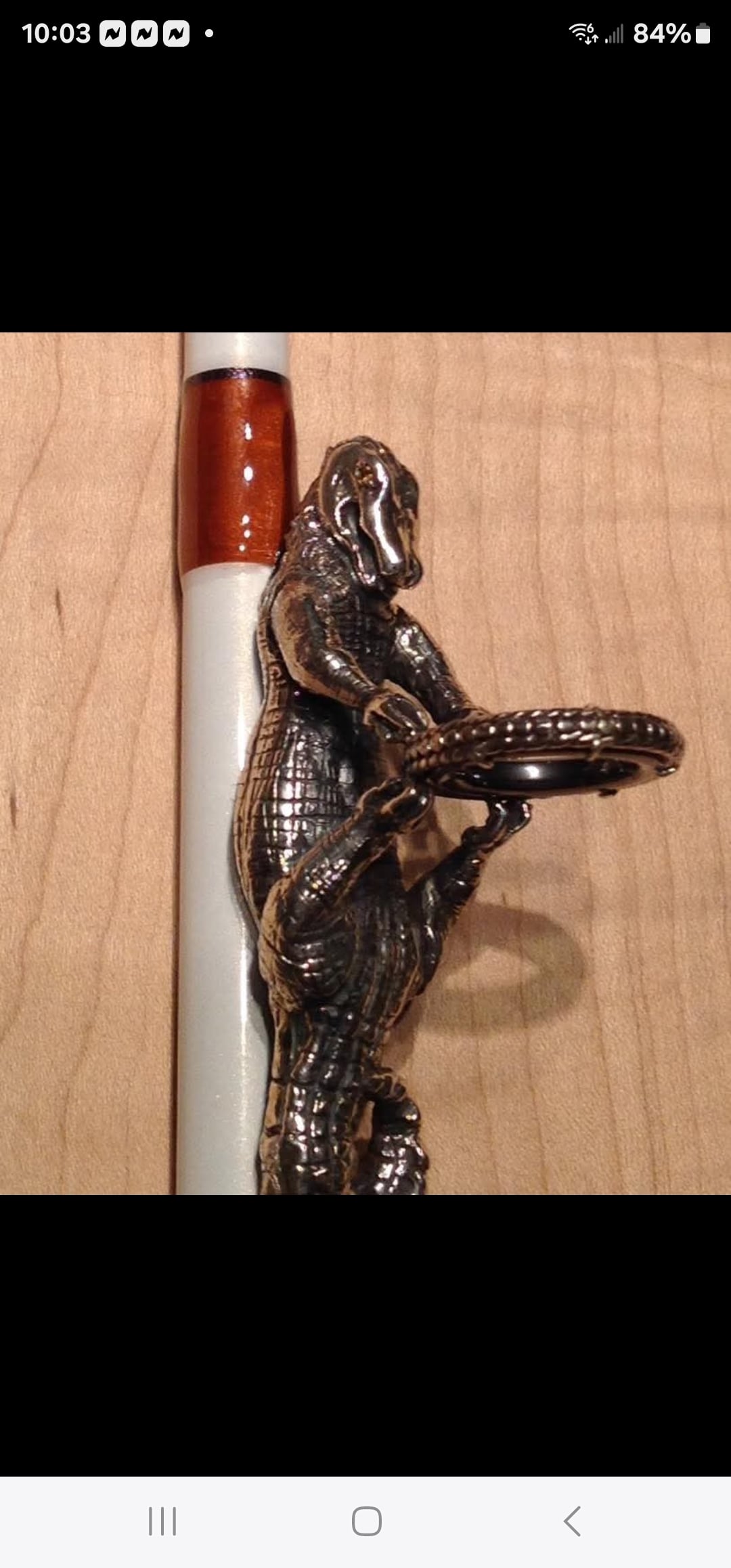
Reel seat bodies are another area where 3D printing opens doors. Crouse described a reel seat color he liked but could no longer find. Rather than abandon the idea, he bought filament in the color he wanted, used Fuji hoods, and printed the body himself. That is an important point: 3D printing does not have to replace trusted components. It can work alongside them. A builder may still use proven hoods, guides, and other hardware while printing custom bodies, checks, trim rings, or parts that allow the finished rod to better match the customer’s needs.
Butt caps are another example. When Crouse came back to the United States in the early 1990s, he was frustrated by the lack of high-end butt cap options compared with what he had seen in Europe. He remembered asking why he should spend hundreds of dollars on premium components and then finish the rod with a cheap rubber butt cap. That frustration led him to start making his own parts.
“So I had to start making my butt caps,” Crouse said. “Once I did that, okay, let’s make the trim parts. Then once I did that, well, let’s make the reel seats.”
That natural progression is exactly where 3D printing fits. Once a builder can make one part, he starts seeing other parts that could be improved, resized, reshaped, or customized.
From Idea To Finished Component
The process begins with a problem. Maybe the rod needs a certain shape. Maybe a customer wants a color match. Maybe the blank diameter requires a size that is hard to find. Maybe the builder wants a grip that is not round, because round is not always the most comfortable shape for a hand. From there, the idea has to become a digital model.
Crouse said builders do not necessarily have to start with expensive design software. “You can get Tinkercad or Corel,” he said. “There’s a lot of programs online you can download for free.” Of those, he said Tinkercad is a good place to start because it is accessible and easy enough for a beginner to begin designing simple parts.
Once the part is designed, it goes into a slicer program. The slicer tells the printer how to build the part, including wall thickness, infill, density, overhangs, and surface finish. This is where 3D printing becomes both powerful and frustrating. Two builders may use different printers, different filaments, different slicers, and different settings, which means one person’s file may not automatically print perfectly on another person’s machine.
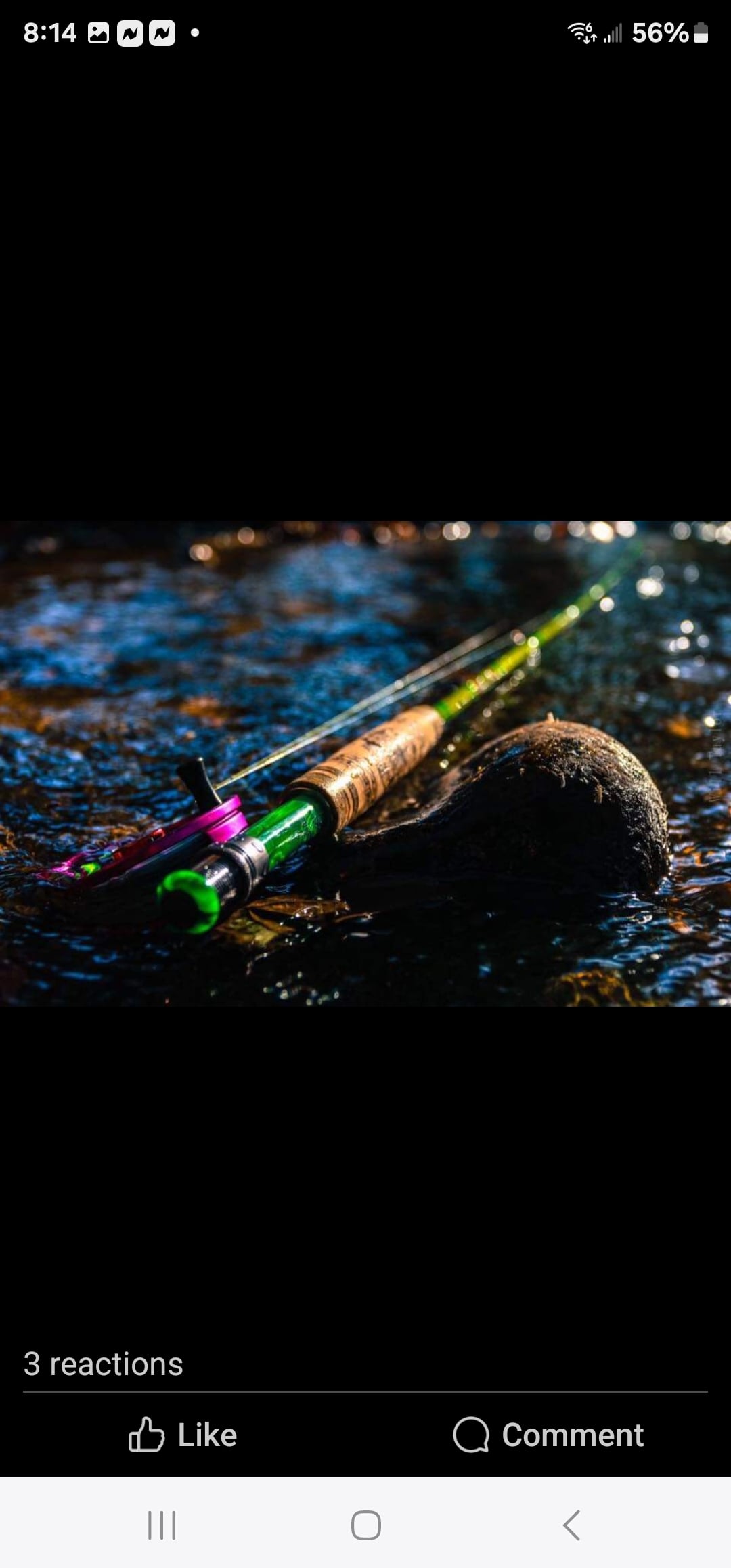
“If I write a program now to make that reel seat, I use a Bambu Labs, you use Creality,” Crouse said. “If I sent you the finished STL file, your Creality might not run with it, because I have different settings in my Bambu.”
That is why Crouse keeps coming back to practice. The printer is not a magic box that removes craftsmanship from the process. It is another tool that has to be learned. A builder still has to understand fit, finish, strength, heat, surface quality, and whether the part actually solves the problem it was meant to solve.
For some simple components, the timeline can be surprisingly short. A winding check can be drawn, sized, printed, and installed quickly once the file and settings are dialed in. More complicated reel seat bodies, grip shells, and carbon-skinned parts take more time, testing, and finishing work. The advantage is not always that 3D printing is faster than buying a part. The advantage is that the part can be made exactly for the rod in front of the builder.
Materials Make Or Break The Part
The material matters as much as the printer. Not every filament belongs on a fishing rod, and Crouse is careful about matching the material to the application and environment. A rod used in a cool climate is different from a rod left in a hot truck in Florida, Texas, or Alabama. A decorative trim piece is different from a reel seat body. A grip shell that will be covered in carbon fiber is different from a finished printed part that will be exposed.
“You have to look for temperature,” Crouse said. He explained that regular PLA or PLA Tough may work in some cooler environments, but in hotter places it can distort. “It won’t break, but it could shift a little bit in high temperatures,” he said.
For many of his rod parts, Crouse likes PETG-CF, a PETG filament with carbon fiber. He also uses ABS when he needs a material that can handle more heat. “If I print something out for somebody who lives in big heat, I use the filament, it’s called ABS,” he said. That material requires higher printing temperatures and more control, but it gives him another option for parts that may see tougher conditions.
Strength has been one of the surprises. Crouse described printing a reel seat when something went wrong after only a very small section of the threading had printed. He removed the thin ring of printed material and tried to break it by hand. He could not. Compared with a thin piece cut from a nylon seat, he found the carbon-filled printed material surprisingly tough.
“It’s very strong,” he said.
Still, the material choice has to match the part. Crouse is not saying every builder should print every component from the same filament. He is saying that builders need to think about heat, humidity, strength, flexibility, surface finish, and how the part will be used. A printed component is only as good as the material, design, and settings behind it.
Real-World Performance And Durability
Credibility matters with 3D-printed rod components because fishing rods are tools, not display pieces. A part may look good on the bench, but it still has to survive heat, handling, load, water, sun, and repeated use. Crouse has tested parts by using them on rods, handling them, refining them, and in some cases leaving printed winding checks in the sun to see whether the color holds.
The most important lesson is that not every printed part has to carry the same load. A winding check, trim ring, or decorative insert has a different job than a reel seat or fighting butt. Grip shells, especially those covered with a carbon fiber sleeve, become part of a composite structure rather than just a printed plastic part. That allows the builder to use 3D printing to create the shape, then use carbon fiber to create the final strength and surface.
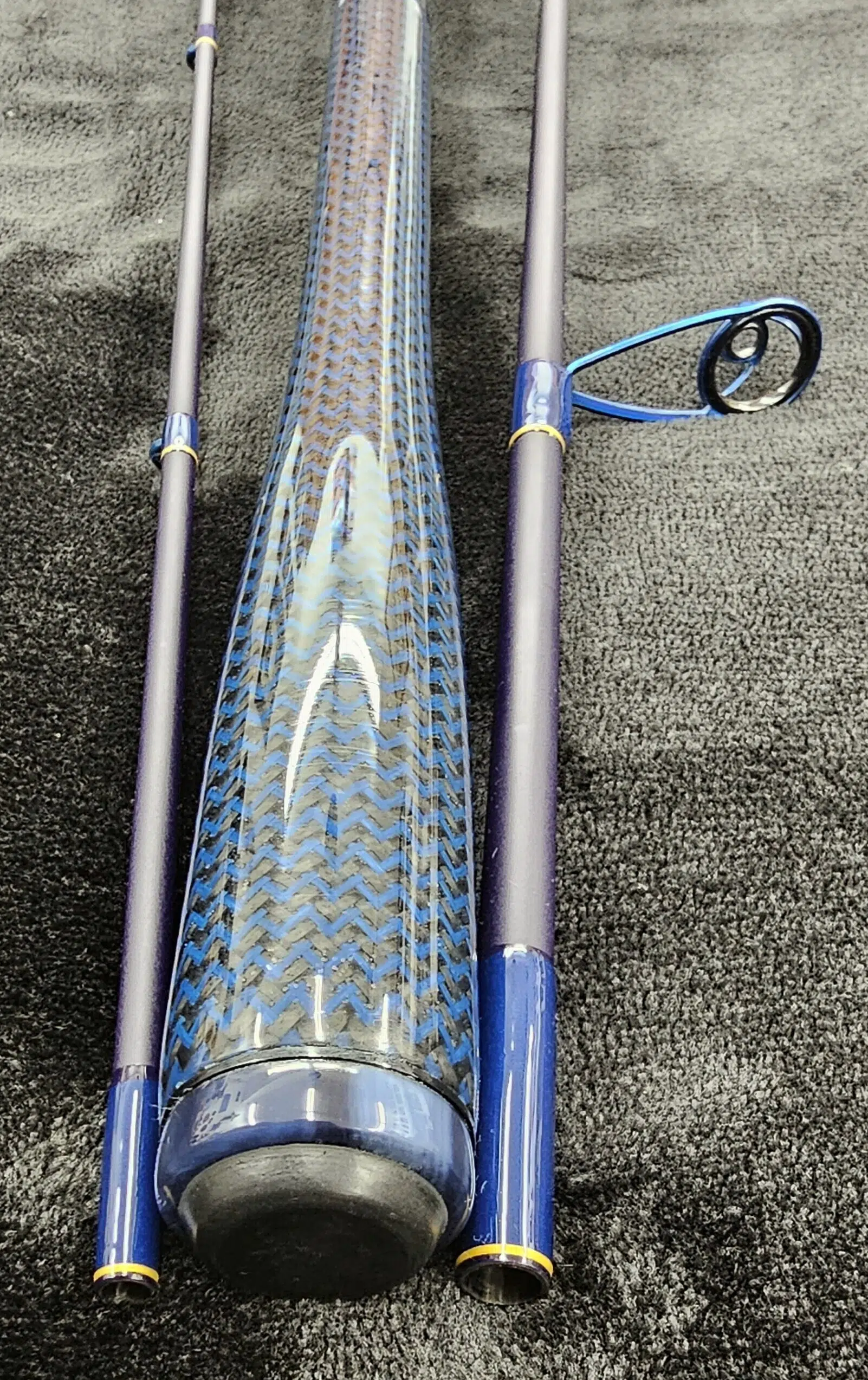
Crouse’s carbon fiber grip shells are a good example. He can print a thin shell or form, cover it with a carbon fiber sleeve, add lamination fluid, and cure it into a light, strong part. He said he began with thicker walls and has worked down to very thin printed shells. “Now I’m down to 0.7 millimeter,” he said. “I make them really thin, very, very light, and then I cover them with a sleeve.”
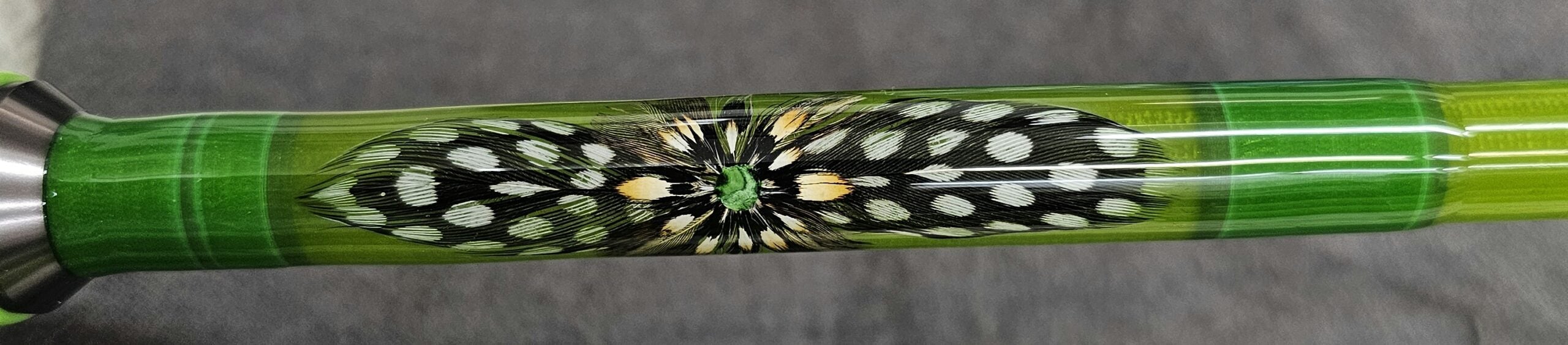
Once the carbon is laminated, the part becomes much stronger than the shell alone. “Once you put your lamination fluid on it and it dried down, it is hard like a rock,” Crouse said.
That does not mean the process is foolproof. Crouse tried shrink tubing and heat during the carbon process, but found that too much heat could collapse a thin shell. He now uses a process that involves pulling the carbon sleeve tight, applying lamination fluid, waiting for it to soak in, rubbing it into the sleeve by hand, removing excess resin, tightening the ends again, and curing it under pressure. It is not beginner-level work, but it shows how 3D printing can become part of a larger custom-building system.
Where 3D Printing Changes The Game
The biggest advantage of 3D printing is not that it makes normal parts cheaper. It is that it makes unusual parts possible. A builder can print a reel seat body in a color that is no longer available. He can make a winding check in the exact size he needs. He can change one axis of a part without changing the others. He can create ergonomic grips that are oval, curved, asymmetrical, or shaped around how a person actually holds a rod.
That last point matters because most rod components are round for a simple reason: they are turned on a lathe. Round parts are efficient to make, easy to inventory, and familiar to builders. But hands are not round, and a grip that works for one angler may not work for another. Crouse thinks about rod grips the way a person might think about tool handles.
“Anytime you pick up a tool handle, it’s never round,” he said. “It’s always oval.”
For Crouse, comfort is not a luxury. It affects fishing. If an angler’s hand gets uncomfortable, he gets irritated, loses focus, and may miss strikes. “It’s at the beginning, it’s never that much about looks,” he said. “It’s about functionality. And then, if I get it to work, and I know, okay, I can repeat that 100 times, it will be always the same. Okay, now we can try to make it pretty.”
That is a strong way to think about 3D printed fishing rod components. The printer is not just there to decorate the rod. It can help make the rod more comfortable, more personal, and more functional. It lets a builder solve a fit problem first, then refine the look.
For custom builders, that has real value. Most factory rods are built for an average user. Grip sizes, reel seats, butt caps, and component shapes have to fit as many people as possible. A custom rod does not have to do that. It only has to fit the person who will fish it.
Cost, Time, And Accessibility
For a part-time builder, the first question is usually whether 3D printing is worth the investment. The answer depends on what kind of rods the builder wants to build. If someone is happy using standard parts and only builds a few rods a year, a printer may not make sense. But if a builder is constantly searching for special sizes, custom trim pieces, unique reel seats, or one-off decorative parts, the value starts to become clearer.
Crouse said a builder does not necessarily need to spend a fortune, but he does recommend buying a better enclosed printer rather than the cheapest open-frame option. “What do you want to do? You want to do precise parts. You need a good printer,” he said. He estimated that a better enclosed machine may cost roughly $150 to $200 more than a basic open printer, but that added control can matter.
One reason is heat. Another is humidity. Crouse said filament can pick up moisture while it is being stored or while it is exposed on a printer. That can affect print quality. “Do not get an open printer like a lot of them are, because that means your filament is in the open too,” he said. He also recommends an AMS feeder or similar system that keeps filament enclosed, dry, and controlled while feeding into the printer.
The time investment is real. A builder has to learn software, slicer settings, filament behavior, printer maintenance, and finishing techniques. But once a file is built and dialed in, it can be reused and modified quickly. If Crouse prints a reel seat in size 22 and later needs the same style in size 24, he can adjust the file rather than starting over from scratch.
“So now it’s in my printer’s file,” he said. “You can change the percentage, the overall percentage. You can change one axis or two axis or all three axis. You can change it, manipulate it the way you need it.”
That may be the real payoff. A 3D printer is not just a way to make one part. It is a way to build a private library of custom components that can be adapted from rod to rod.
Limitations And Beginner Mistakes
For all the promise of 3D printed fishing rod components, Crouse is clear that it takes work. Different printers behave differently. Filament recommendations are not always accurate. Settings matter. Temperature matters. Humidity matters. Surface finish matters. Some designs fail. Some materials are wrong for the job. Some parts need more strength than a printed part should provide.
One of Crouse’s biggest warnings is not to trust every number on the back of a filament spool. “One tip on the back of your spool, it tells you operating temperature,” he said. “Ninety percent of the time that temperature is wrong.” His solution is simple, but not always quick: the builder has to test, adjust, and learn how that filament behaves on that printer.
He also warns that printing is not as open and well-documented as some people might assume. He has worked with others, asked questions, contacted people, and still found that much of the knowledge has to be learned by doing. “I really don’t do secrecy,” Crouse said. “I tell you what I did.” But he also admits that he does not have one universal solution for every builder because every printer and setup can behave differently.
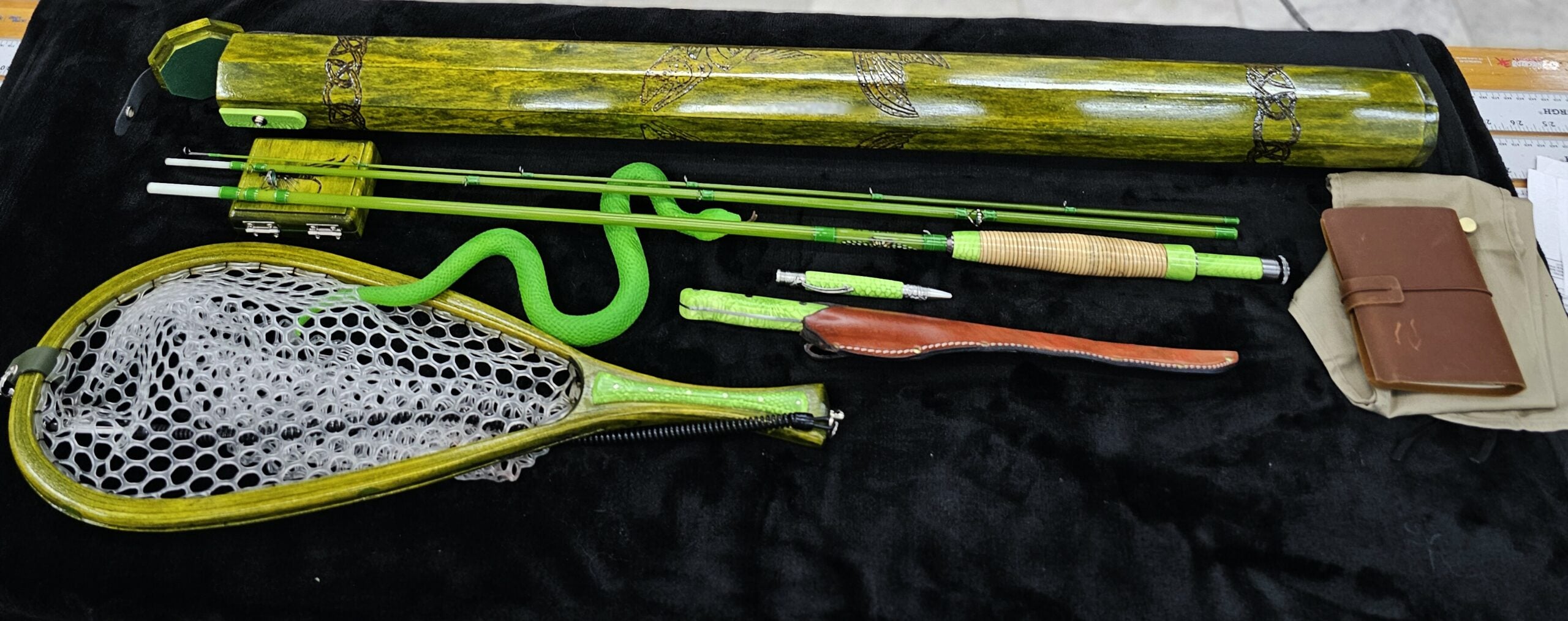
Beginners should also be realistic about which parts to print first. A simple winding check, trim ring, or decorative part is a better starting point than a complex reel seat or structural handle system. It is better to learn with low-risk parts than to build a critical component before understanding the material and printer.
There are also times when buying a traditional component is still the smart answer. If a standard reel seat, guide, or grip component already fits the build perfectly, there may be no reason to reinvent it. The best use of 3D printing is not replacing proven parts for the sake of novelty. It is filling the gaps, solving fit problems, and creating custom touches that standard inventory cannot provide.
The Future Of 3D Printed Fishing Rod Components
The future of 3D printed fishing rod components will likely depend on better materials, easier software, more consistent printers, and builders willing to experiment. Crouse is already looking beyond simple printing. He mentioned printers that also offer laser engraving and laser cutting, as well as rotary attachments and scanning technology. For serious custom builders, these tools point toward a future where more of the rod can be designed, personalized, engraved, sized, and fabricated in-house.
That does not mean major component companies disappear. If anything, the future may involve a combination of trusted factory components and custom printed parts. A builder may still rely on proven blanks, Fuji guides, hoods, thread, finish, and other supplies while printing the exact parts needed to make the rod more personal and precise.
The larger trend is toward more control at the builder’s bench. Desktop tools that were once out of reach are becoming more affordable. Builders now have access to printers, small lathes, laser engravers, scanners, and design software that can turn a one-person shop into a small design and fabrication studio. For builders who want every rod to be different, that matters.
Crouse has spent more than five decades building rods, and he still sees new tools as part of the same old mission: make something that fits the angler and cannot be found anywhere else. “No two rods look alike,” he said. That philosophy may be where 3D printing fits best. It helps builders move farther away from repetition and closer to true custom work.
Practical Advice For Builders Who Want To Start
For a builder who wants to try 3D printing, the best first step is not buying the most expensive machine or designing a complicated reel seat. Start with a simple part that solves a real problem. A winding check is a good example because it teaches sizing, wall thickness, surface finish, color, and printer settings without putting the whole rod at risk. Trim pieces and simple decorative parts are also good early projects.
From there, learn the software and play with the printer before expecting perfect results. That does not mean being careless. It means accepting that experimentation is part of the learning curve.
The next step is understanding the material. Do not assume every filament is suitable for fishing. Think about heat, water, sunlight, strength, and whether the part will be decorative, functional, or structural. If the rod will live in a hot climate, material choice becomes more important. If the part is going to be covered with carbon fiber, the printed shell has a different job than a finished exposed component.
Finally, keep the purpose of custom building in mind. Crouse tells builders not to copy someone else’s work. “Make your own style,” he said. A 3D printer should not make every builder’s rods look the same. It should help each builder develop a style that is more personal, more functional, and harder to duplicate.
A New Tool For A Very Old Craft
Rod building is not new. Builders have been wrapping guides to blanks with thread and finishing them for generations, and many of the fundamentals have not changed. What has changed is the builder’s ability to make the small parts that turn a rod from assembled to truly custom. For a long time, those parts had to be bought, turned, carved, modified, or improvised. Now, some of them can be designed and printed.
That does not make 3D printing a shortcut. If anything, it gives serious builders another craft to learn. The printer has to be understood. The software has to be learned. The materials have to be tested. The finished part still has to belong on a fishing rod, hold up in use, and serve the angler.
But for builders who care about fit, function, and originality, 3D printing is more than a novelty. It is a way to build parts that do not exist yet. It is a way to match colors, fix sizing problems, shape grips around real hands, and create fishing rod components that are as custom as the rods themselves.
That is why this technology is rising in custom rod building. Not because every rod needs printed parts, and not because traditional components are going away, but because custom builders have always wanted the same thing Mark Crouse wanted from the beginning: to build rods you could not buy.