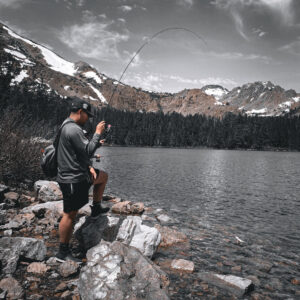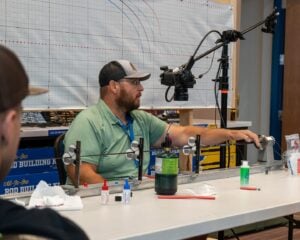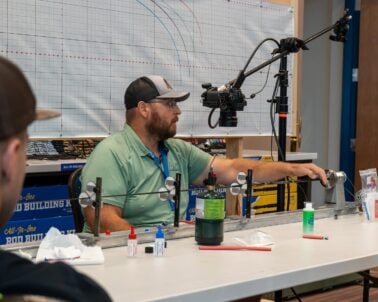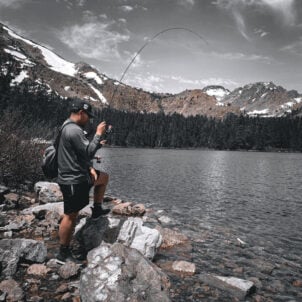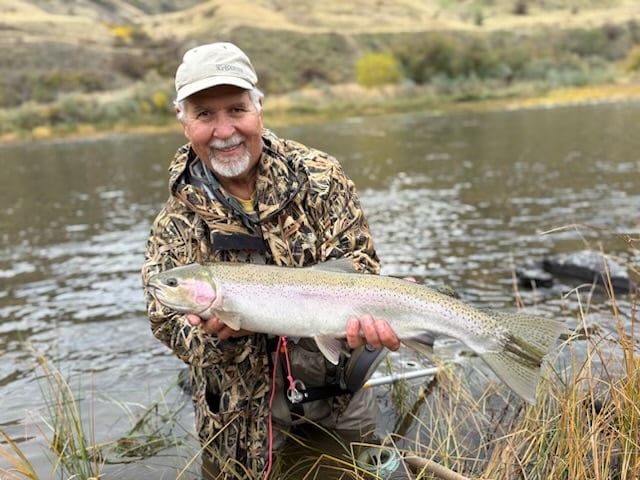
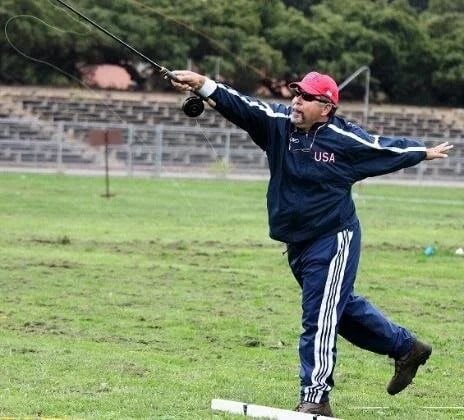
If you want to understand what makes the best fly casting rod for maximum distance, Steve Rajeff is one of the best people in the world to ask. Rajeff has been involved in tournament casting for around 60 years, winning the world all-around casting championship 14 times, which includes fly, spinning, and baitcasting events for both accuracy and distance, and securing 44 U.S. national championships. On top of that, he spent 35 years as the rod designer for G. Loomis, guided in Alaska and Montana, and taught fly casting through clubs and premier saltwater fly fishing schools, including Florida Keys Outfitters in Islamorada.
That combination is rare. Rajeff does not just know how to cast a long way; he knows how rods are built, how anglers actually fish, and how small choices in blank, line, guides, grip, and finish can change the way a rod performs. When the subject is choosing or building a fly rod for maximum distance, his first point is important: not every “distance” rod should be built the same way. A rod made for tournament distance casting is not the same as a rod made for a full day of fishing, where a tournament caster may only need to hit a handful of casts as hard as possible, whereas a fisherman may need to cast hundreds of times, with wind, flies, fatigue, accuracy, and presentation all playing a role.
“For fishing, you don’t want to be belting every rod with pretty much maximum force,” Rajeff said.
That is the heart of the trade-off. A stiffer rod may help create more line speed and carry more line in the air, but if it is too stiff for the angler or the situation, it can be tiring, unforgiving, and less useful at normal fishing distances. Ultimately, the best long-distance fly rod is not always the stiffest rod you can find; it is the rod that matches the caster, the line, the fly, and the kind of fishing being done.
What “Maximum Distance” Really Means
In fishing, maximum distance is not the same as tournament distance. For most anglers, the goal is not to throw one heroic cast in perfect conditions but to make the longest cast possible consistently, under real fishing conditions, with the actual fly you are using. Rajeff notes that fly size, wind, line type, and fishing situation all matter.

For example, a slim size 6 Clouser on an 8-weight line with a light breeze at your shoulder may be a 90-foot cast for a good caster, while a big, bushy deceiver-style streamer with a crosswind or slight headwind may make 75 feet a more realistic target. That is still a long cast in real fishing, and more importantly, it is a repeatable one. A rod that helps you make clean 70- to 90-foot casts all day may be more valuable than one that can occasionally reach farther but feels unpleasant or inaccurate at 40 to 60 feet. For most saltwater sight fishing, freshwater bass fishing, and general streamer work, there is still a lot of fishing done inside that range, and Rajeff estimates that a lot of saltwater fly fishing is more about presentation than pure distance.
“I’d say seventy-five percent of most saltwater is about presentation, not maximum distance,” he said.
That does not mean distance is unimportant; it simply means distance has to be balanced with control.
Start With the Fishing, Not the Rod
Before choosing a fly casting rod, think about the job you need it to do. Are you blind-casting streamers from a boat, reaching stripers in the surf, or covering open water where every extra foot matters? Perhaps you are sight-casting to redfish or bonefish, where accuracy and a quiet presentation matter more than raw distance, or maybe you are throwing wind-resistant deer-hair bugs, poppers, and big baitfish patterns. Rajeff’s general advice is that the bigger the fly and the more distance you want, the more rod and line weight you may need. All else being equal, a heavier line can cast farther with the same size fly; a 10-weight can generally carry and deliver a fly farther than an 8-weight, assuming the caster can handle it and the fly does not create too much air resistance.
However, there is a point where bigger is not always better, as a heavier outfit is more tiring, less delicate, and often less enjoyable for shorter casts. For a practical all-around discussion, Rajeff suggests using a 9-weight as a useful middle ground, and from there, an angler can move up or down depending on the fly and the fish. If you are throwing bigger flies, bump up a line size, but if you are throwing smaller flies or need more finesse, drop down a size. For many Southern anglers fishing redfish, bass, open-water streamers, larger baitfish patterns, or windy coastal conditions, the familiar 8- or 9-weight range makes sense; if the specific goal is distance and the flies are on the larger side, leaning toward the heavier end of that range can help.
Choose the Right Action and Stiffness
Rod action gets talked about constantly, but Rajeff makes an important distinction: action is not just one thing; it is a combination of taper and stiffness. Taper describes where the rod bends, does it mostly bend in the tip, in the middle, or flex deeper toward the handle? Stiffness describes how much it bends under load. Together, those two things create the overall feel of the rod. A very stiff, fast-action rod may create high line speed and help with long casts when the caster has enough skill and power to load it, but that same rod may feel dead, harsh, or difficult at closer fishing distances. Conversely, a softer rod may feel great up close, but it may run out of power when trying to carry a lot of line or punch into wind.
“I prefer medium fast,” he said. “That way I can load the rod tip at a shorter cast and feel nice as I get out into that zone that I fish at, at thirty to sixty feet.”
A medium-fast rod gives him feel and control at normal fishing distances while still keeping enough power in reserve for longer casts or lifting a good fish. That balance is important for anglers who want distance without giving up everyday fishability. For a pure distance setup, especially one meant for blind-casting open water, a stiffer rod can make sense as it lets the caster carry more line in the air, hit the rod harder, and create more line speed. But the caster has to be able to load it; a stiff rod that the angler cannot bend well will not cast farther, it will just feel harder to use.
Do Not Ignore the Fly Line
Rajeff is clear that distance is not only about the rod; the fly line is a major part of the system. “The distance is the result of making a rod load effectively against the line, which is the weight,” he said. That means the line has to match the rod and the job. A short, heavy-headed line may be excellent for quick shots at 30 to 60 feet, especially with bulky flies—many redfish, bass, and warmwater lines are built that way, as they load the rod quickly and turn over big flies well. However, those same short, overweighted heads can become harder to carry when you try to stretch casts out to 80, 90, or 100 feet. Once the short head turns over, it wants to fall, and the caster may feel like the rod is overloaded when trying to carry more line.
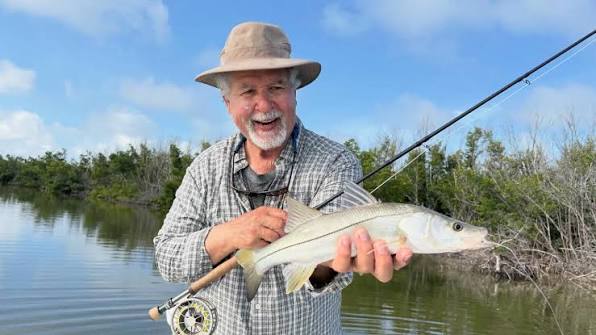
For longer casts, Rajeff says a longer belly or longer head can help because it keeps the loop rolling longer, which can extend the cast. There is a trade-off, though: longer heads are harder to handle, especially in wind or with large flies. Some anglers can comfortably manage 35 or 40 feet of head, while others can handle 50, 55, or 60 feet. The best line really depends on what you can actually carry in the air. If you are using a short-head, overweighted redfish or bass line and feel like it works great at 40 feet but falls apart when you try to reach 80, Rajeff’s advice points toward experimenting with a longer-belly line that is not as aggressively heavy. A slightly lighter, longer head can allow you to hit the cast harder and create more line speed. If you want maximum distance above all else, the next step is a shooting head system.
Shooting Heads Are the Distance Tool
If Rajeff had to cast as far as possible every time, he said he would use a shooting head. A shooting head is a short section of fly line, often around 30 feet, connected to a thinner shooting line behind it, often monofilament. Because it is thinner and slicker than a normal fly line, it creates less friction and shoots farther.
With a small fly, Rajeff notes that a cast that may be around 90 feet with a standard weight-forward floating line could potentially stretch to around 120 feet with a shooting head and monofilament running line. That is a big difference. For fishing, he recommends not going too thin with the mono because very thin monofilament tangles easily; something in the 25- to 30-pound range can be easier to manage. Flat monofilament can also work well in a boat because it tends to lay flatter than round mono.
For the head itself, Rajeff said intermediate or medium-sink shooting heads cast nicely. Extra-fast sinking heads go even farther because they are skinny and dense, but they can feel jumpy or wrinkly in the air and are not always as smooth to cast. The reason sinking lines cast farther is simple: diameter. A floating line has a larger diameter, whereas a slow-sinking or intermediate line of the same weight is thinner, which cuts through the air better. A fast-sinking line is thinner still, and that can make long casts easier. For fishing situations where a sinking or intermediate line makes sense, that can be a real advantage. For surface presentations or shallow sight fishing, however, a floating line may still be the right tool.
Rod Length: Nine Feet Is Standard, But Longer Can Help
The standard modern fly casting rod is nine feet long for good reason. It is a very good length for a wide range of fishing—accurate, comfortable, easy to manage, and useful from short to long distances. But for maximum distance, Rajeff says a slightly longer rod can help. In tournament events where longer rods are allowed, many casters use rods in the 9-foot-8 to nearly 10-foot range. The extra length helps a caster aerialize more line and move the rod tip through a longer path during the stroke, making it easier to carry 50 or 60 feet of line in the air before shooting.
“When you really want to make consistent, longer casts, a rod that’s a little longer than nine feet makes the distance cast a little easier,” Rajeff said. The trade-off is that a longer rod may not be as comfortable or accurate at shorter ranges. A 9-foot-6 rod built for distance may be great when you are blind-casting open water, but it may feel less precise when making quick 25-foot shots. So the choice depends on the mission. For a general-purpose fishing rod, nine feet still makes sense. For a rod built mainly to cover water and cast long all day, a slightly longer rod is worth considering.
One-Piece, Two-Piece, or Four-Piece?
A one-piece rod has some advantages: there are no ferrules to loosen, no sections to twist, and no added ferrule weight. In a perfect world where travel and shipping do not matter, Rajeff said one-piece rods are wonderful. But the practical world matters. One-piece rods are hard to ship, hard to travel with, and less common today. Four-piece rods are far more convenient, and modern designs are very good. Rajeff does point out that every ferrule adds a little material and weight, so for tournament casting, where small advantages matter, many casters use two-piece rods when possible to save weight compared to a four-piece rod. For fishing, though, he would not worry too much about it.
“I think find the right action, the right stiffness that you would like, and that’s more important than the weight savings,” he said.
In other words, do not buy the wrong action just because it has fewer pieces. A good four-piece rod with the right action is a better fishing tool than a two-piece rod that does not suit you.
Lighter Is Better, But Action Comes First
Fly casting rods have become incredibly light, and Rajeff still believes lighter is generally better, especially in the 8-weight range. A lighter rod is easier to control and can improve tracking, presentation, and casting consistency. Most anglers, if they cast two rods with similar actions, will naturally prefer the lighter-feeling one. But weight is not more important than action. If one rod is slightly heavier but has the right feel, taper, and stiffness for your cast, that may be the better choice. A lighter rod that is too stiff, too soft, or wrong for the line will not help you cast farther.
“Go for action over weight,” Rajeff said. That is a useful rule: if the actions are similar, pick the lighter rod. If the actions are not similar, pick the action that works.
Guides: Do They Matter for Distance?
Guides matter, but not always in the way anglers expect. Rajeff does not believe a fly angler will gain huge amounts of distance just by changing guide size or material, but guide choice can affect smoothness, durability, weight, and how the rod feels. A normal 9-foot fly rod may have nine or ten guides plus the tip-top. Rajeff said going below the normal number of guides is not helpful, and in fact, it may make the rod feel like it loses a little smoothness or power. Adding one or two extra guides may make the rod feel smoother and more controlled. Tournament casters often add two or three extra guides compared to a standard setup; the idea is similar to the Fuji Concept approach in spinning and casting rods, where more guides help distribute load and improve how the rod works under pressure.
In fly rods, the effect is not as dramatic because fly rods already have a lot of guides, but Rajeff still sees some value in it. For saltwater, he likes REC Recoil titanium guides because titanium resists corrosion, which matters when rods are exposed to salt and not always rinsed perfectly. Rajeff also has a long history with single-foot wire guides. He and his brother Tim experimented years ago by taking a standard snake guide, folding it into a single-foot guide, wrapping it onto a rod, and casting it. It worked, and the advantage is less thread and less finish on the blank, which saves a little weight. It is not earth-shattering, but it helps. For an 8-weight, Rajeff says single-foot or double-foot guides can both work; some anglers may prefer double-foot snake guides for confidence, especially in heavier saltwater situations, while others may like the lighter, cleaner build of single-foot guides.
Ceramic Single-Foot Guides Are Worth Experimenting With
Rajeff also mentioned that some tournament casters have been experimenting with small single-foot ceramic guides, including titanium Torzite-style guides, all the way to the rod tip. These guides are smooth, slippery, light, and quiet. In tournament casting, Rajeff said they believe they may be seeing a small distance advantage. Do not expect a miracle, he is not saying they add 10 feet to a 100-foot cast, but one or two extra feet and a smoother feel may matter to someone trying to get every bit of performance from a rod. There is a trade-off, though: very small ceramic guides may not pass knots well. A nail knot or leader connection can hang up. For normal fishing a guide train that casts far but catches knots may not be worth the trouble. For the stripping guides, Rajeff says one is functionally necessary, especially because of double hauling and stripping line. Two can help share load when fighting fish, and a third may be more cosmetic on an 8-weight, though heavier offshore rods may have more reason for it.
Grip Shape Can Help Your Casting Stroke
Distance casting is not only about the blank; the grip affects how the caster applies power. Rajeff and many distance casters like a full wells-style grip with more flare toward the front, which gives the thumb and hand something solid to press against during the cast. For distance, he also likes the back end of the grip, near the reel seat, to be slimmer. That allows the little finger and lower hand to close more easily and helps the wrist articulate during the casting stroke. That wrist movement matters; on the backcast, the wrist opens, and on the forward cast, it turns over and snaps through the end of the stroke. A fat, bulky rear grip can make that harder. For many anglers, a standard full wells grip is a good starting point, but if you want to fine-tune it for distance, you can sand the rear of the grip slightly thinner near the reel seat. Rajeff also mentioned a trick from tournament casting: wrapping the cork with a thin tennis grip. In hot weather, hands get sweaty, and a tennis grip can let you hold the rod securely without squeezing as hard, which can make the hand more relaxed and comfortable during powerful casts. If you do not like it, take it off, but it is a cheap experiment that may help.
Keep Thread and Finish Light
When building a distance-focused rod, extra weight on the upper half of the blank is the enemy. Rajeff recommends using thin thread, such as size A or size B, and keeping wraps short. There is no need for bulky thread wraps that extend far beyond the guide foot; use only enough wraps to secure the guide properly. The finish should also be thin, especially from the middle of the rod to the tip. Thick, bulbous epoxy adds weight where it hurts performance most. Decorative wraps near the butt section are less harmful because weight near the handle does not affect the casting stroke as much. If maximum distance is the goal, keep the upper half clean, light, and efficient.
Coated Blanks Are Better for Saltwater
Some anglers like the look and weight savings of a raw graphite blank, but Rajeff prefers at least some coating on the blank, especially for saltwater use. Graphite conducts electricity, and in saltwater, a raw graphite blank can promote corrosion in non-titanium guides. A clear coat or paint layer helps protect against that. For freshwater, it is less of a concern, but for saltwater, Rajeff generally prefers a coated blank. The small weight difference is not worth creating corrosion problems.
If You Buy Instead of Build, Cast Before You Buy
For anglers buying a factory rod, Rajeff’s advice is simple: try it first if you can. He mentioned respected rod companies such as G. Loomis, Sage, Winston, and Echo, but he said brand is not the most important thing. The most important thing is how the rod feels with the line and fly you plan to use. Do not judge a distance rod by internet specs alone. Cast it. Try it with your own line or the type of line you actually plan to fish. If possible, try it with a fly similar to what you use on the water. A rod that feels great with a yarn fly on grass may feel very different with a bulky streamer, popper, or crab pattern in a crosswind.
A Practical Distance Rod Recipe
For an angler who wants a fishing rod built with distance in mind, not a pure tournament tool, the recipe starts with a 9-foot to 9-foot-6 rod in the 8- to 10-weight range. For a general-purpose coastal, bass, and open-water streamer setup, a 9-weight is a strong starting point. Go lighter for smaller flies and more presentation, or heavier for bigger flies, more wind, and more open-water distance work. Choose a medium-fast to fast action depending on how much you value presentation versus raw distance; a medium-fast rod is more versatile and more comfortable at normal fishing distances, while a faster, stiffer rod can help when the job is repeatedly carrying more line and casting as far as possible.
For the line, think carefully. A short, heavy head is great for close and medium fishing shots, but a longer-belly line can help stretch distance. If distance is the main goal, experiment with shooting heads and a manageable monofilament shooting line in the 25- to 30-pound range. For fishing where it makes sense, intermediate and medium-sink heads can cast farther than floating lines because they are thinner.
Use quality corrosion-resistant guides, especially for saltwater; titanium single-foot wire guides are a good lightweight option, and ceramic single-foot guides may be worth experimenting with if you are chasing every foot of distance, but be aware of knot clearance. Do not under-guide the rod. A normal guide count is the minimum, and one or two extra guides may make the rod feel smoother. Use a full wells grip and consider slimming the rear slightly for wrist movement. If sweaty hands are an issue, try a removable tennis grip wrap. Keep thread wraps short and finish thin, especially on the upper half of the rod. Use a coated blank for saltwater. Most importantly, match the rod to the caster and the line. That is the part that cannot be skipped.
The Rod Is Only Part of the Cast
A well-built distance fly casting rod can help, and a good line can help even more. A smooth guide train, light finish, comfortable grip, and longer rod can all add small advantages, but distance still comes from the whole system working together. The rod has to load against the line, the line has to match the fly, and the caster has to be able to carry the head, control the loop, and create line speed. The setup that works for a sparse streamer in light wind may not be the same setup that works for a big bass bug or redfish fly in a crosswind. That is why Rajeff’s advice keeps coming back to balance. Choose enough rod for the fly, enough stiffness for the distance, and enough line length to keep the cast rolling. But do not build a rod so extreme that it stops being useful for the fishing you actually do. For most anglers, the best distance rod is not the one that wins a tournament; it is the one that helps them cast farther, cleaner, and more consistently when the fish are just beyond their normal range.