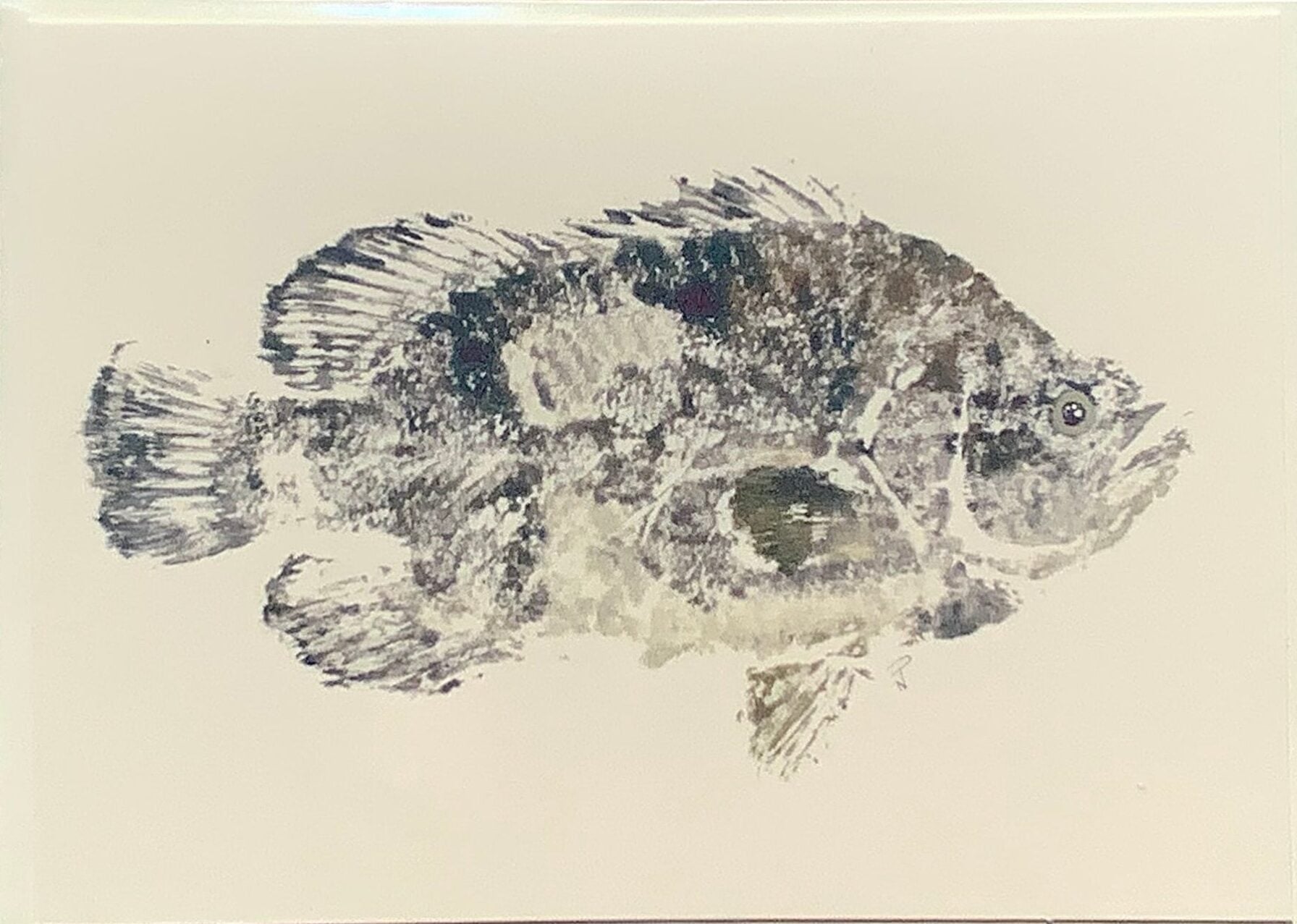
Few fishing traditions blend storytelling, craftsmanship, and cultural history as beautifully as Gyotaku, the Japanese practice of creating fish prints. What began centuries ago as a practical way for fishermen to record their biggest catches has evolved into a stunning art form that captures the true shape, texture, and character of each fish. Along the northern Gulf Coast, two artists, Nikki Paschen and Jen Cox, have brought this tradition to life in a way that turns everyday catches into lasting impressions.
The Roots of a Tradition
The word Gyotaku is formed from two Japanese words. “Gyo means fish, and Taku means impression or print,” Paschen explains when asked how the practice began. Before cameras and digital scales, a fisherman might ink a prized catch and press rice paper against the surface to preserve its exact size and details. These fish prints became a way to honor the animal and record the moment without waste.
“It dates back to the 1700s or 1800s, when there was no easy way to document a trophy catch,” Paschen says. “Gyotaku kept the memory alive while still allowing the fish to be used for food.”
A Chance Encounter Turns Into a Calling
Paschen first discovered Gyotaku at a fishing tournament in the mid-2000s. She remembers walking past the prize table and seeing a metallic redfish print that stood out from everything else.
“I looked at it and said, I’m going to win that print,” she recalls. “And would you believe it, I did. That print sent me down a path I never expected.”
With little instructional material available at the time, she learned through trial, error, and experimentation. Early attempts involved craft paper and cut-up T shirts in a cold garage. “There wasn’t much online back then. You just had to figure it out yourself,” she says.
Today Paschen has printed nearly 30 species, from speckled trout and flounder to long-tail sea bass and lionfish.
When Art Meets the Gulf
Nikki eventually partnered with Jen Cox, who moved to the coast and wasn’t afraid to jump into boat detailing and fish printing. “I’ve never been scared of getting my hands dirty,” Cox says. “When Nikki told me what she was doing, I thought it was really cool. I’ve been hooked ever since.”
Together, the two have created prints from some of the Gulf’s most unusual and prized species. Lionfish are among the strangest. With venomous dorsal and pectoral spines, handling them requires caution. “But the print turned out fantastic,” Paschen says. “We even got to print a Florida state-record lionfish that was over thirteen inches.”
Some projects are massive. “We printed the blue marlin that broke the tournament record in 2013,” Paschen says. “The print was about eighteen feet long. It took a lot of paint, a lot of canvas, and a lot of teamwork.”
A Modern Twist on a Classic Tradition
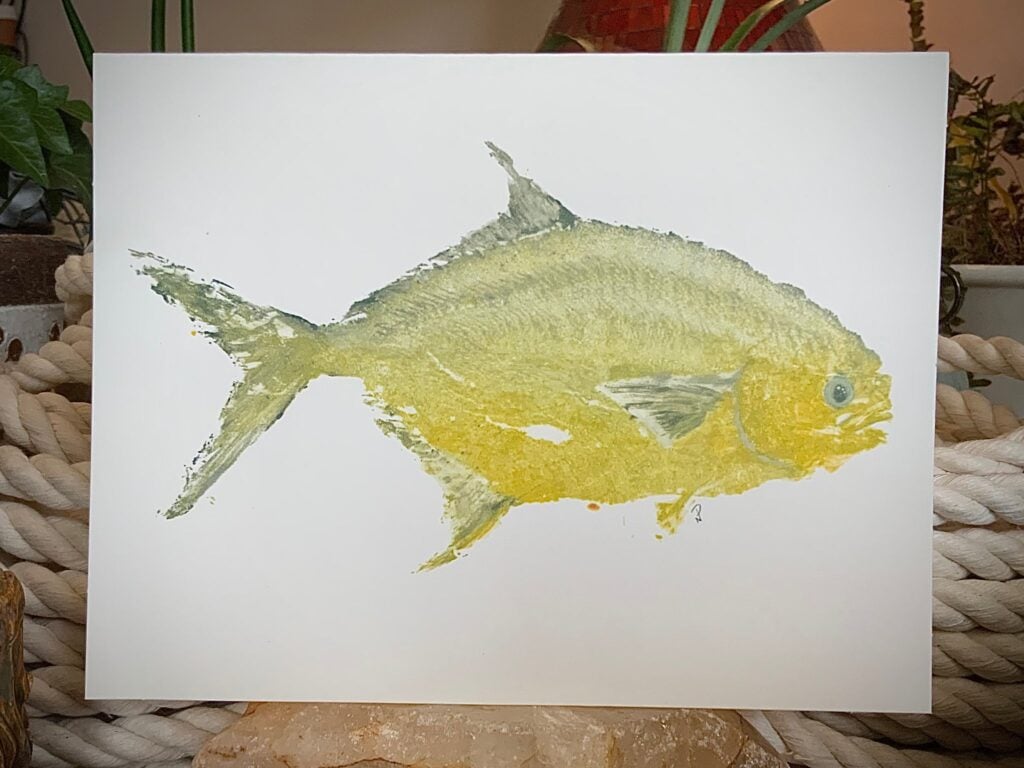
Traditional Gyotaku is often done in black ink, but Paschen and Cox enjoy exploring color and stylized approaches. “Mahi mahi are my favorite because they’re so vibrant,” Paschen says. “Speckled trout are beautiful too. They change depending on how the light hits them.”
This flexibility allows each print to become a unique piece of art. A single species can be captured in grayscale realism or bold art-deco colors. “It blends the masculine and the feminine. The fish gives you its shape, and the colors give you personality,” Paschen says.
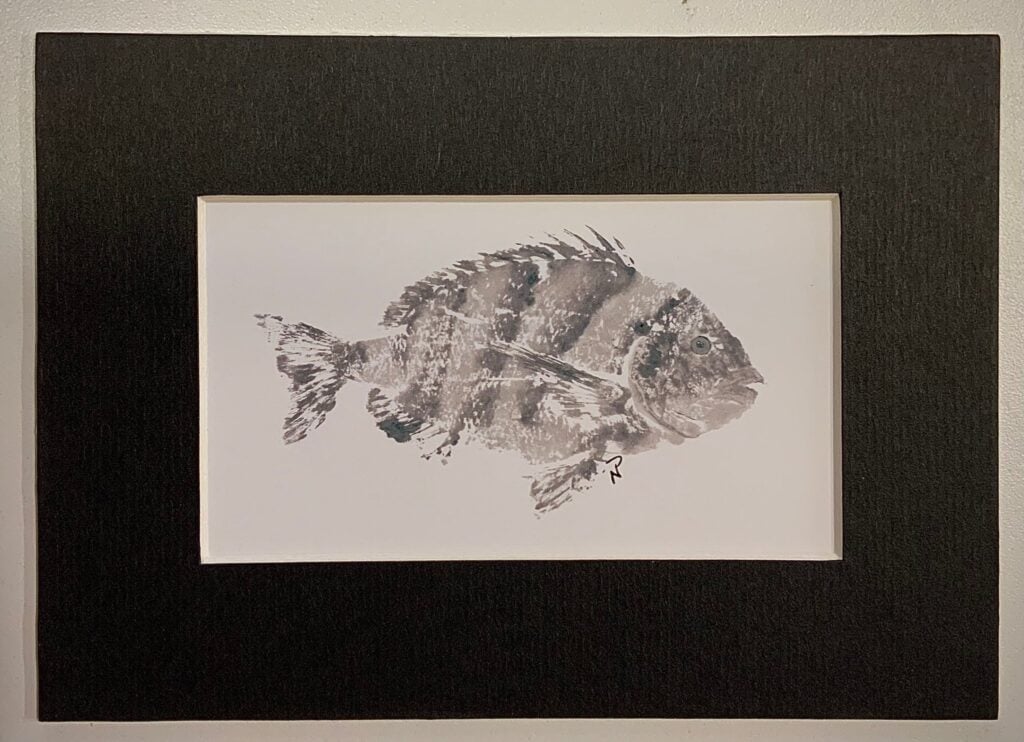
Their work now appears in the Coastal Art Center of Orange Beach and across their product lines. They turn prints into note cards, apparel, stickers, pillows, and decor, all available through their brand Nautical Passions.
Why Gyotaku Appeals to Anglers
Fish prints preserve more than a story; they preserves the fish themselves. “When you get a print, it’s your fish,” Paschen says. “Every detail is there on the one side we print. It’s not a reproduction based on measurements.”
Many clients bring children’s first catches, milestone trips, or unexpected species they want to remember. “It doesn’t have to be a huge trophy,” Cox notes. “It could be a special day with family or a fish you’ve worked years to catch.”
One deckhand at Zeke’s Marina is on a mission to collect prints of every species he has caught. “He tells the story behind each one when someone visits,” Paschen says. “He has at least fifteen already.”
From Catch to Canvas
How does someone try Gyotaku at home? Paschen offers simple advice for beginners wanting to make their own fish prints.
“Wash the slime off with a little dish soap,” she says. “Pin the fins so they stay open. Apply your ink, press your fabric or paper over the fish, and rub your hands over every contour. Then lift it for the reveal.”
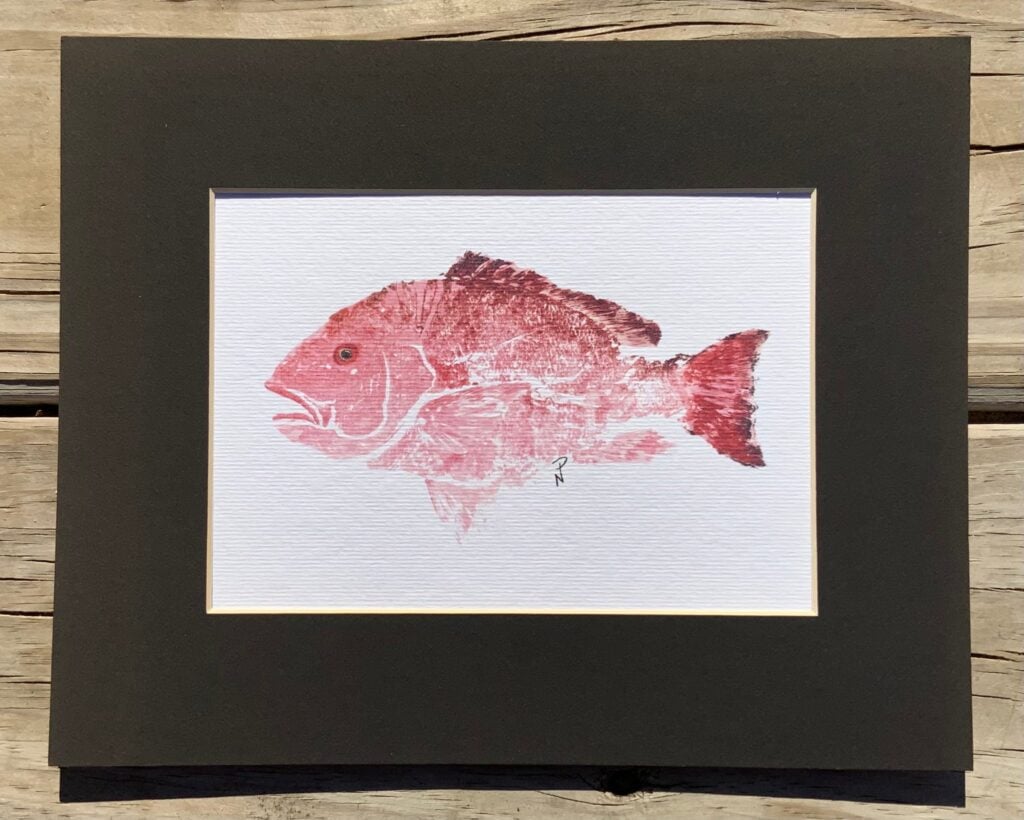
Rice paper, fabric, and non toxic inks are easy starting points. Finished prints can be sealed with archival spray or displayed under glass.
For those who want a professional print, keeping the fish cold is the most important step. “Just keep it on ice until you contact us,” Cox says.
Inspiring the Next Generation
Paschen and Cox are passionate about introducing kids to the outdoors. At local festivals, they set up booths where children can create prints using rubber fish molds. “We want kids to know nature is cool and you can turn it into art,” Paschen says.
More Than Art, It’s Legacy
In the end, Gyotaku is storytelling preserved in ink. “The fishing we do, the art we create, and the legacies they hold are about triumph, loss, and beauty,” Paschen says. “Our mission is to help these stories stick around, one print at a time.”
For fish prints, apparel, commissions, or to follow their latest work, visit nauticalpaschens.com.