When it comes to steelhead fishing, the rod you choose is as crucial as your skill in casting the line. This article is designed to guide you through the process of selecting the best steelhead rod, balancing factors like performance, durability, and personal preference. Steelhead, known for their strength and agility, require a rod that can match their vigor, and choosing the right one can be the difference between a successful catch and a near miss.
We’ll delve into the essential features of steelhead rods, discussing aspects such as length, action, and material. Whether you’re an experienced angler or new to steelhead fishing, understanding these characteristics is vital to making an informed decision. Additionally, we’ll offer insights on how to match a rod to your specific fishing conditions and style.
Our aim is to provide you with the knowledge to select a rod that not only complements your fishing technique but also adds to the overall enjoyment of your fishing experience. Let’s begin this journey to find the steelhead rod that best suits your needs.
Steelhead Fishing 101
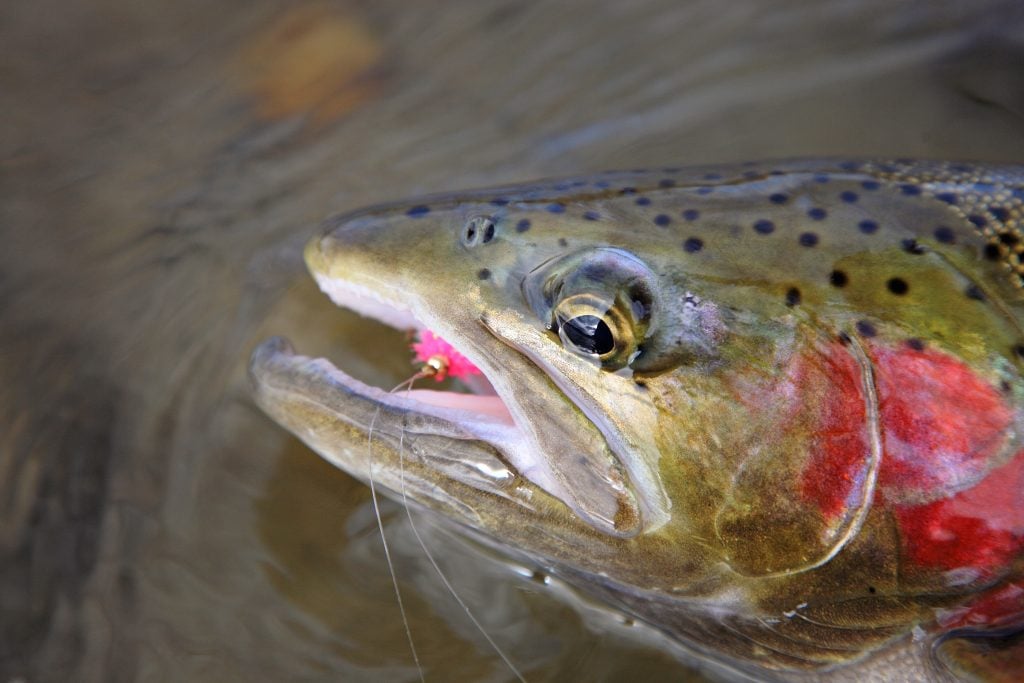
Steelhead, a subspecies of rainbow trout (Oncorhynchus mykiss), are renowned in the angling world for their unique life cycle and impressive fighting ability. These anadromous fish are born in freshwater, migrate to the ocean, and then return to freshwater to spawn, a trait that sets them apart from their freshwater-only rainbow trout counterparts. In the ocean, steelheads exhibit a silvery, streamlined appearance which changes to more pronounced patterns with shades of red and pink when they return to freshwater for spawning, especially in males.
The size of steelhead varies significantly, typically ranging from 20 to 30 inches in length and weighing between 3 to 15 pounds, although some can grow larger depending on their habitat and the duration of their ocean stay. Even though they’re the same species as regular ole, bug-eating Rainbow Trout, their impressive size means that most anglers pursue them with much heavier and stronger equipment than a standard 5wt fly rod.

Their migration is a remarkable feat, with some traveling hundreds or even thousands of miles to reach their spawning grounds. Unique among salmonids, steelhead can spawn multiple times, returning to the ocean after each spawning cycle. Their diet shifts from insects, small fish, and crustaceans in freshwater to larger prey like fish, squid, and amphipods in the ocean, facilitating their rapid growth.
Steelhead are highly prized by sport fishermen for their strong, acrobatic fights, often leaping out of the water when hooked, demanding skill and patience from anglers. However, their conservation status varies by region, with some populations being healthy and others threatened or endangered due to habitat loss, overfishing, and environmental changes. Efforts to conserve steelhead populations include habitat restoration, hatchery programs, and regulated fishing practices.
Key Features Of A Steelhead Rod
Fishing for these saltwater titans requires a rod that combines suitable length, power, and action to meet the demands of landing such a large and energetic fish.
In terms of length, steelhead rods are typically in the range of 8 to 10 feet. This length offers several advantages: it allows for longer casts, which can be crucial in reaching steelhead in various fishing environments, and it provides better control over the line. Additionally, a longer rod is advantageous in absorbing the forceful strikes and vigorous fights that are characteristic of steelhead.
When considering the power of the rod, which refers to its resistance to bending, medium to heavy power rods are usually preferred for steelhead fishing. This level of power ensures that the rod has enough backbone to fight and manage the strength of a steelhead, which is essential for successfully landing these fish.
The action of the rod, meaning where the rod bends, is also a critical factor. Fast action rods, which bend mostly near the tip, are generally favored for steelhead fishing. This is because they provide better sensitivity, allowing the angler to feel even the slightest nibbles, and they offer quicker power transition for setting the hook effectively. Moderate action rods, which bend more towards the middle, can also be suitable as they provide a good balance of casting capability and shock absorption during the fish’s powerful runs.
When selecting a fly fishing rod for steelhead, the key considerations include the length, weight, and type of the rod. Typically, a steelhead fly rod is about 9 to 10 feet long, offering a balance between casting distance and control. The weight of the rod generally falls around 7-weight, ideal for its versatility in handling various steelhead sizes and fishing conditions. For larger rivers or bigger steelhead, a 9-weight rod may be more appropriate.
The choice between single-handed and Spey rods depends on your fishing environment and style. Single-handed rods, usually about 10 feet long, are traditional and work well for various steelhead fishing scenarios. They offer ease in line mending and sufficient power for larger fish. Spey rods, on the other hand, are longer, around 13 to 14 feet, and are designed for a specific casting style suited to areas with limited space. They are effective for covering more water and useful when using heavy lines or sink tips.
Material choice, typically graphite or fiberglass, impacts the rod’s overall performance. Graphite rods are preferred for their lightness and sensitivity, crucial for detecting bites and managing the fight. In contrast, fiberglass offers durability and a degree of flexibility that can be beneficial in handling the aggressive behavior of steelhead.
Comfort in handling is another consideration, with rod handles typically made from cork or foam. Comfort and a firm grip are essential, especially when engaged in a prolonged battle with a steelhead.
In summary, the ideal rod for steelhead fishing should be long enough to offer good casting range and line control, have sufficient power to handle the strength of steelhead, and feature a fast to moderate action for sensitivity and effective hook setting. Such a rod will greatly enhance an angler’s ability to successfully hook and land these challenging fish.
Steelhead Spinning Rods
- Lamiglas X-11 Salmon/Steelhead Spinning Rod
- Loomis IMX Steelhead Side Drift Spinning Rod
- Loomis E6X Steelhead Float
Steelhead Casting Rods
Steelhead Fly Rods
Final Thoughts On Steelhead Rods
In conclusion, the journey to finding the perfect steelhead rod is as much about understanding the fish and the environment as it is about the rod itself. We’ve explored the critical factors like length, action, and material, each playing a pivotal role in your overall fishing experience. Whether you’re a seasoned angler or just starting out, the right steelhead rod can significantly enhance your ability to land these challenging fish.
Remember, the best rod is not just the one with the highest ratings or the most advanced features; it’s the one that feels right in your hands and suits your specific fishing style and conditions. It’s about the balance between technical specifications and personal comfort. We encourage you to use the knowledge gained from this article to make an informed decision, one that will bring you satisfaction and, hopefully, many successful catches.